Key Takeaways
- Holder counts are address counts, not people counts. One person can control many wallets, and one exchange wallet can represent millions of customers.
- The fastest free method is a block explorer. Etherscan and its sister explorers cover EVM chains, while Solscan covers Solana. Both show a holder number on the token page.
- The number alone tells you very little. Concentration in the top 10 wallets, clustered wallets, and contract addresses matter more than the headline figure.
What a "Holder" Actually Means On-Chain
Before you look up any number, it helps to know what you are counting.
A blockchain does not store a list of owners. It stores balances attached to addresses. When a tool says a token has 42,000 holders, it usually means 42,000 addresses currently hold a balance greater than zero.
That definition creates three gaps between the number and reality:
- One person, many addresses. Traders, bots, and airdrop farmers often run dozens or hundreds of wallets.
- One address, many people. Centralized exchanges pool customer funds into shared wallets, so a single address can stand in for a very large user base.
- Not all addresses are humans. Liquidity pools, staking contracts, bridges, treasuries, and burn addresses all appear in holder lists.
Reporting on tokenized stocks in 2026 made this point clearly: figures that crossed hundreds of thousands of "holders" were measuring blockchain addresses, not verified individual investors. Keep that framing whenever you quote a holder count.
Method 1: Use a Block Explorer (Fastest and Free)
This is the default method for most people and it takes under a minute.
On Ethereum and other EVM chains
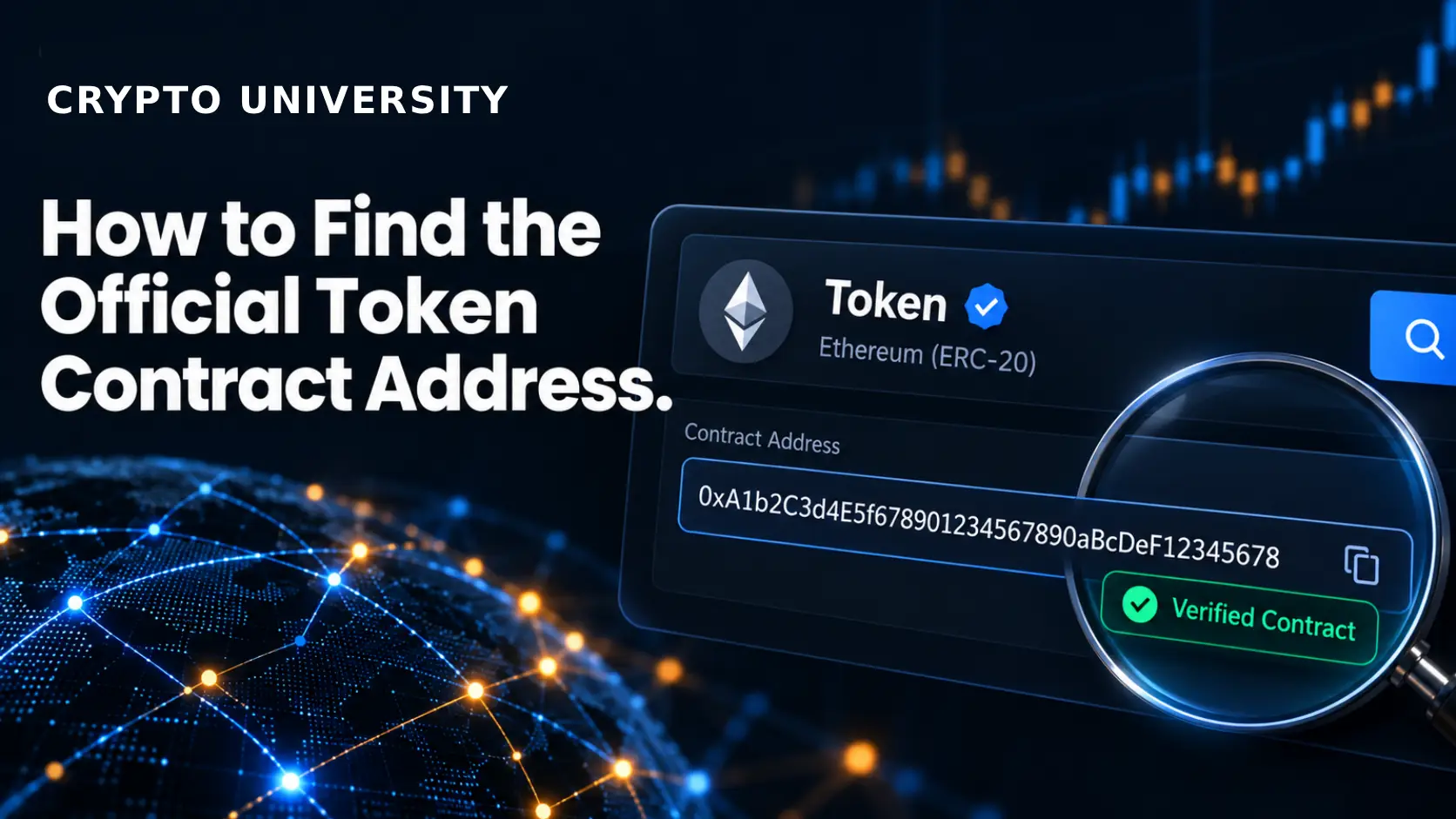
- Find the contract address. Get it from the project website, a major data aggregator, or a reputable exchange listing. Never trust a contract address pasted in a chat group.
- Open the explorer for that chain. Etherscan for Ethereum, and the matching explorer for BNB Chain, Base, Arbitrum, Polygon, or Optimism.
- Paste the contract address into search. You will land on the token page.
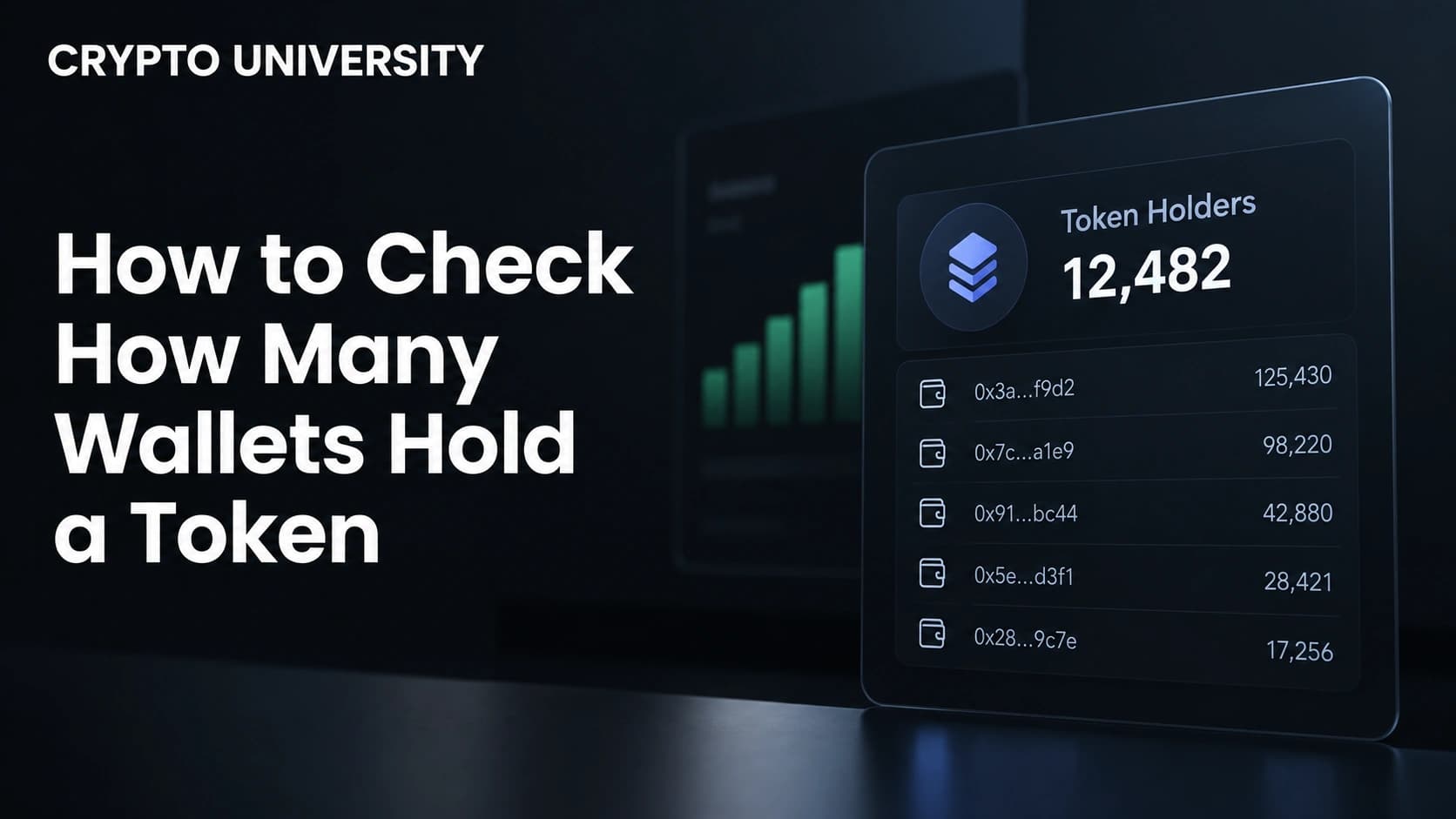
- Read the Holders figure on the token overview panel.
- Open the Holders tab to see the ranked list, each wallet's balance, and its percentage of supply.
On Solana
- Paste the token mint address into Solscan or a similar Solana explorer.
- Read the holder count on the token page.
- Open the Holders tab for the ranked list and supply percentages.
One Solana specific detail: balances live in token accounts that belong to wallets, not in the wallet address itself. A single wallet can own more than one token account for the same token, so some tools count token accounts while others group by owner. If two Solana tools disagree, this is often why.
Method 2: Use Analytics Platforms for Context
Explorers tell you how many. Analytics tools tell you whether the distribution is healthy.
| Tool | What it shows | Cost | Best for |
|---|---|---|---|
| Etherscan family | Holder count, ranked holder list, supply share | Free to view | Quick checks on EVM chains |
| Solscan | Holder count, top holders, token metadata | Free tier plus paid API | Solana tokens |
| Bubblemaps | Visual map of top holders and the transfer links between them | Free tier plus paid | Spotting connected wallets |
| Dune | Custom SQL queries and holder growth charts | Free tier plus paid | Trends over time |
| Nansen, Arkham | Labeled wallets and entity identification | Mostly paid | Knowing who is behind an address |
| Bitquery, Moralis, Covalent | Holder data through APIs | Free tier plus paid | Developers and dashboards |
Bubblemaps is worth understanding because it answers a question explorers cannot. It draws the top holders as bubbles sized by balance, and links wallets that have transacted with each other. Contract and exchange bubbles are hidden by default so the focus stays on ordinary holders. A well spread token looks scattered. A token where one cluster of linked wallets controls a large share of supply looks like a tight web, which is a signal to look much harder before going further.
Method 3: Query the Data Yourself
If you are building a dashboard or checking many tokens, use an API.
| Approach | How it works | Notes |
|---|---|---|
| Etherscan API v2 | One API key across 60 plus chains using a chainid parameter | The token holder count and top holder endpoints sit behind the paid Pro tiers |
| Solana RPC | getTokenLargestAccounts returns top accounts, getProgramAccounts can scan all token accounts | The full scan is heavy and many public nodes limit it |
| Bitquery | GraphQL queries over transfers or balance updates | Transfer based queries cover full history, balance snapshots suit very new tokens |
| Dune | SQL over decoded transfer events | Good for holder counts across a date range |
| Moralis, Covalent, Birdeye | Managed REST endpoints for holders and balances | Faster to ship than raw RPC work |
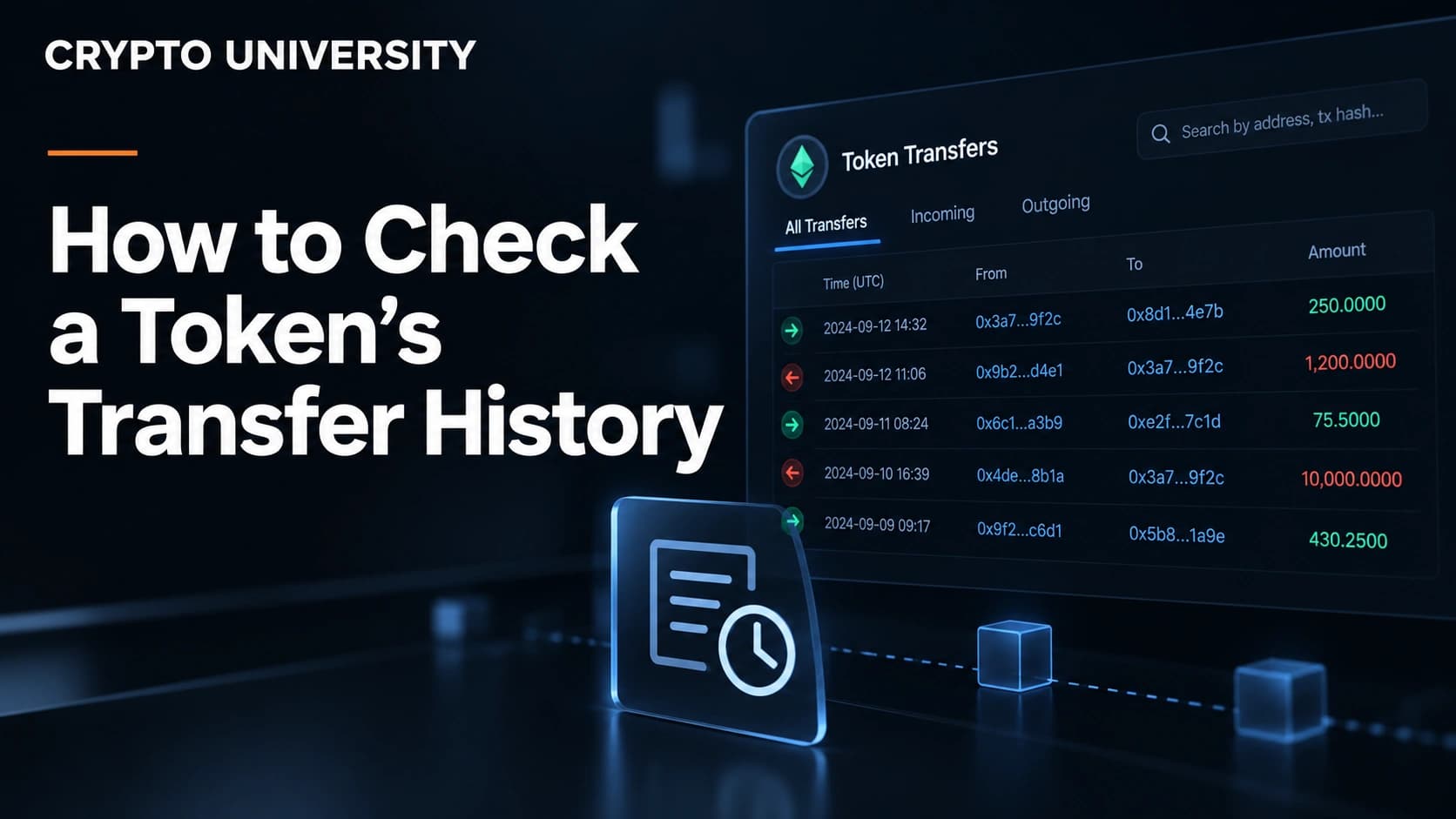
A simple pattern for building holder counts from scratch: sum every inflow and outflow per address from the token's transfer events, then count the addresses with a positive balance. That is what most tools do behind the scenes.
Why the Number Can Mislead You
This is the section most guides skip. Read the count alongside these distortions.
| Distortion | What it does to the number | What to do instead |
|---|---|---|
| Exchange wallets | One address hides thousands or millions of real owners | Check labels before treating a large wallet as a whale |
| Contracts, pools, bridges | Liquidity pools and staking contracts appear as top holders | Exclude them before judging concentration |
| Burn addresses | Dead supply still shows as a holder | Subtract burned supply from your calculations |
| Airdrop farming and dust | Thousands of throwaway wallets inflate the count | Compare holder growth with active address growth |
| Multichain tokens | Each chain has a separate holder list | Add up counts per chain and say which chains you checked |
| Snapshot timing | Counts move every block | Record the date and the source with any figure you publish |
A sudden jump in holders with no matching rise in activity often points to bot created wallets or an airdrop farm rather than real adoption.
How to Read Holder Data Properly
Use this checklist after you have the raw number.
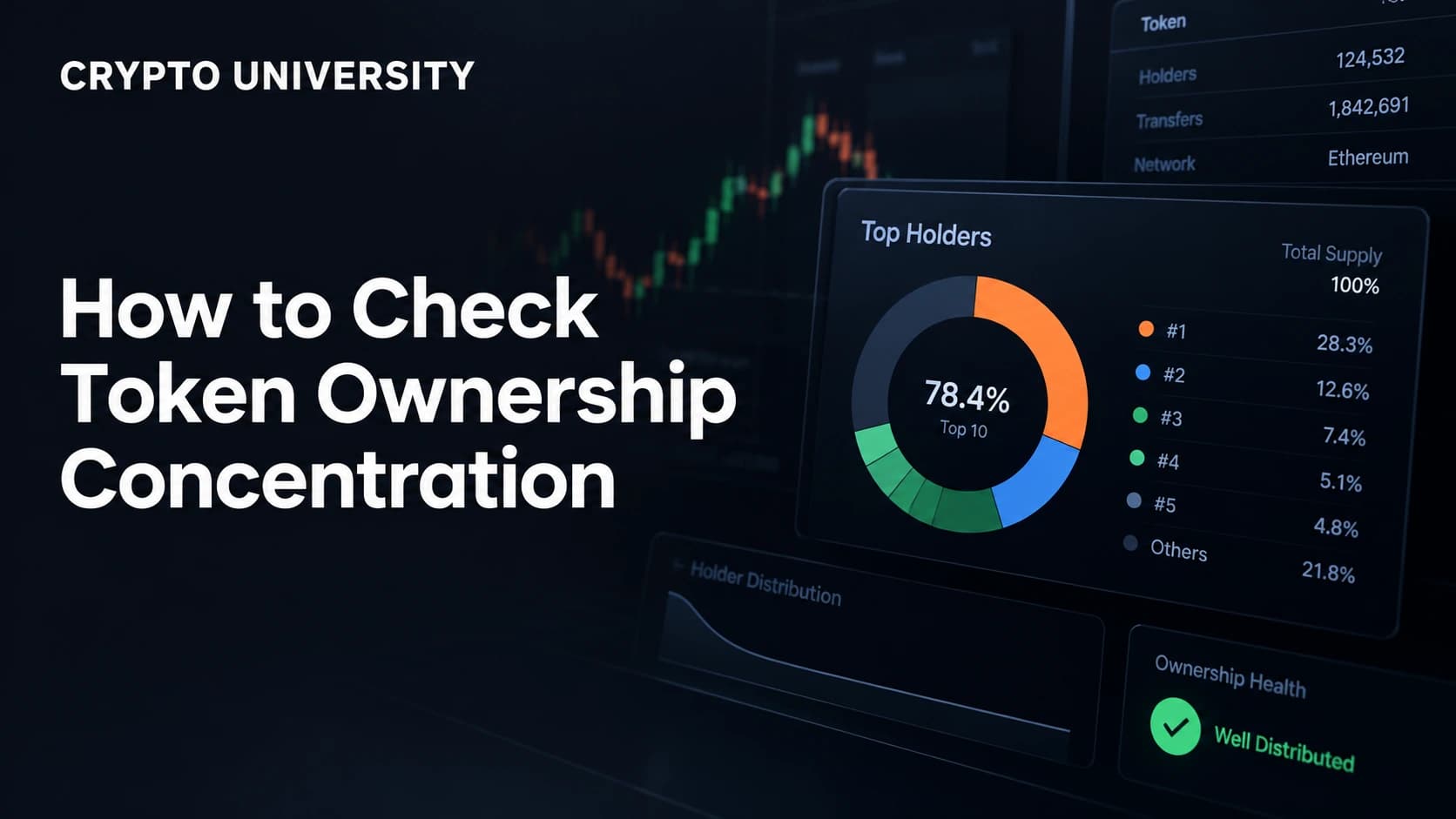
- Check top 10 concentration. Add the supply percentages of the ten largest wallets. Exclude pools, bridges, and burn addresses first.
- Identify what each large wallet is. Explorer labels, Arkham, and Nansen help. An unlabeled wallet holding a large share deserves attention.
- Look for clusters. Run the token through a bubble map. Wallets that funded each other are often controlled by the same party, even when the list looks spread out.
- Compare holder growth with usage. Rising holders plus flat transfers is a weak signal. Rising holders plus rising active addresses is stronger.
- Check liquidity and lock status. A token can have many holders and still be almost impossible to exit if the pool is thin.
- Cross check two sources. If an explorer and an analytics tool disagree by a wide margin, find out which definition each one uses before quoting either.
Quick Reference: Where to Look
| Chain | Explorer to start with | What you get free |
|---|---|---|
| Ethereum | Etherscan | Holder count, ranked list, supply share |
| BNB Chain | BscScan | Same layout as Etherscan |
| Base | Basescan | Same layout as Etherscan |
| Arbitrum, Polygon, Optimism | Chain specific Etherscan style explorers | Holder count and holder list |
| Solana | Solscan, SolanaFM | Holder count and top holders |
Frequently Asked Questions
Is a high holder count a good sign? Not on its own. It shows distribution breadth, not quality. A token with 100,000 holders where two linked wallets control most of the supply is more concentrated than a token with 5,000 evenly spread holders.
Why do two websites show different holder counts for the same token? They use different rules. Some exclude zero balances, some count Solana token accounts rather than owner wallets, some cache data, and some cover only one chain when the token exists on several.
Can I see how many people hold a token? No. Public chains expose addresses, not identities. Analytics firms use entity clustering to group addresses that appear to share an owner, which brings estimates closer to reality but still does not reach a verified user count.
Does the holder count include coins held on exchanges? Indirectly. Exchange customers do not appear as individual holders. Their balances sit inside the exchange's own wallets, which appear as a small number of very large holders.
How often does the holder count change? Continuously. Every transfer that moves an address above or below a zero balance changes it, so always note the timestamp of any figure you cite.
Related Terms
- Holder concentration: the share of supply held by the largest wallets.
- Omnibus wallet: a single custodial address holding balances for many customers.
- Entity clustering: grouping addresses that appear to be controlled by one owner.
- Token account (Solana): the account that stores a wallet's balance of a specific token.
- Burn address: an address with no known private key, used to remove supply from circulation.
Sources
- Etherscan API documentation, token holder count and top holders endpoints
- Etherscan multichain API overview
- Solscan Pro API, token holders reference
- Bubblemaps documentation, how bubble maps work
- Bitquery documentation, Solana token holders
- Reporting on tokenized stock holder counts measuring addresses rather than individuals, August 2026
More Reading
- How to Troubleshoot an Empty Wallet After Restoring It
- How to Check Whether You Imported the Correct Wallet
- How to Restore a Crypto Wallet on a New Device
This article is educational and factual. It is not financial advice and contains no price predictions. Figures cited from third party tools are point in time estimates that change continuously.
Not sure which problem you have?
Use the Fixing Crypto Mistakes hub to identify the transaction, wallet, network, or exchange issue before taking another action.
OPEN TROUBLESHOOTING HUB