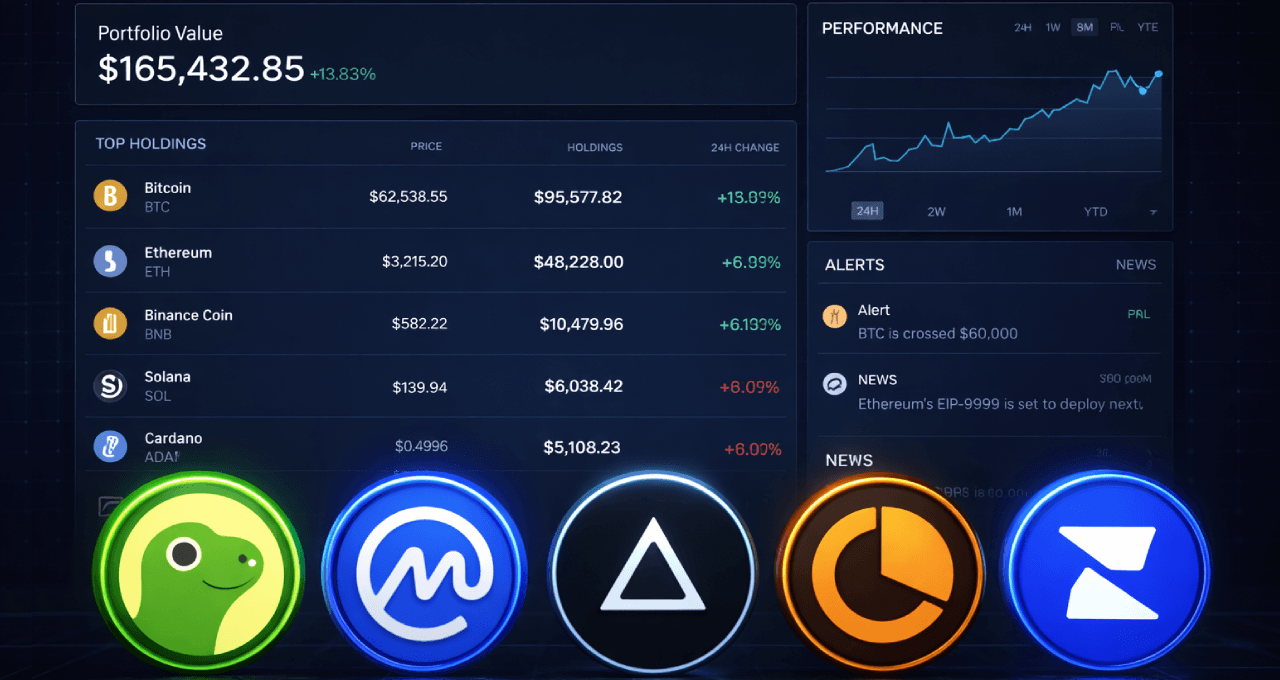
Once you start buying crypto, it quickly spreads across different wallets, exchanges, and blockchains. Suddenly you’re wondering, “How much do I actually own and is it going up or down?”
That’s exactly why a good portfolio tracker is one of the smartest tools you can add to your crypto journey. It shows everything in one clean place, tracks performance, and even sends alerts so you don’t have to check constantly.
You don’t need fancy charts or complicated software when you’re just starting out. You just want something simple and reliable. This guide breaks down five beginner-friendly options so you can pick the one that feels right for you.
What Makes a Good Portfolio Tracker?
Here’s what actually matters most when you’re new:
Feature | Why it matters for beginners |
Easy entry | You’ll actually keep it updated |
Multi-wallet support | Your coins are probably scattered everywhere |
Alert features | You get notified instead of checking 24/7 |
Clear interface | No confusion – you see what you own at a glance |
Reliability | You can trust the numbers every single day |
1. CoinGecko Portfolio
CoinGecko gives you one of the simplest free portfolio tools around. It’s perfect if you just want to quickly add your coins and see everything in one clean view.
Best for
Beginners who like quick manual tracking
People who already use CoinGecko to check prices
Rating (0–5): 4.6/5
Pros
Completely free for basic use
Super clean and easy to understand
Works great alongside their market data
Cons
Mostly manual entry (no automatic sync for every wallet)
Not built for heavy advanced analysis
2. CoinMarketCap Portfolio
CoinMarketCap’s portfolio feature sits right inside the site most beginners already visit for prices. It feels familiar and shows a wide range of assets.
Best for
Traders who live in the CoinMarketCap ecosystem
Anyone who wants a mainstream, no-fuss setup
Rating (0–5): 4.5/5
Pros
Very familiar and easy to start using
Great market data coverage
Free to use for basic tracking
Cons
Can feel a bit busier on the screen than super-simple tools
Less focus on mobile-first experience
3. Delta
Delta is known for its polished, good-looking app that makes tracking your portfolio actually enjoyable on your phone.
Best for
Mobile users who want a nice design
Beginners who value a smooth experience
Rating (0–5): 4.4/5
Pros
Beautiful and easy-to-use mobile app
Strong overall user experience
Good for tracking many different assets
Cons
Some advanced features are behind a paid upgrade
Slightly steeper learning curve than the simplest options
4. CoinStats
CoinStats steps up when your portfolio starts growing across multiple platforms. It connects wallets and exchanges so you get a fuller picture.
Best for
Traders whose holdings are getting more complex
People who want more automatic tracking
Rating (0–5): 4.4/5
Pros
Strong multi-platform and wallet support
Helpful for growing portfolios
More integration options than basic tools
Cons
Can feel a little overwhelming if you only have a small portfolio
More features than total beginners usually need right away
5. Zerion
Zerion shines if you hold assets directly in wallets, especially on Ethereum and other DeFi chains. It shows your on-chain positions clearly.
Best for
DeFi users and wallet-heavy traders
Anyone who wants to see real on-chain activity
Rating (0–5): 4.3/5
Pros
Excellent for tracking DeFi and wallet positions
Gives a true on-chain view of your holdings
Great visibility into complex positions
Cons
Best only if you’re active in DeFi and wallets
Less useful if your crypto is mostly on centralized exchanges
Comparison Table
Tool | Best for | Ease of Use | Portfolio Depth | Beginner Rating (0–5) |
CoinGecko | Simple tracking | Very High | Basic to moderate | 4.6 |
CoinMarketCap | Mainstream market users | Very High | Basic to moderate | 4.5 |
Delta | Polished mobile experience | High | Moderate | 4.4 |
CoinStats | Growing multi-platform portfolios | Moderate to High | High | 4.4 |
Zerion | On-chain & DeFi users | Moderate | High for DeFi | 4.3 |
Which One Is Best for Beginners?
Start with CoinGecko if you want the absolute simplest free tracker.
Choose CoinMarketCap if you already spend time on their site.
Go with Delta if you love a beautiful mobile app.
Pick CoinStats when your portfolio starts getting bigger.
Try Zerion if you’re mostly using wallets and DeFi.
Final Thoughts
A portfolio tracker’s real job is to remove confusion – not add it. The best one for you is the one you’ll actually open every week without getting frustrated.
Start simple. Pick one tool, add your holdings, and watch how much clearer your crypto journey feels. You don’t need the most powerful tracker when you’re just getting started – you need the one that keeps you consistent and confident.
FAQ
What is a crypto portfolio tracker?
It’s a simple tool that shows you everything you own, how it’s performing, and sends alerts when prices move.
Which tracker is easiest for total beginners?
CoinGecko and CoinMarketCap are usually the friendliest places to start.
Do I need to pay for a portfolio tool?
Not at the beginning. The free versions of these tools are more than enough when you’re learning.
Are these trackers only for active traders?
No! They help anyone who holds crypto across different places and just wants to stay organized.
Is Zerion good for DeFi?
Yes – it’s one of the strongest options if you hold assets directly in wallets and use DeFi platforms.
Disclaimer: This content is for educational and informational purposes only and is not financial advice. Nothing here is a recommendation to buy or sell any asset or use any platform. Do your own research and manage your risk.
Read More
Top 5 Cryptocurrency Payment Gateways for Beginners
How Traders Are Using Top Categories to Spot Market Narratives
Need deeper training?
Join our structured modules with live examples and expert checklists for effective implementation.
JOIN THE ACADEMY