Key Takeaways
- Pending means your transaction is still sitting in a waiting queue and can still confirm. Dropped means the network forgot it, and it will never confirm unless someone broadcasts it again.
- A dropped transaction never moved any funds. No coins left the sending address and no fee was charged, even if your wallet still displays the amount as spent.
- You only need three things to check: the transaction ID, the correct block explorer for that chain, and a second independent source to confirm what the first one told you.
The Short Answer
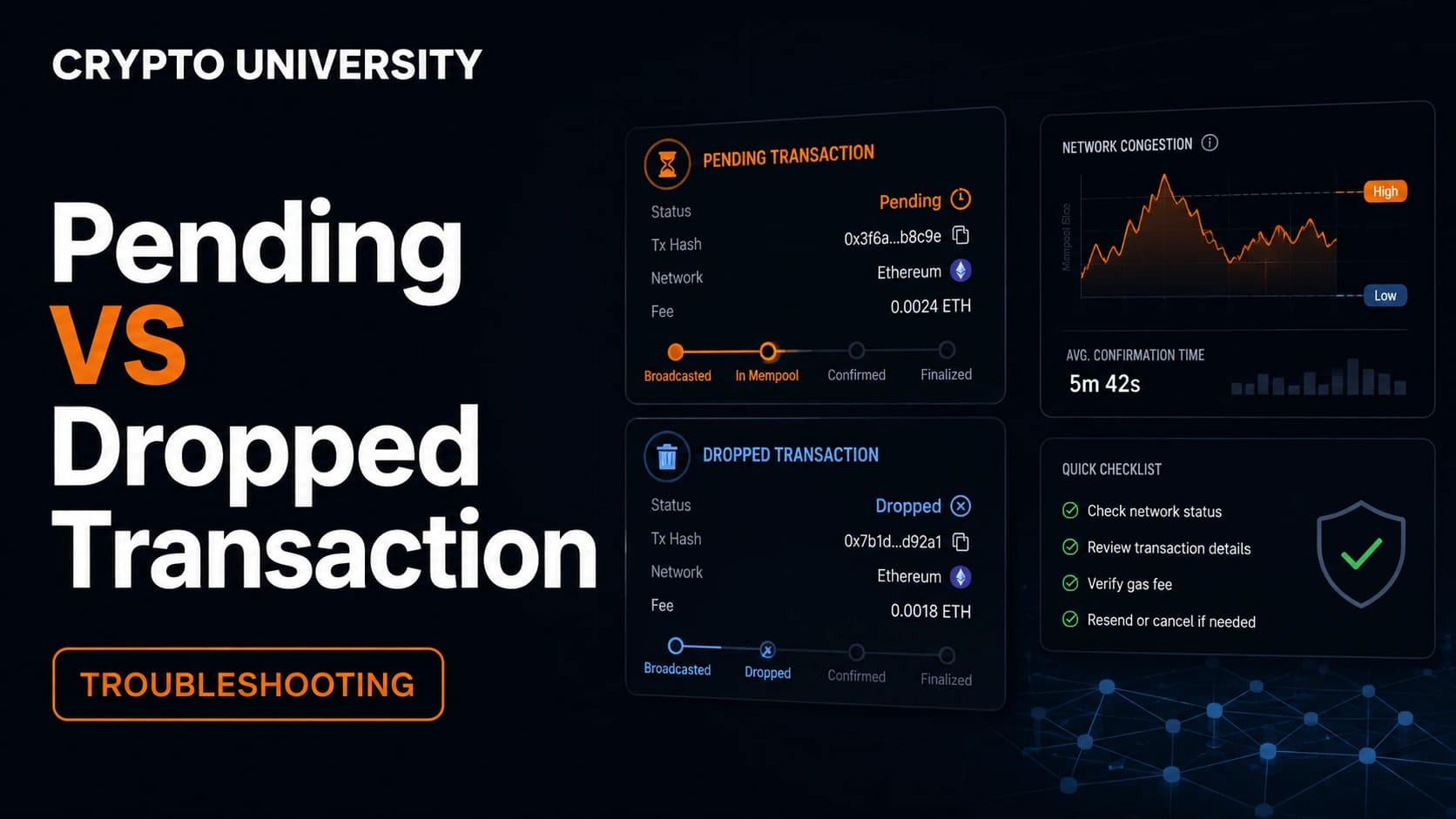
A pending transaction appears on a block explorer as Pending or Unconfirmed. A dropped one either shows a Dropped status or disappears entirely, returning "transaction not found."
Both look identical inside a wallet app, because most wallets keep spinning long after the network has moved on. Checking the chain directly is the only reliable method.
What Pending Actually Means
When you send a transaction, your wallet signs it and broadcasts it to nearby nodes. Those nodes check that it is valid, hold it in a temporary waiting area called the mempool (short for memory pool), and pass it on to their peers.
At this stage the transaction exists only in memory. Block producers pick transactions out of the mempool and package them into blocks, preferring those that pay more for the space they use. Until one selects your transaction, it stays pending.
Two points follow:
- Every node keeps its own mempool. There is no single global waiting room, which is why explorers can disagree about the same transaction.
- A mempool is temporary storage. Nodes can forget a transaction at any time, and regularly do.
What Dropped Means
Dropped means nodes removed the transaction from their mempools without it ever reaching a block. From the network's point of view, you never sent anything.
This has one useful consequence: your money is safe. Because the transaction was never recorded, the sending address keeps its full balance and pays no fee.
The confusion happens on your screen. Many wallets calculate your available balance by subtracting anything they believe is in flight, so a wallet can show a reduced balance for a transaction the network already erased. Resyncing the wallet, or checking the address balance on an explorer, clears this up.
Statuses That Look Similar but Are Not the Same
Beginners often mix these up. The table below is worth bookmarking.
| Status | What happened | On chain? | Funds moved? | Fee charged? |
|---|---|---|---|---|
| Pending | Waiting in the mempool | Not yet | Not yet | Not yet |
| Confirmed / Success | Included in a block and executed | Yes | Yes | Yes |
| Failed / Reverted | Included in a block, execution reverted | Yes | No | Yes |
| Dropped | Removed from mempools before inclusion | No | No | No |
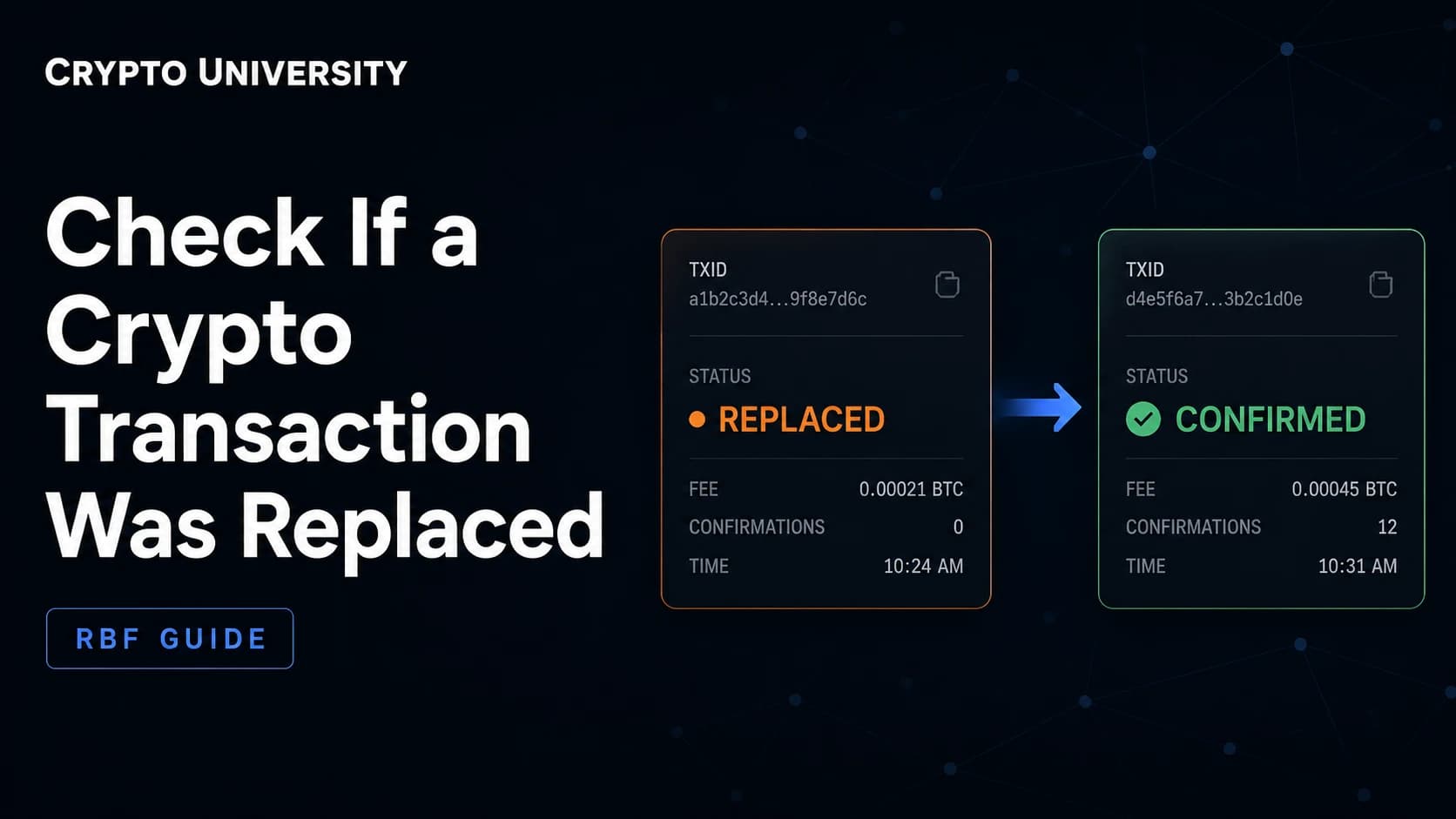
| Dropped and replaced | Superseded by a newer transaction from the same sender | Replacement only | Replacement only | Replacement only |
| Not broadcast | Signed by the wallet but never sent | No | No | No |
The Failed row surprises people most. A failed transaction is the opposite of a dropped one: it reached a block, so the fee is gone, but the intended action did not happen.
How to Check, Step by Step
Step 1. Find the transaction ID. This long string of letters and numbers is also called the transaction hash or txid, and wallets show it in the transaction detail view. If there is no ID at all, the transaction was probably never broadcast.
Step 2. Open the right explorer for the right network. A Bitcoin txid will not resolve on an Ethereum explorer, and a transaction sent on Arbitrum will not appear on Ethereum mainnet.
Step 3. Read the status field. A block height or confirmation count means it has settled. Pending means it is still queued. Dropped means it is gone.
Step 4. Check a second source. Mempools differ between nodes, so one explorer may still hold a transaction another has discarded. If explorer A says pending and explorer B says not found, treat it as dropped.
Step 5. Look at the sending address, not just the transaction. Most people skip this check and it is the most conclusive one. If the address balance is untouched and no matching outgoing transfer appears, nothing left the wallet.
Chain by Chain Differences
| Network | Typical wait | Maximum pending time | Main reason it gets dropped |
|---|---|---|---|
| Bitcoin | About 10 minutes | Up to 14 days on default settings | Low fee, or mempool eviction |
| Ethereum and EVM | Seconds to minutes | Hours, sometimes longer | Low fee, nonce gap, node restarts |
| Solana | A second or two | One to two minutes | Blockhash expiry after 150 slots |
| Layer 2 rollups | Under a minute | Rarely long | Sequencer outage or odd fee setting |
Bitcoin. Default node software caps the mempool at 300 MB of memory and discards unconfirmed transactions after 336 hours, which is 14 days. When the mempool fills, the lowest paying transactions are evicted first. Since Bitcoin Core version 29, released in April 2025, any unconfirmed transaction can be replaced by a higher paying version.
Ethereum and EVM chains. Explorers such as Etherscan use three relevant statuses: Pending, Dropped, and Dropped and Replaced. The third appears when a newer transaction from the same address reuses the same nonce, the sequential counter attached to every transaction from an account. Only one transaction per nonce can confirm, so the newer one takes the slot. Node defaults matter too: common settings hold a few thousand executable transactions and discard queued ones after about three hours.
Solana. There is no long lived mempool. Every transaction references a recent blockhash valid for about 150 slots, roughly one to two minutes, and expires for good if it is not processed inside that window.
Why Transactions Get Dropped
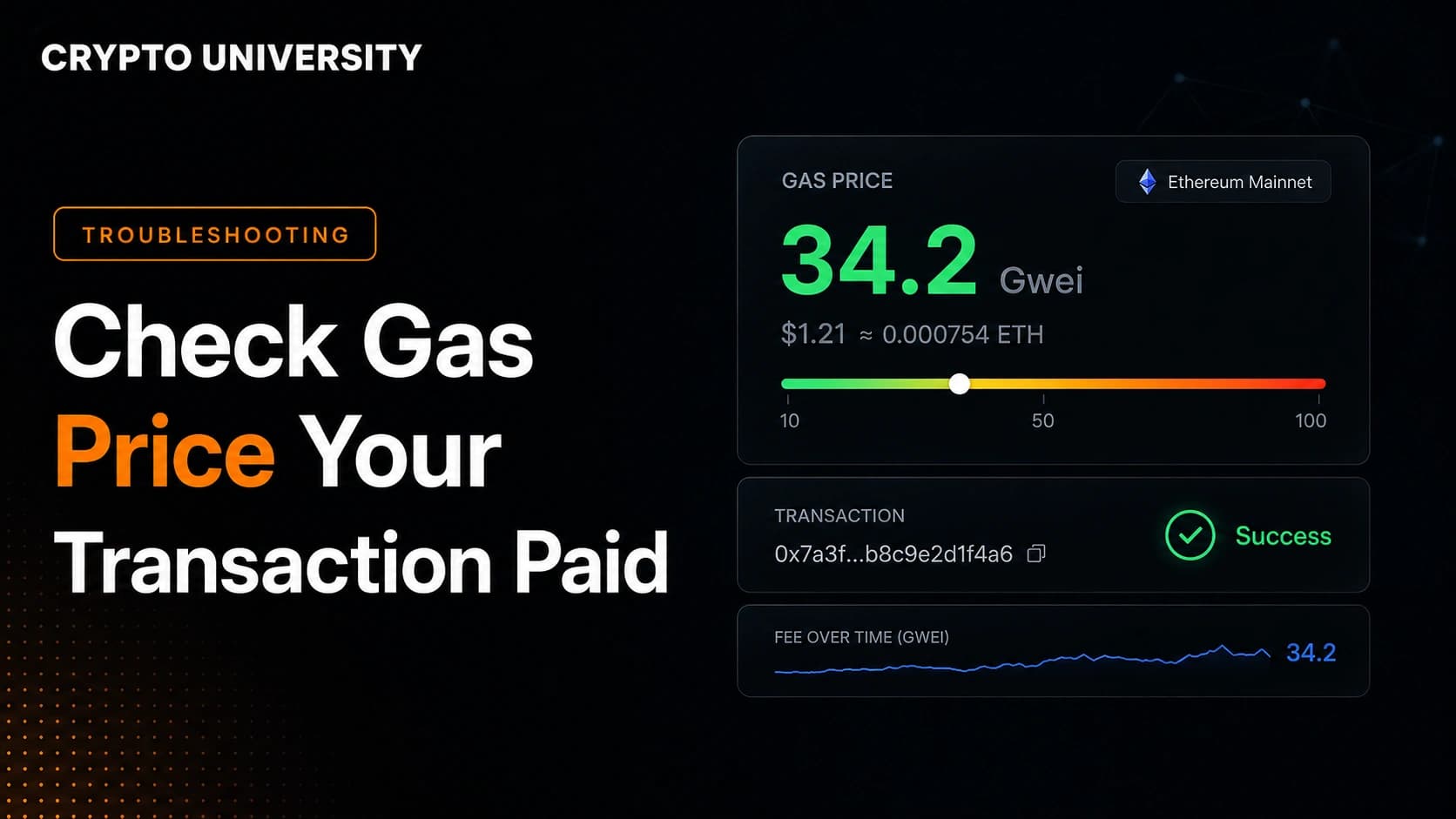
- The fee was too low for current demand, so block producers ignored it until nodes cleaned it out.
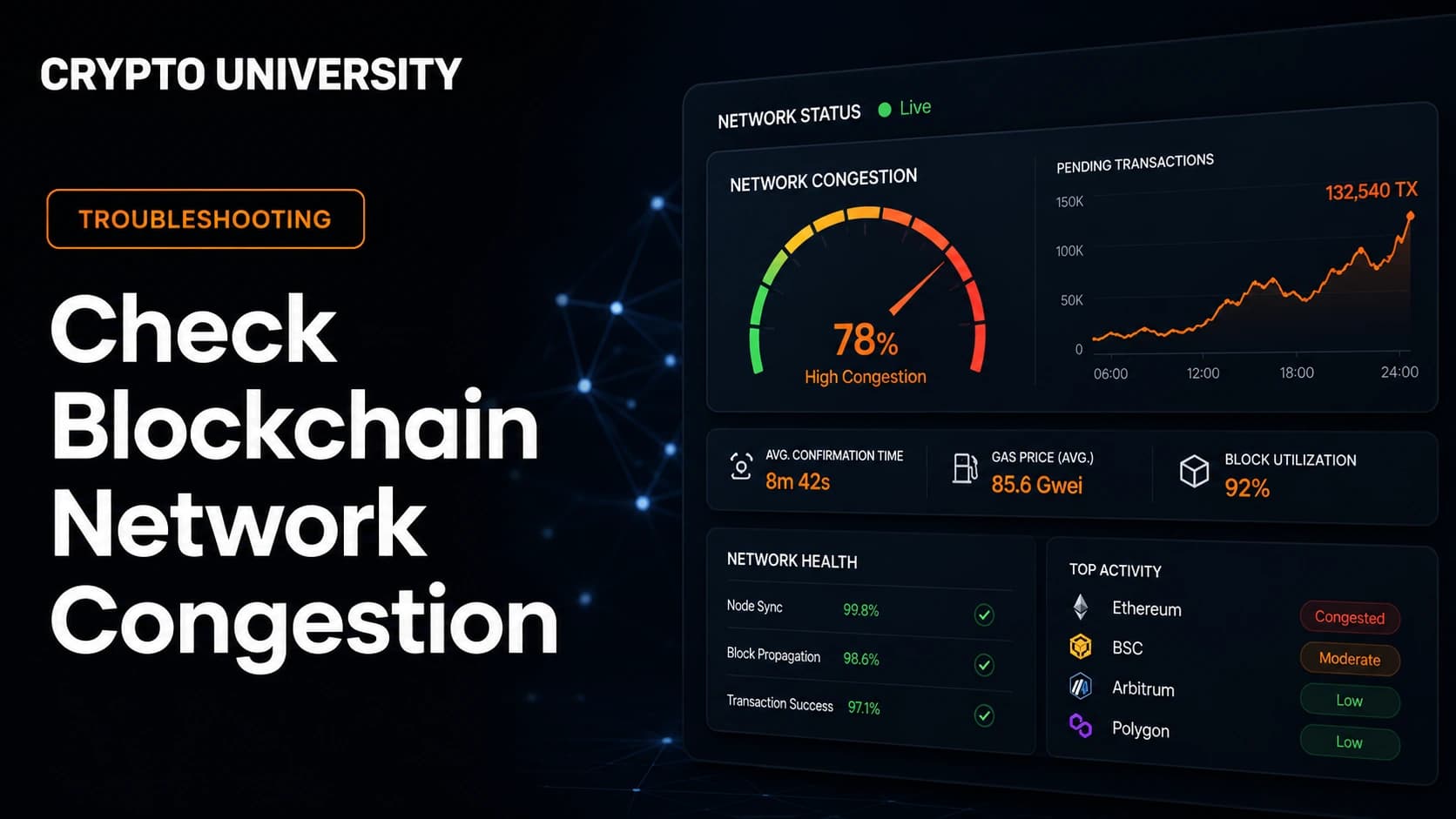
- The mempool filled up during a congestion spike and low paying transactions were evicted.
- A nonce gap. If you send nonce 12 while nonce 11 is missing, transaction 12 cannot execute and waits until it is discarded.
- You replaced it yourself with a speed up or cancel button, which reuses the same nonce.
- The transaction expired, the normal Solana case.
- It was never broadcast, for example because the wallet lost connection while sending.
What to Do Next
If the transaction is pending, you have three reasonable choices: wait, since fee markets cool down and transactions often confirm on their own; rebroadcast the signed transaction, which some wallets and explorers support; or bump the fee with your wallet's speed up feature.
If it is dropped, the funds are still yours and you can send again. Check the current fee level first, and resync the wallet so it is not working from a stale balance.
If an exchange is involved, contact its support with the transaction ID. Withdrawals often sit in an internal queue before being broadcast, and no transaction ID exists during that stage, which explains many missing withdrawal reports.
Mistakes to Avoid
- Do not assume a transaction is dropped because your wallet is still spinning. Verify on chain first.
- Do not send a plain second payment while the original is visible on any explorer. If the first confirms afterwards, you have paid twice. Use a proper replacement instead.
- Do not post your transaction ID publicly and reply to whoever messages you. Fake support accounts monitor those posts and will ask for your seed phrase. No legitimate service needs it.
- Do not set the fee below the network minimum. Very cheap transactions are the ones that get evicted.
Frequently Asked Questions
Do I lose money if my transaction gets dropped? No. A dropped transaction never entered a block, so no coins moved and no fee was taken. The funds remain at the sending address. Only a confirmed transaction, or one that failed after being included in a block, actually costs you anything.
How long should I wait before treating a transaction as dropped? It depends on the chain. On Solana, anything unconfirmed after a couple of minutes has expired. On Ethereum, a few hours of no movement usually means the fee is far below market. On Bitcoin, transactions can legitimately stay pending for days during heavy congestion, and default node settings hold them for up to 14 days.
What is the difference between a dropped transaction and a failed one? A dropped transaction was never recorded on the blockchain and cost nothing. A failed transaction was recorded, so the fee was consumed, but the action inside it was reverted. Failed transactions still appear permanently in your address history.
Why does one explorer show my transaction while another says it does not exist? Each node keeps its own copy of the mempool with its own memory limits and retention settings. Some explorers run nodes configured to hold far more unconfirmed transactions than average. Disagreement between explorers is normal and usually means the transaction is being dropped by most of the network.
Can I cancel a pending transaction? Sometimes. On account based chains such as Ethereum, you can send a replacement transaction to yourself using the same nonce and a higher fee, which is what a wallet's cancel button does. On Bitcoin, a fee bump replaces the original with a new version. Neither method is guaranteed, because the original can confirm first.
Related Terms
- Mempool. The temporary holding area where each node keeps valid but unconfirmed transactions.
- Nonce. A sequential counter attached to every transaction from an account based address, ensuring order and preventing replays.
- Replace by fee (RBF). Replacing an unconfirmed transaction with a version that pays a higher fee.
- Confirmation. The inclusion of a transaction in a block, plus each additional block built on top of it.
- Blockhash expiry. The Solana rule that makes a transaction invalid once the blockhash it references is roughly 150 slots old.
Sources
- Bitcoin Core, mempool policy and configuration documentation, including the 300 MB
maxmempooldefault and the 336 hourmempoolexpirydefault: https://bitcoincore.org - Bitcoin Core release notes for versions 28.0 and 29.0 covering full replace by fee: https://bitcoincore.org/en/releases/28.0/
- Etherscan Information Center, "Transaction Dropped and Replaced": https://info.etherscan.com/transaction-dropped-replaced/
- Go Ethereum command line options, transaction pool defaults: https://geth.ethereum.org/docs/fundamentals/command-line-options
- Solana documentation, "Transaction Confirmation and Expiration" and "Retrying Transactions": https://solana.com/docs/advanced/confirmation
Further Reading
- Learn Me A Bitcoin, "Memory Pool" explainer: https://learnmeabitcoin.com/technical/mining/memory-pool/
- Alchemy Docs, "Ethereum Transactions: Pending, Mined, Dropped and Replaced": https://www.alchemy.com/docs/ethereum-transactions-pending-mined-dropped-replaced
- Solana Developers, "Retrying Transactions" guide: https://solana.com/developers/guides/advanced/retry
Disclaimer: This article is educational content. It is not financial, investment, tax, or legal advice. Network behaviour, fees, and explorer interfaces change over time, so verify current details against official documentation before relying on them.
Not sure which problem you have?
Use the Fixing Crypto Mistakes hub to identify the transaction, wallet, network, or exchange issue before taking another action.
OPEN TROUBLESHOOTING HUB