Key Takeaways
- Congestion is a demand problem, not a broken network. It happens when more transactions want block space than a block can hold, so fees rise and waiting times get longer.
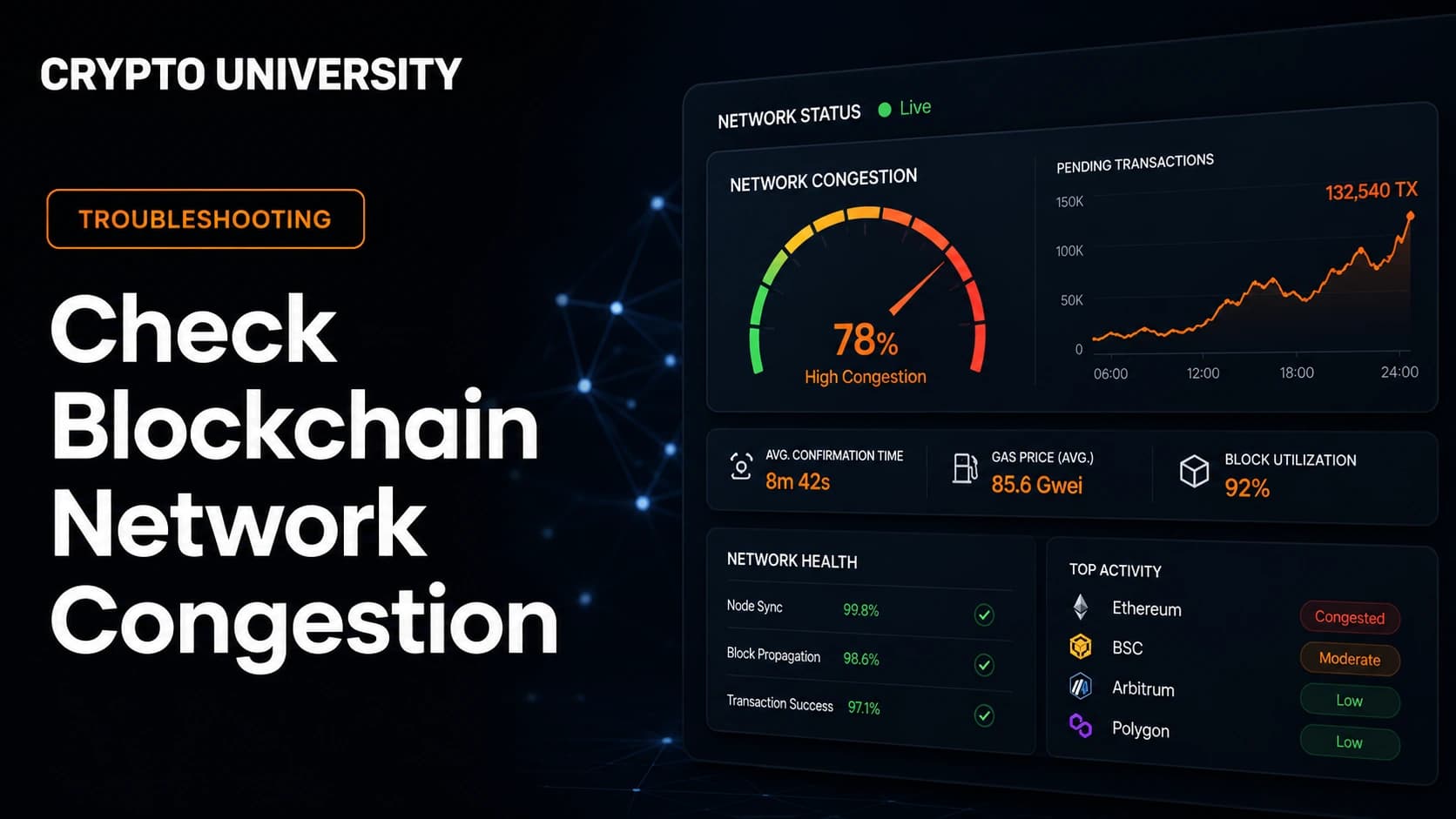
- Three numbers answer the question on almost any chain: how large the pending queue is, what the current fee rate is, and how full recent blocks are.
- Every chain uses different units and different tools. Bitcoin is measured in sat/vB and mempool size, Ethereum in gwei and gas used per block, and Solana in compute units and priority fees.
What Blockchain Congestion Actually Means
Every blockchain limits how much work fits into one block. That limit is a design choice, not a flaw, and it keeps blocks small enough for ordinary computers to verify and store.
| Network | Block interval | Block space ceiling |
|---|---|---|
| Bitcoin | About 10 minutes on average | About 4 million weight units, close to 4 MB of witness-discounted data |
| Ethereum | 12 seconds per slot | About 60 million gas, with a target of about 30 million |
| Solana | About 400 milliseconds per slot | 100 million compute units per block since the SIMD-0286 upgrade on 29 July 2026 |
When more transactions want space than a block can hold, they start waiting and users bid higher fees to move up the queue. That is congestion. The network is still working as designed. It has simply become slower and more expensive to use.
Congestion is often confused with an outage, where blocks stop being produced, and with a local problem, where your wallet or node connection is failing while the network itself is fine. The checks below separate them.
The Five Signals That Matter
You do not need advanced analytics. Five signals cover almost every situation.
| Signal | What it tells you | Where to look |
|---|---|---|
| Pending queue size | How many transactions are waiting and how much data they represent | Mempool view on a block explorer |
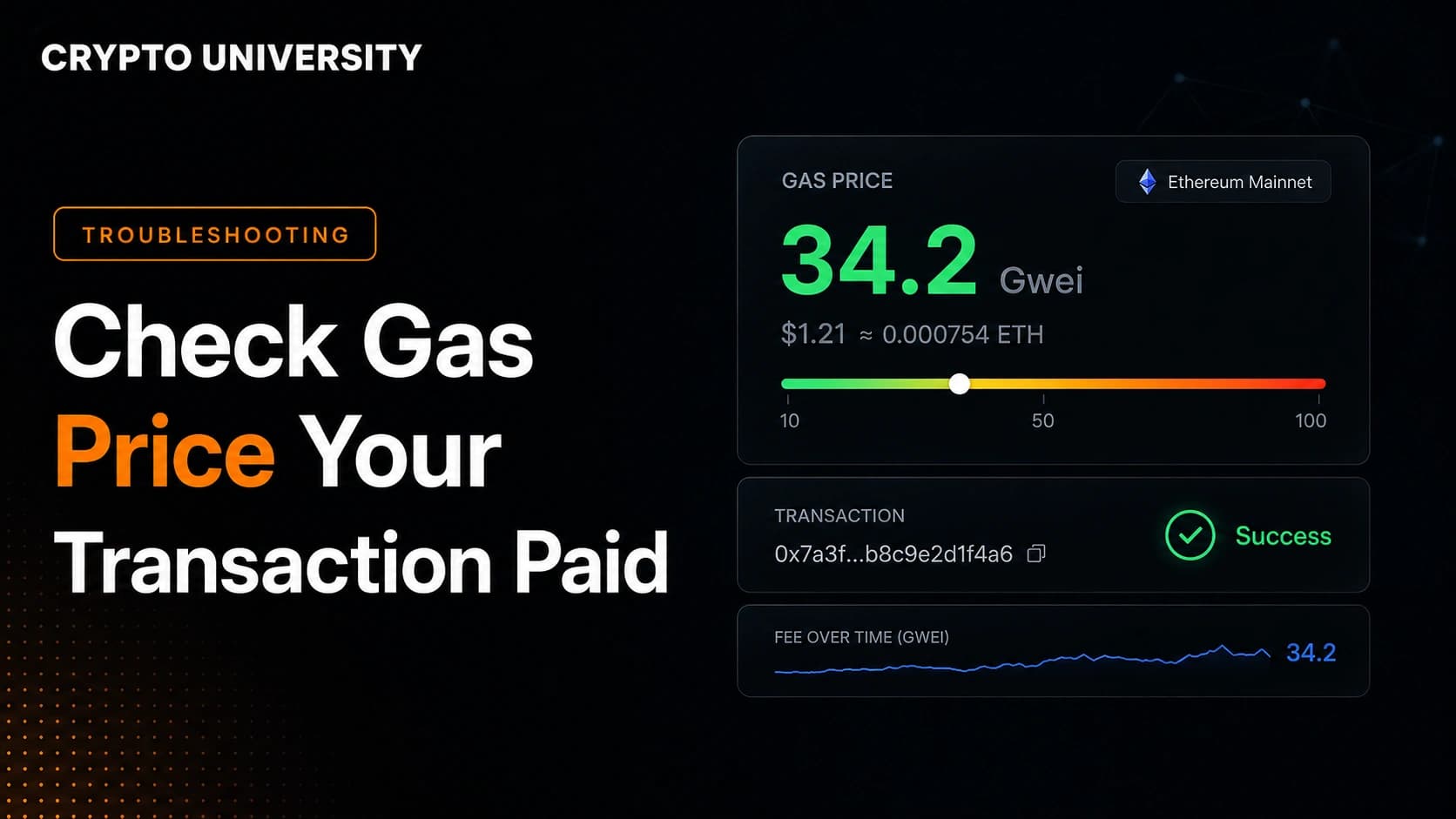
| Current fee rate | What the market is paying right now for fast inclusion | Fee estimator or gas tracker |
| Block fullness | Whether recent blocks are hitting their limit | Recent blocks list on an explorer |
| Confirmation time | How long a normal transaction is actually taking | Explorer estimates, your own pending transaction |
| Network status | Whether this is congestion or an incident | Official status pages |
Read the trend, not a single number. A queue growing faster than blocks can clear it means congestion is worsening. A shrinking queue means the backlog is draining, and fees usually fall with it.
The Two Minute Check
- Open the chain's main explorer, on the mempool or gas tracker page.
- Read the recommended fee and compare it to the last seven days on the fee chart.
- Check the last ten blocks. If they are all near the block limit, demand is above capacity.
- If fees look normal but nothing confirms, open the status page. That points to an incident or to a problem on your side.
Bitcoin: Read the Mempool
Bitcoin gives the clearest picture of any major chain, because pending transactions sit in a visible queue called the mempool. The most widely used dashboard is mempool.space, where three fields matter:
- Mempool size in virtual megabytes, the weight of everything waiting. More meaningful than the raw count.
- Transaction count, how many separate payments are queued.
- Recommended fee tiers in satoshis per virtual byte (sat/vB), split into next block, a few blocks, and low priority.
For scale, two widely reported quiet-period readings in 2026: about 179 MB across roughly 49,300 pending transactions on 8 May, and about 241 MB with fee tiers of 1 to 6 sat/vB on 19 August. During heavy inscription minting, the same screen has shown far larger backlogs and tiers in the hundreds of sat/vB. Treat these as snapshots, not thresholds.
Two protocol details help you read the screen. Bitcoin Core nodes keep a default 300 MB mempool, and when it fills, the lowest fee packages are evicted and the minimum fee to enter rises. Since v29.1 in September 2025, that minimum relay fee defaults to 0.1 sat/vB rather than 1 sat/vB. There is also no single global mempool, so two explorers can show slightly different figures. Node operators can check locally with getmempoolinfo.
Ethereum: Read the Base Fee and Block Fullness
Ethereum has no queue you can watch in the same way, because much of the pending flow is routed privately. You read price and capacity instead. On a gas tracker such as the one on Etherscan, check two things:
- The base fee in gwei. The protocol sets it, not bidders. It rises when the previous block was above target, falls when it was below, and moves at most 12.5 percent per block.
- Gas used per block, shown as a percentage on the recent blocks list. Consistently above 50 percent means the base fee is climbing.
Because those steps are capped, sustained congestion looks like a staircase rather than a spike. Context matters too. Ethereum's gas limit rose from 30 million to about 60 million during 2025, and utilisation through 2026 has often sat below the 50 percent target, which is why base fees have frequently been reported in fractions of a gwei. Several gwei is already a busy day.
Rollup data uses a separate blob fee market, expanded in January 2026 to a target of 14 blobs per block and a maximum of 21. Because that market is independent, Layer 2 costs can spike while mainnet gas stays cheap, and the reverse is also possible.
Solana: Read Priority Fees and Landing Rates
Solana has no public waiting room. Transactions go straight to the current block producer, so the question becomes whether yours are landing rather than how long the queue is.
getRecentPrioritizationFeesreturns what recent blocks actually paid, sampled across the last 150 blocks. Fee trackers wrap the same data in percentile bands.getRecentPerformanceSamplesshows transactions processed and slots produced, which reveals a drop in throughput.- Block compute usage. Blocks cap at 100 million compute units. Before that ceiling was raised in July 2026, the Solana Foundation reported 11.2 percent of blocks using 56 million compute units or more.
Solana fee markets are also local. Contention attaches to the writable accounts a transaction touches, and any single account is capped at 12 million compute units per block. The network can therefore look quiet while one busy trading pool is fully contended. If transactions keep failing on one application while everything else works, that is local contention, not network-wide congestion.
Layer 2s and Other Networks
On rollups such as Arbitrum, Base or Optimism, slow transactions usually mean one of three things: the sequencer is backed up, the sequencer is paused for an incident, or the cost of posting data to Ethereum has risen. Check the chain's explorer for fees, then its status page for sequencer health.
| Network type | Unit of block space | Primary check | Congestion looks like |
|---|---|---|---|
| Bitcoin | Virtual bytes | mempool.space | Mempool size rising, fee tiers separating |
| Ethereum | Gas | Etherscan gas tracker | Base fee climbing block after block, blocks above 50 percent |
| Solana | Compute units | RPC fee and performance methods | Priority fees jumping, transactions failing to land |
| Rollups | Sequencer capacity plus blob costs | Chain explorer plus status page | Rising L2 fees or a stalled sequencer |
Congestion, Outage, or Your Own Setup?
| What you see | Most likely cause |
|---|---|
| High fees, full blocks, blocks still arriving on time | Congestion |
| No new blocks at all on the explorer | Network incident |
| Normal fees, but your transaction never appeared | Wallet or RPC problem |
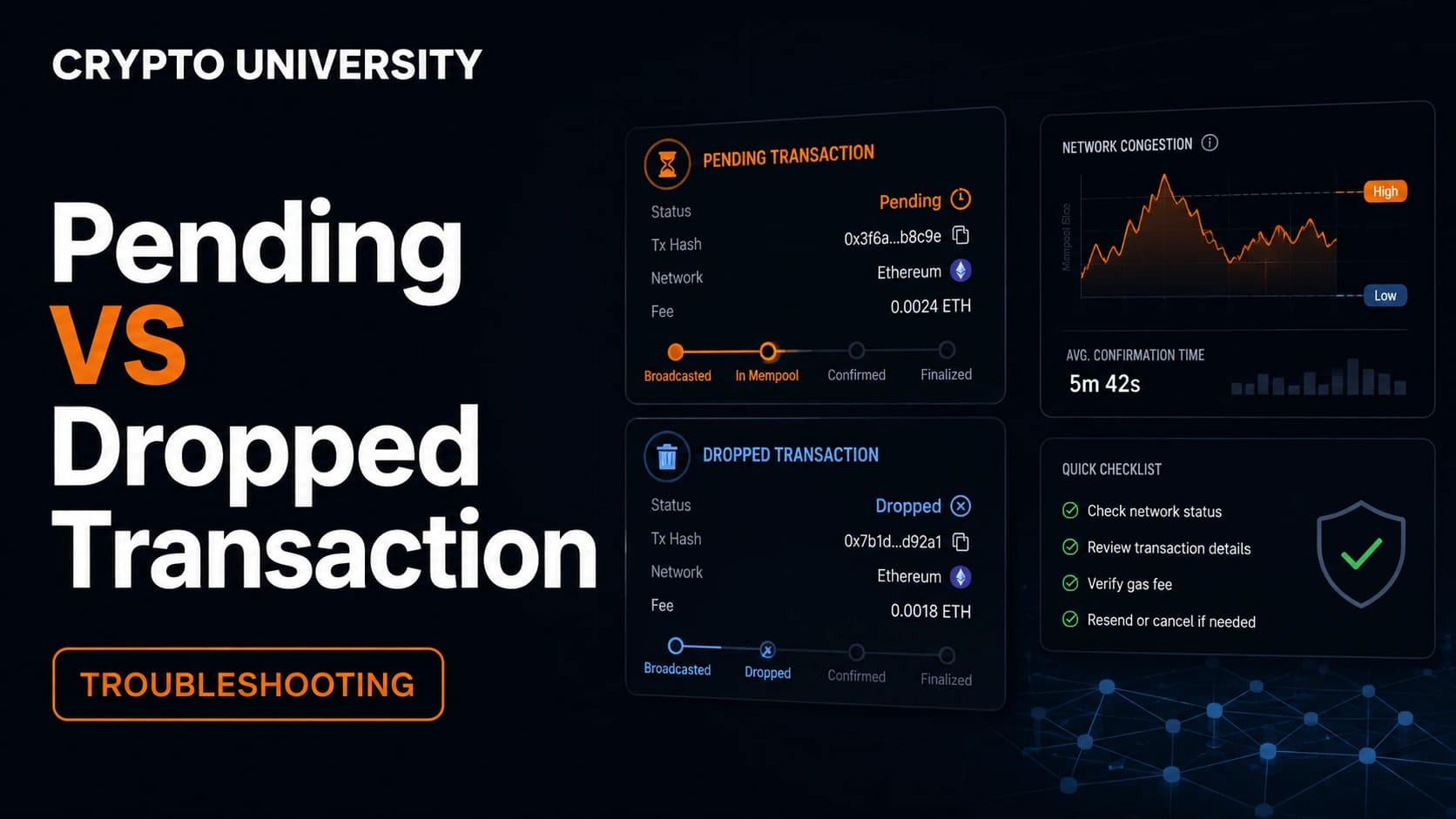
| Transaction visible but unconfirmed at a low fee | Fee below the current market |
| One application fails while others work | Contract or account contention |
An exchange pausing withdrawals is a separate signal. It sometimes reflects congestion and sometimes internal maintenance.
Practical Options When a Network Is Busy
- Wait. Backlogs commonly drain during weekends and off-peak hours in US and European time zones.
- Set the fee manually instead of accepting a wallet default, using current tier data as your guide.
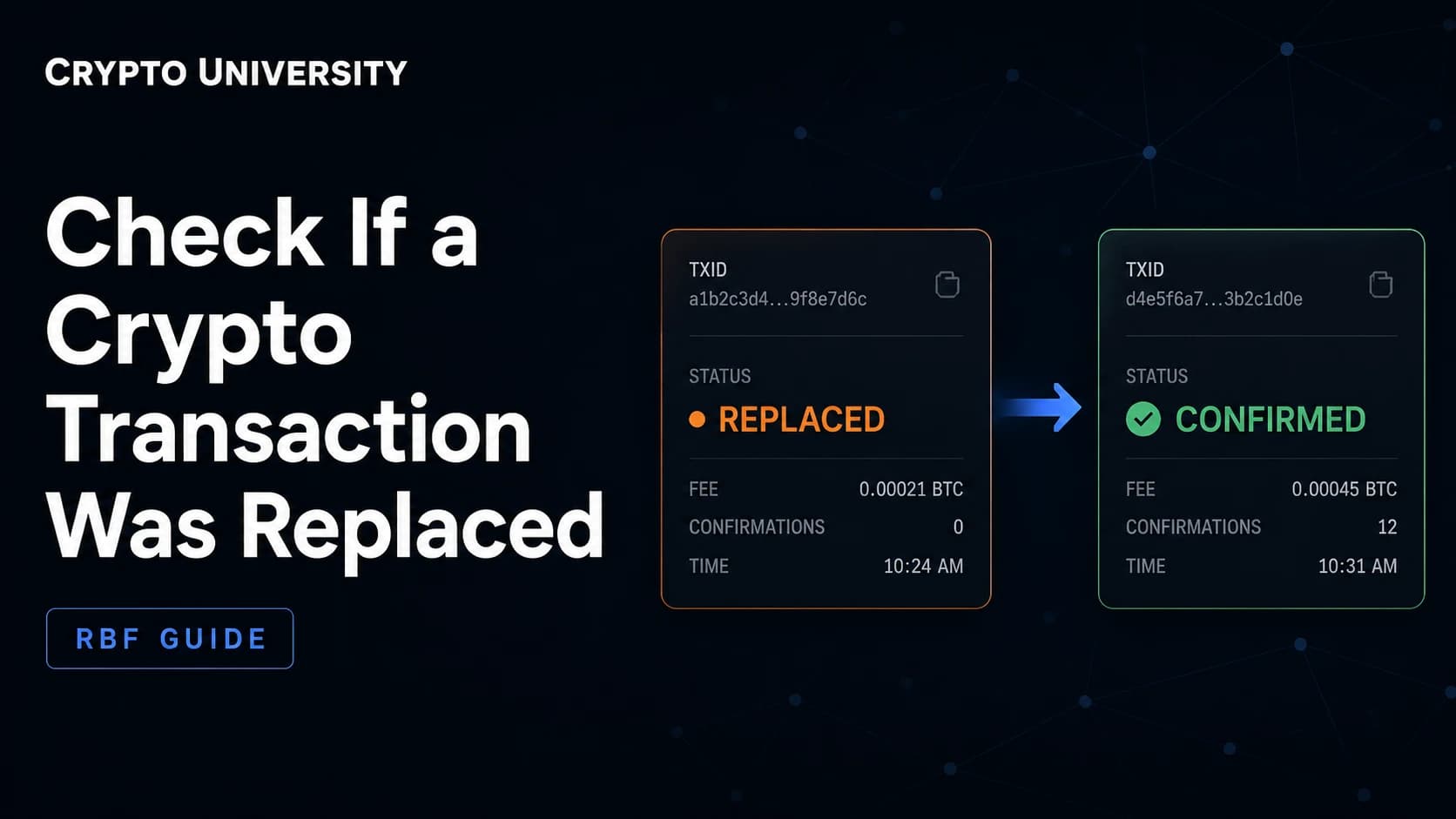
- On Bitcoin, use Replace-by-Fee to raise a stuck transaction's fee, or Child-Pays-For-Parent if you are the recipient.
- On Solana, simulate first so the compute unit limit is accurate, then set a competitive compute unit price. Paying for an inflated limit wastes money.
- Avoid deadline-sensitive on-chain actions during peak congestion, because inclusion is never guaranteed.
Mistakes to Avoid
- Judging fees in fiat alone. A dollar figure can rise because the asset price rose, not because the network got busier. Compare the native unit.
- Treating one explorer as global truth. Mempool figures are node specific, and a pending count is not the same as backlog weight.
- Bidding hard at the peak. Fee spikes tend to be short, and the queue often looks different an hour later.
FAQ
How do I know if a blockchain is congested right now? Open the chain's main block explorer, look at the recommended fee and the pending queue, then check whether recent blocks are close to their capacity limit. Rising fees plus full blocks means congestion.
Why is my transaction stuck if the network looks fine? Usually because the fee attached was below the current market rate, or because the transaction never reached the network due to a wallet or RPC issue. Search the transaction ID on an explorer. If it does not appear at all, it was probably never broadcast successfully.
Does congestion mean the blockchain is failing? No. Congestion means demand for block space exceeds supply. The network is still producing blocks and validating transactions normally. An outage is a different event, where blocks stop being produced.
Do all blockchains have a mempool I can look at? No. Bitcoin and Ethereum style networks maintain pools of unconfirmed transactions, although Ethereum's is increasingly private. Solana forwards transactions directly to the block producer, so you monitor fee levels and landing rates instead.
Can Layer 2 fees rise while Ethereum mainnet is cheap? Yes. Rollups post data through a separate blob fee market with its own pricing, and that market can become scarce and expensive independently of mainnet execution gas.
Related Terms
- Mempool: the pool of valid but unconfirmed transactions a node holds before they are included in a block.
- Base fee: the protocol-set portion of an Ethereum transaction fee, adjusted automatically each block and removed from circulation.
- sat/vB: satoshis per virtual byte, the unit used to price Bitcoin transactions relative to their size.
- Compute unit: Solana's measure of the computational work a transaction performs, similar in role to gas.
- Replace-by-Fee (RBF): a Bitcoin feature that lets a sender rebroadcast a pending transaction with a higher fee.
Sources
- Ethereum Foundation, "Gas and fees" developer documentation, ethereum.org
- Ethereum Foundation, "Building on Ethereum in 2026", ethereum.org
- Solana, "100M CU Blocks" upgrade page, solana.com/upgrades/100m-cu-blocks
- Solana Foundation reporting on SIMD-0286 activation, July 2026
- Bitcoin Core documentation and release notes, v29.1 and v31.0
- mempool.space public dashboard readings, May and August 2026
- Etherscan gas tracker and pending transaction charts
- Helius and Chainstack documentation on Solana priority fees and RPC methods
More Reading
- What Is a Mempool and Why Does It Matter? A deeper look at how unconfirmed transactions are stored, relayed and evicted.
- Understanding Ethereum Gas: Base Fee, Priority Fee and Gas Limit. How the EIP-1559 fee market prices block space.
- Layer 2 Networks Explained: Rollups, Sequencers and Data Availability. Why rollup costs are tied to Ethereum but priced separately.
Disclaimer: This article is educational content. It is not financial, investment, tax, or legal advice. Network behaviour, fees, and explorer interfaces change over time, so verify current details against official documentation before relying on them.
Not sure which problem you have?
Use the Fixing Crypto Mistakes hub to identify the transaction, wallet, network, or exchange issue before taking another action.
OPEN TROUBLESHOOTING HUB