Key Takeaways
- A token name and ticker are just text fields. Anyone can deploy a token called "Bitcoin" or "USDC" because blockchains do not enforce unique names.
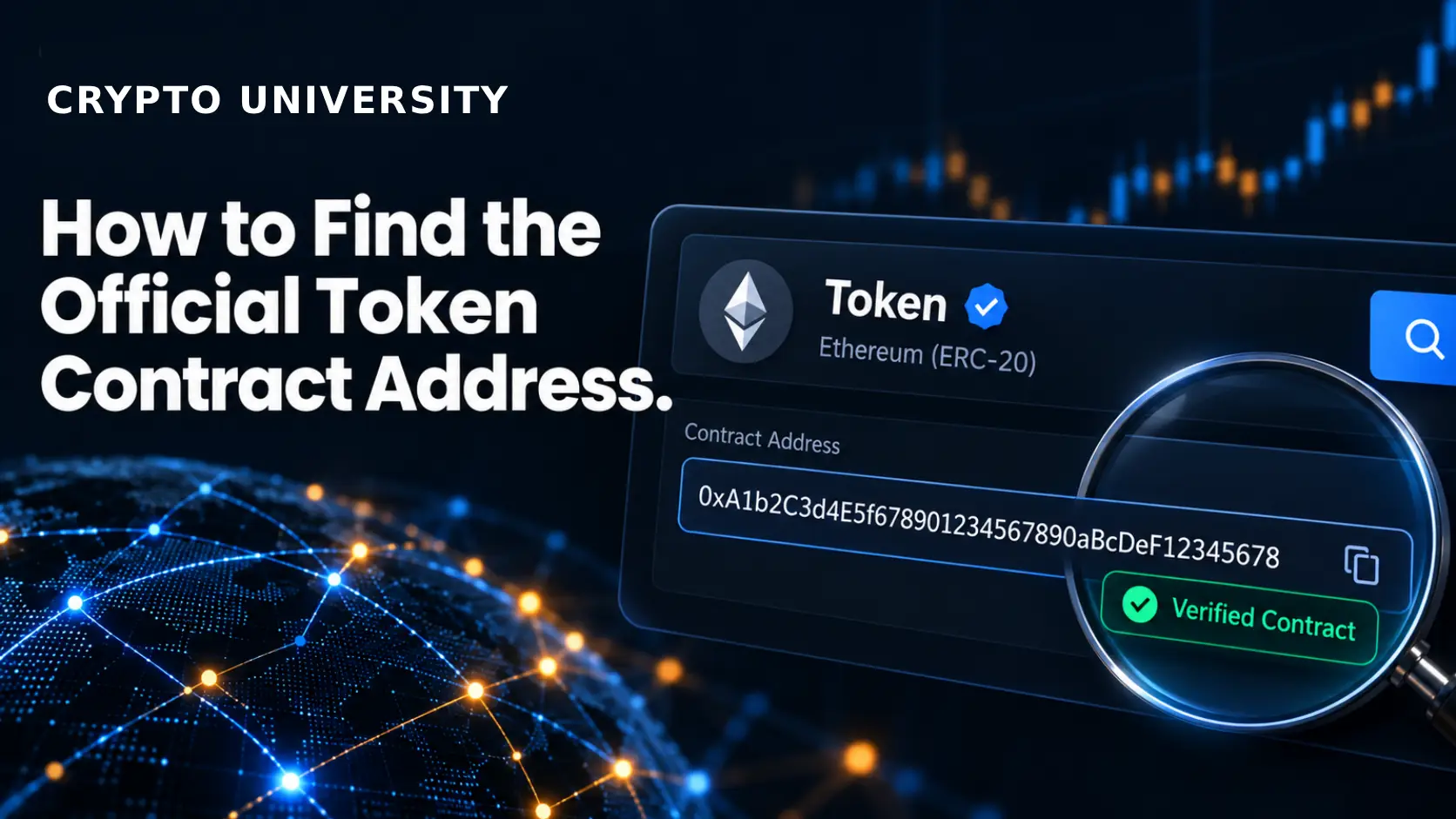
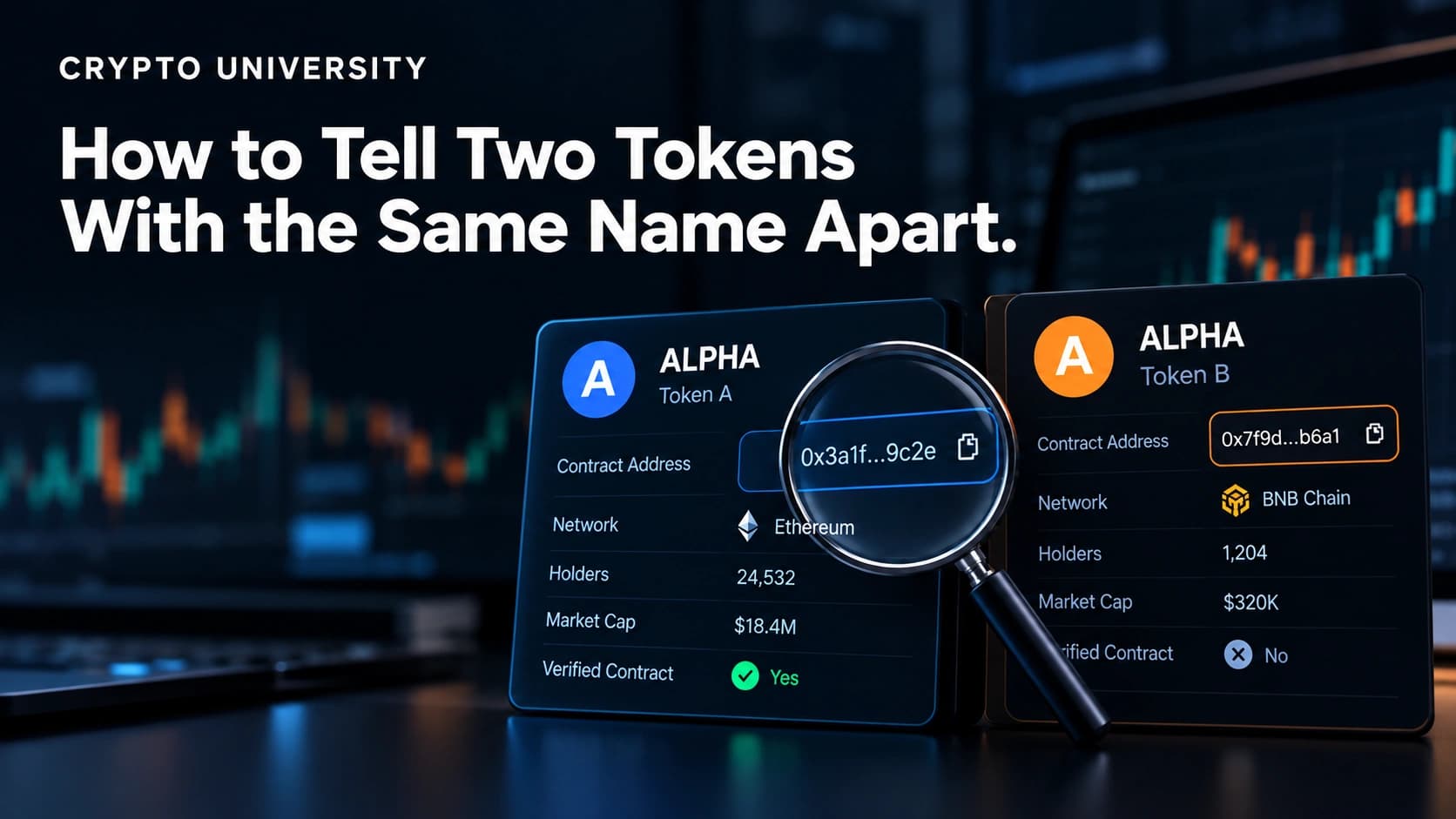
- The contract address is the only identity that cannot be copied. Two tokens can share every visible detail, but never the same address on the same chain.
- Not every duplicate is a scam. Honest projects sometimes collide on the same ticker, and the same project often has different addresses on different chains.
Why Two Tokens Can Share the Same Name
On most blockchains, a token's name and symbol are simply stored as text inside a smart contract. Nobody checks them for uniqueness. When a developer deploys an ERC-20 token on Ethereum or an SPL token on Solana, they choose the name and ticker themselves, and the network accepts whatever they typed. There is no registrar, no ticker committee, and no approval queue.
The Ethereum Foundation states the situation plainly in its guide on scam tokens: impersonators can copy the name and symbol of a real token, but they cannot reuse its contract address.
Traditional markets work differently. On the Nasdaq or the NYSE, an exchange assigns each ticker and prevents duplication, so AAPL points to exactly one company. Crypto has no equivalent authority. Exchanges and data sites each apply their own internal identifiers, which means the same three or four letters can point to different assets depending on where you are looking.
Three Reasons Duplicates Exist
Before assuming fraud, work out which kind of duplicate you are dealing with. Each has a different level of risk.
| Type | What is happening | Typical risk |
|---|---|---|
| Honest ticker collision | Two unrelated but real projects chose the same symbol independently | Low. You may buy the wrong real asset |
| Multi-chain versions | One project issues the same token on several networks, or a bridge issues a wrapped version | Medium. Sending to the wrong chain can cause permanent loss |
| Deliberate impersonation | A copycat contract clones the name, symbol and logo to capture buyers | High. Often worthless or unsellable |
Honest collisions are more common than beginners expect. In 2021, Paxos rebranded its stablecoin and adopted the ticker USDP, which was already in use by a token from the lending protocol Unit Protocol. Neither side was fraudulent. Kraken and Coinbase have both described ticker conflicts as a normal feature of the market, usually resolved by whichever project gains listings and public recognition first.
The Contract Address Is the Real Identity
Every token lives at a unique address on the chain where it was deployed. On Ethereum and other EVM networks this is called the contract address. On Solana it is called the mint address. Some listing forms use the two words interchangeably.
That address is the answer to "which token is this." Everything else on the screen is decoration:
- Name and symbol: free text, editable by the deployer, not unique
- Logo: pulled from metadata or a listing site, easy to copy
- Website and social links: off-chain, easy to clone
- Contract address: unique per chain, cannot be duplicated
This is why exchanges and wallets increasingly display the address next to the ticker. Standards exist to make the pairing explicit. CAIP-19 writes an asset as a chain identifier plus the token address, for example eip155:1/erc20:0xA0b8...eB48 for USDC on Ethereum mainnet. ERC-3770, still a draft, proposes a human-readable prefix such as eth:0x... so the chain travels with the address. You do not need to memorise these formats, but recognising them helps when a developer or support page hands you one.
A Six-Step Check Before You Trade or Receive
Work through these in order. The whole process takes about a minute once you are used to it.
Step 1. Find the address at the source. Go to the project's own website, documentation or GitHub. Do not use an address from a direct message, a comment reply, a video description or a search advertisement.
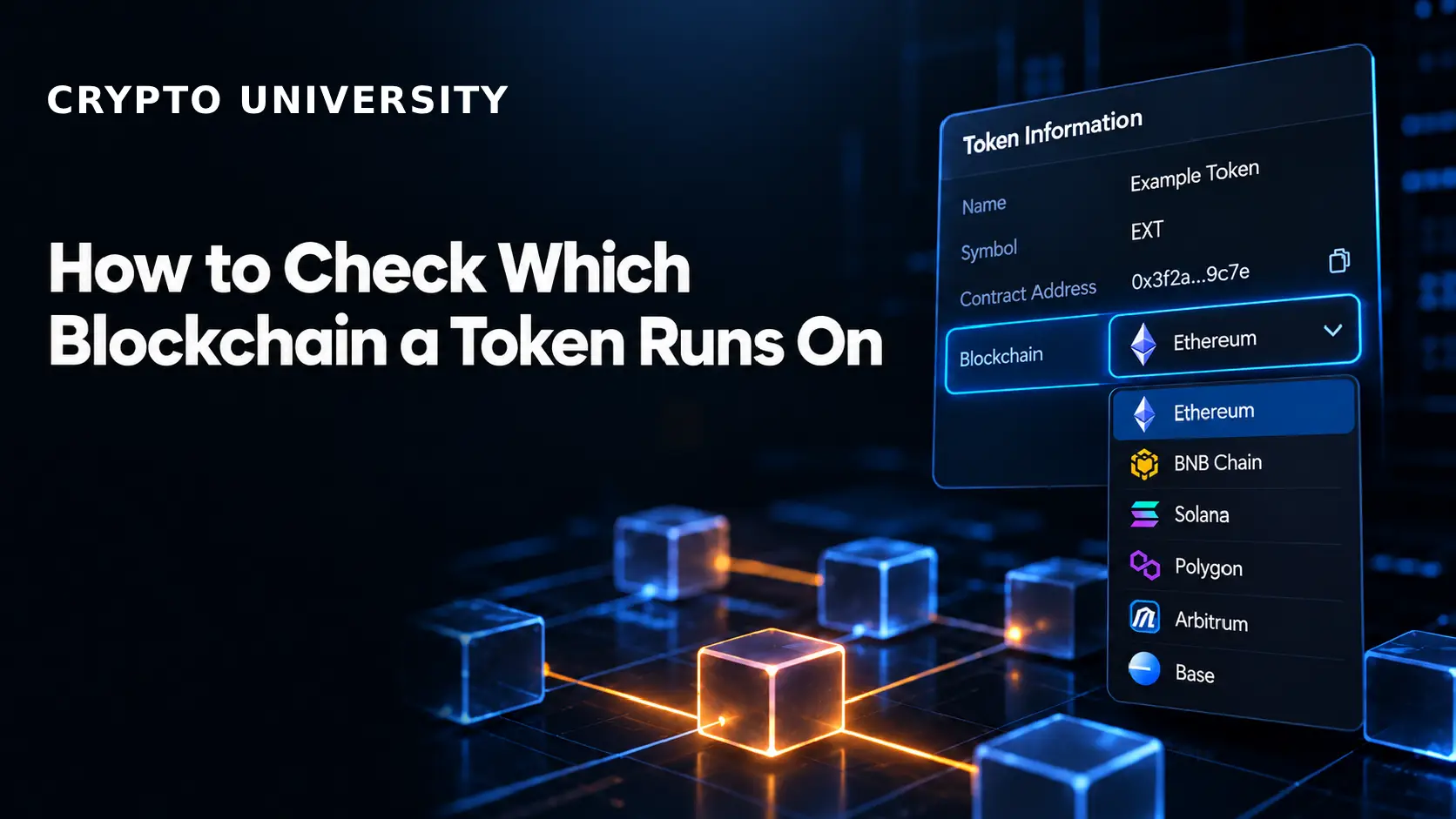
Step 2. Confirm the chain. The same project can hold different addresses on Ethereum, Base, Arbitrum, BNB Chain and Solana. An address that is correct on one network is meaningless on another.
Step 3. Cross-check on an aggregator. Open the asset page on CoinGecko or CoinMarketCap and compare the listed contract address with the one from the project. Two independent sources agreeing is much stronger than one.
Step 4. Open the address in a block explorer. Use Etherscan, BscScan, Solscan or the explorer for the relevant chain. Look at deployment date, holder count, transfer volume and any public label attached to the deploying wallet. A real, widely used token shows continuous activity and thousands of holders. A clone often shows a recent deployment, few holders and long gaps between transactions.
Step 5. Compare character by character. Check the first six and last six characters, then a section in the middle. Impersonators pick addresses that begin or end similarly, so checking only one end is not enough.
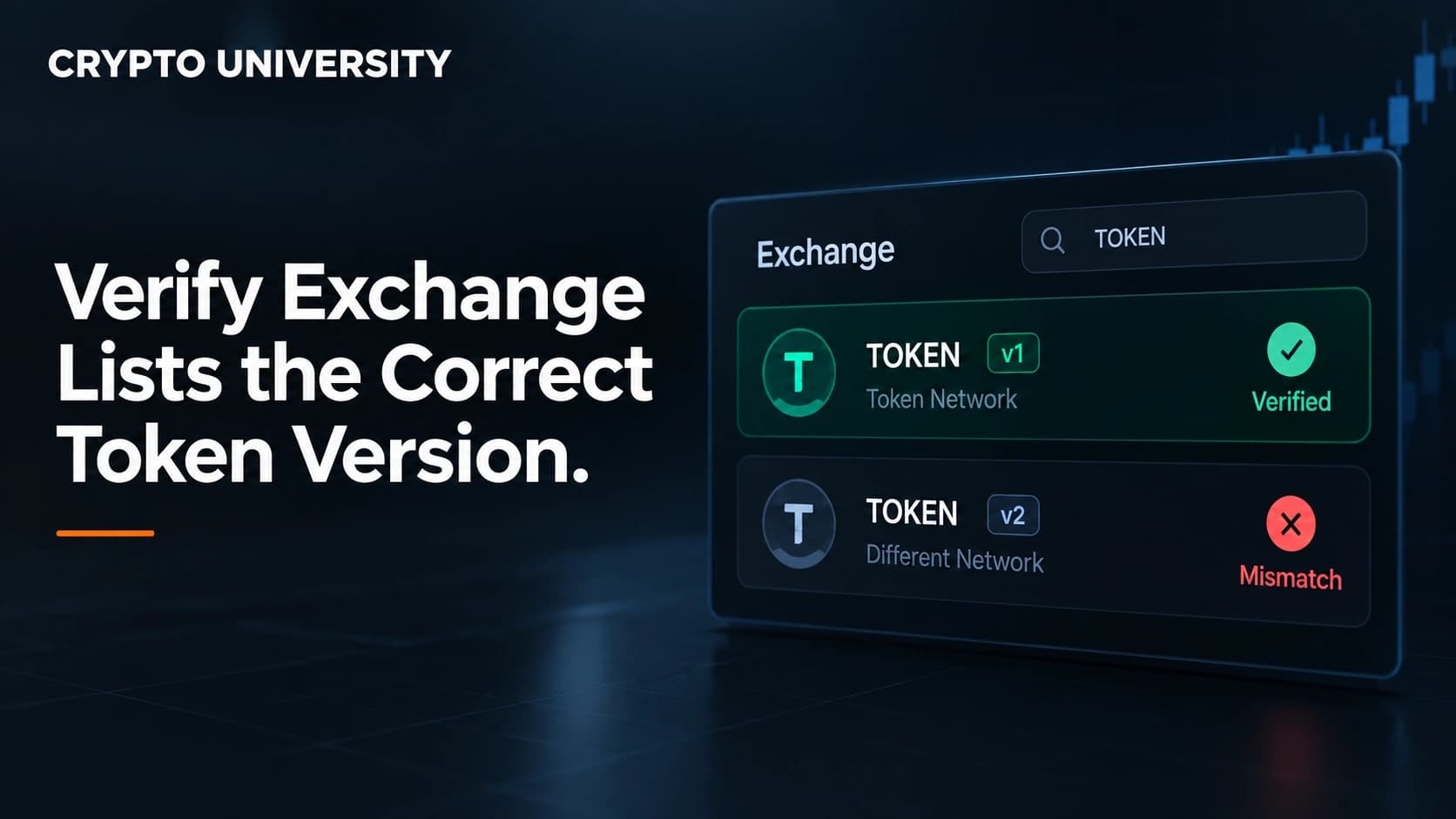
Step 6. Use the interface's own list. On decentralised exchanges, select the token from the verified list rather than pasting an address you found elsewhere. On Solana, the Jupiter verified list and RugCheck feed into Solana Explorer's verification display. Verification confirms which token is the canonical one. It is not an endorsement of the project.
Where Official Addresses Come From
| Source | How much to trust it | Notes |
|---|---|---|
| Project website or docs | Highest | The issuer controls it. Check the domain carefully |
| Issuer transparency page | Highest | Circle and Tether publish per-chain address lists for USDC and USDT |
| CoinGecko or CoinMarketCap | High | Good for cross-checking, but listings can lag or contain errors |
| Block explorer public labels | Medium to high | Useful confirmation, though labels are applied manually |
| Wallet or DEX default token list | Medium to high | Curated, but coverage of new tokens is uneven |
| Social media posts and DMs | Lowest | The main distribution channel for impersonation |
Warning Signs of an Impersonating Token
| Signal | What it suggests |
|---|---|
| Contract deployed days or weeks ago | The token is new, whatever the branding claims |
| Very few holders relative to the claimed project | The user base does not exist |
| Deployer wallet flagged with a phishing label | The explorer has already recorded abuse reports |
| Name slightly off, such as "ERC-20: USDC" instead of "USD Coin" | Metadata was filled in by a copycat |
| Thin or newly created liquidity pool | Anyone can open a pool for any token pair |
| Token appeared in your wallet unrequested | Common airdrop and dusting tactic |
Tokens That Arrive Uninvited
If an unfamiliar token shows up in your wallet, treat it as a message, not an asset. Balances are controlled by the token contract itself, so a contract can display any number it likes and can block transfers entirely. The purpose is usually to make you visit a website to sell or claim, where you will be asked to sign an approval that hands over control of assets you actually own.
The safe response is to leave it alone. Hide the token in your wallet interface, do not interact with any linked site, and review existing approvals periodically using a tool such as Revoke.cash.
What Verification Does Not Prove
Matching the address confirms identity. It does not confirm quality or safety.
- Verified source code is not an audit. Publishing readable code on an explorer only proves the code matches the deployed bytecode. Copycats routinely verify their contracts to look credible.
- Some contracts are upgradeable. Proxy patterns allow the logic behind an address to change after deployment.
- Transfer restrictions may exist. So-called honeypot tokens allow buying but block selling.
- You may still have the wrong real token. In an honest ticker collision, both options are genuine, and only one is the one you meant to buy.
Identity verification is the first filter, not the last. It answers "is this the token I think it is." Questions about the project itself come after.
FAQ
Can two tokens have exactly the same name and symbol? Yes. Name and symbol are free-text fields in the token contract, and blockchains do not check them for uniqueness. Only the contract address is guaranteed to be unique on a given chain.
Is a duplicate ticker always a scam? No. Unrelated legitimate projects sometimes pick the same symbol by coincidence, and the same project usually has separate addresses across chains. Impersonation is one category of duplicate, not all of them.
What is the difference between a contract address and a mint address? They serve the same purpose on different networks. EVM chains such as Ethereum use the term contract address. Solana uses mint address. Some listing forms label both as the contract address.
Why does the same token have different addresses on different chains? Each network stores its own separate deployment. Bridged and wrapped versions are also distinct contracts issued by a bridge rather than by the original issuer, so their addresses and risk profiles differ.
Someone airdropped a token I did not ask for. Should I sell it? Trying to sell it is the usual objective of the scam, since it pushes you toward a site that requests a signature. Leaving it untouched, hiding it, and reviewing your token approvals is the lower-risk path.
Related Terms
- Contract address
- the unique on-chain location of a token's smart contract, and its true identifier.
- Ticker collision
- two or more separate projects using the same symbol at the same time.
- Wrapped token
- a token issued on one chain to represent an asset held on another.
- Honeypot token
- a token whose contract permits purchases but restricts or blocks selling.
- Address poisoning
- sending tiny or fake transfers so a lookalike address appears in your transaction history.
Sources
- Ethereum Foundation, "How to identify scam tokens" (ethereum.org)
- Binance Support, "How to Identify the Correct Token/Ticker Symbol?"
- CoinDesk, "Crypto Long and Short: The Trouble With Ticker Symbols"
- Solana documentation, "How to verify a token and make it appear in Solana Explorer"
- ERC-3770 (Chain-specific addresses) and CAIP-19 (Asset identifiers) specifications
- Avalanche Support, "What are fake tokens?"
More Reading
- Explore Best Platforms to Buy Tokenized Stocks Worldwide
- Robinhood Wallet vs MetaMask on Robinhood Chain
- How to Buy Coinbase Tokenized Stock: COIN Tokens and Onchain Markets
This article is educational and factual. It is not financial advice and contains no price predictions. Figures cited from third party tools are point in time estimates that change continuously.
Not sure which problem you have?
Use the Fixing Crypto Mistakes hub to identify the transaction, wallet, network, or exchange issue before taking another action.
OPEN TROUBLESHOOTING HUB