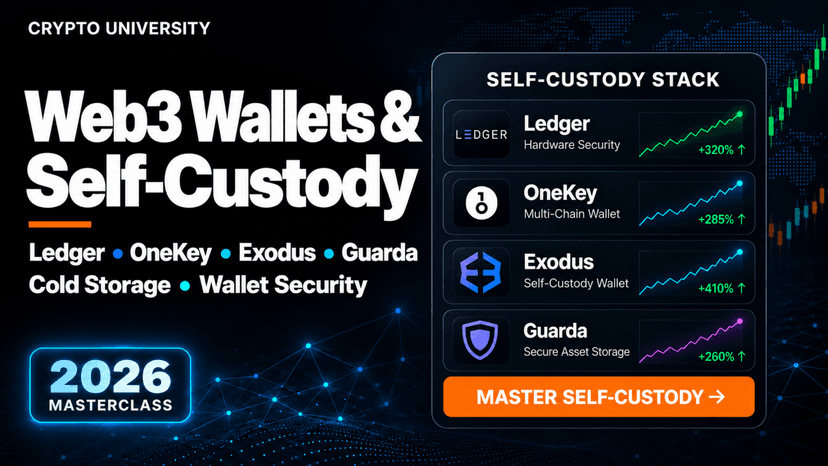
Mastering Web3 Wallets and Self-Custody Security: Ledger, OneKey, Exodus, and Guarda in 2026
The foundational crypto mantra, "not your keys, not your coins," has evolved from a niche cypherpunk slogan into a mandatory financial survival skill. Following the systemic centralized exchange collapses of the early 2020s, the mass migration toward Self-Custody has fundamentally reshaped the digital asset landscape. By 2026, managing your own cryptographic keys is no longer a clunky, high-friction chore reserved for developers. It is a highly polished, multi-chain, and secure experience that rivals traditional banking apps, but without the counterparty risk.
However, as self-custody has gone mainstream, so too have the sophistication and scale of attacks targeting it. Supply chain interdiction, fake wallet applications seeded via search engine poisoning, and advanced "blind signing" phishing campaigns are now the primary threats to digital wealth.
For High-Net-Worth Individuals (HNWIs), active DeFi participants, and long-term investors, mastering modern Web3 wallet architecture is the single most important component of a resilient crypto strategy. This comprehensive guide breaks down the core pillars of modern self-custody, the top-tier wallet platforms dominating the space in 2026, and the strict operational security frameworks required to protect your digital assets against evolving threats.
The 3 Pillars of Modern Self-Custody in 2026
To build a fortified self-custody stack, you must understand the technological advancements that separate secure, modern wallets from vulnerable legacy systems.
Hardware Secure Elements and "Clear Signing":
The gold standard for self-custody remains the hardware wallet. In 2026, top-tier devices utilize FIPS 140-2 Level 3 certified Secure Element (SE) chips, which isolate private key generation and storage from internet-connected environments. Crucially, modern firmware now supports "Clear Signing," which parses complex smart contract interactions and displays human-readable transaction details (e.g., "Approve 1000 USDC for Uniswap") on the device's physical screen, completely neutralizing "blind signing" phishing attacks.
Multi-Party Computation (MPC) and Social Recovery:
For users who find traditional 12- or 24-word seed phrases daunting or prone to physical loss, MPC technology has become mainstream. MPC splits the private key into multiple "shards" distributed across the user's devices and trusted guardians (or a secure cloud enclave). A transaction can only be signed when a predefined threshold of shards (e.g., 2-of-3) collaborate. This eliminates the single point of failure inherent in traditional seed phrases while maintaining true non-custodial ownership.
Native Multi-Chain Interoperability and Built-in Routing:
The days of managing a dozen different wallet extensions for different blockchains are over. Modern self-custody wallets natively support dozens of chains (Ethereum, Solana, Bitcoin, Cosmos, Layer 2s) from a single interface. They also integrate decentralized exchange (DEX) aggregators and cross-chain bridges directly into the UI, allowing users to swap and bridge assets without ever exposing their keys to external, potentially malicious dApp frontends.
Top Platforms for Web3 Self-Custody in 2026
Choosing the right wallet depends on your technical proficiency, asset diversity, and need for active DeFi interaction versus passive cold storage.
1. Ledger: Best for Ultimate Hardware Security and Cold Storage
Ledger remains the undisputed industry standard for investors who prioritize maximum security for their long-term crypto holdings.
Core Features: Ledger devices (like the Stax and Flex) utilize a certified Secure Element chip to ensure private keys never leave the device. Its standout 2026 feature is "Ledger Clear Signing," which integrates with major DeFi protocols to display plain-English transaction details on the device screen, preventing users from accidentally signing malicious token approvals.
Ledger Pass and Ecosystem: Ledger has expanded beyond hardware into a comprehensive security ecosystem, offering hardware-backed two-factor authentication (2FA) and encrypted password management, creating a unified security perimeter for your entire digital life.
Why Investors Choose It: It provides the ultimate physical circuit breaker. Even if your computer is infected with advanced malware or you visit a perfect phishing replica of a DeFi site, your assets cannot be moved without your explicit, physical button press on the Ledger device.
👉 Secure Your Long-Term Crypto Holdings with a Ledger Hardware Wallet
2. OneKey: Best for Open-Source Transparency and Seamless Multi-Chain DeFi
For crypto natives and DeFi power users who demand both hardware-grade security and complete software transparency, OneKey has emerged as the premier open-source alternative.
Core Features: OneKey offers a full suite of hardware and software wallets with a strong commitment to open-source firmware and software code. This allows the global security community to continuously audit the code, ensuring no hidden backdoors exist. It natively supports an extensive range of blockchains and integrates seamlessly with major DeFi dashboards.
All-in-One Design: OneKey devices feature high-resolution touchscreens and intuitive interfaces that make verifying complex, multi-leg DeFi transactions (like liquidity provision or options minting) straightforward and error-free.
Why Users Choose It: It perfectly bridges the gap between the ironclad security of a hardware wallet and the fluid, high-frequency demands of active decentralized finance participation, all backed by verifiable open-source code.
👉 Experience Open-Source, Multi-Chain Security with OneKey (Use referral code: 46Z9TD)
3. Exodus: Best for All-in-One Portfolio Management and Built-in Swaps
For users who want a beautiful, intuitive, and feature-rich software wallet experience without managing complex hardware setups, Exodus is the gold standard.
Core Features: Exodus supports 250+ assets across dozens of blockchains from a single, elegantly designed interface available on both desktop and mobile. It features built-in, non-custodial swapping and staking, sourcing rates from trusted decentralized liquidity providers to keep users within the safety of the Exodus ecosystem.
Portfolio Visualization: Exodus offers best-in-class visual portfolio tracking, displaying real-time asset allocation, historical performance, and fiat value across all your self-custodied chains in a single, cohesive dashboard.
Why Users Choose It: It eliminates the friction of Web3. You get the security of self-custody combined with the ease of use, customer support, and integrated swapping of a centralized exchange, making it ideal for beginners and intermediate users alike.
👉 Manage and Swap Your Crypto Non-Custodially with Exodus Wallet
4. Guarda: Best for Non-Custodial Flexibility and Web3 Browser Integration
For users who need a highly versatile, multi-platform wallet that can adapt to any Web3 interaction, Guarda provides a robust, purely non-custodial solution.
Core Features: Guarda is available as a web extension, desktop app, and mobile app, allowing seamless synchronization across devices. It features a built-in Web3 browser, enabling direct, secure interaction with decentralized applications (dApps), NFT marketplaces, and decentralized exchanges without needing third-party connectors.
No-KYC and Privacy-Focused: Guarda does not collect personal data, store private keys, or require identity verification, aligning perfectly with the core privacy ethos of cryptocurrency.
Why Users Choose It: Its cross-platform flexibility and built-in Web3 browsing capabilities make it an incredibly powerful tool for users who frequently interact with diverse, emerging dApps across multiple blockchain ecosystems.
👉 Access Flexible, Non-Custodial Web3 Browsing with Guarda Wallet
Top Supporting Tools for a Fortified Self-Custody Stack
A professional self-custody setup requires complementary tools for unified tracking and regulatory compliance.
5. CoinStats: Best for Unified Multi-Wallet Portfolio Tracking
When you hold assets across a Ledger, an Exodus mobile wallet, and a Guarda browser extension, tracking your net worth becomes fragmented. CoinStats solves this by acting as your central command center.
Core Features: CoinStats connects securely via read-only public keys to hundreds of self-custody wallets and blockchains. It aggregates your entire decentralized portfolio into a single, real-time dashboard, tracking your true ROI, PnL per asset, and allocation percentages across all chains simultaneously.
Why Users Choose It: It eliminates the need to manually check a dozen different wallet addresses, providing the macro-level visibility needed to make informed rebalancing decisions.
👉 Track Your Unified Multi-Chain Self-Custody Portfolio with CoinStats
6. Koinly: Best for Automated Self-Custody Tax Tracking
A common and costly misconception is that self-custody transactions are invisible to tax authorities. In reality, every swap, bridge, or staking reward claimed from a personal wallet is a taxable event, and public blockchains are permanently auditable.
Core Features: Koinly seamlessly ingests data from your self-custody wallet addresses via read-only API syncing. Its advanced heuristic engine accurately categorizes complex DeFi interactions, distinguishing between non-taxable wallet-to-wallet transfers and taxable disposals, staking income, or airdrops.
Why Users Choose It: It transforms the chaotic, multi-chain nature of self-custody into a clean, audit-ready tax report, ensuring you don't overpay or underreport your tax liabilities to authorities.
👉 Automate Your Self-Custody and DeFi Tax Tracking with Koinly
Step-by-Step: How to Build a Fortified Self-Custody Stack
Setting up a secure self-custody environment requires a methodical, security-first workflow. Follow this exact blueprint:
Step 1: Segregate Your Wallets by Purpose
Do not use a single wallet for all activities. Create a tiered system:
Cold Storage (Vault): A Ledger or OneKey hardware wallet used exclusively for long-term holding. It should rarely, if ever, connect to the internet or interact with dApps.
Hot Wallet (Active): A software wallet (like Exodus or Guarda) funded with only the amount of crypto needed for active trading, swapping, or dApp interaction.
Step 2: Purchase Hardware Directly and Verify
If purchasing a hardware wallet, only buy directly from the manufacturer’s official website. Never buy from third-party marketplaces (like Amazon or eBay), as supply chain interdiction (tampered devices with pre-configured seed phrases) is a known attack vector. Upon setup, verify the device's authenticity through the official companion app.
Step 3: Secure Your Seed Phrase or MPC Shards
If using a traditional wallet, write your 12- or 24-word recovery phrase on a fireproof and waterproof metal backup plate. Never store it digitally (no photos, no text files, no cloud storage). If using an MPC wallet, securely distribute the key shards to trusted devices or guardians, ensuring no single entity holds a majority of the shards.
Step 4: Connect to Tracking and Tax Tools
Input the public addresses of your self-custody wallets into CoinStats for real-time performance monitoring and into Koinly for automated tax tracking. Ensure you are only providing read-only access; a legitimate tracking tool will never ask for your private key or seed phrase.
Risk Management: The Hidden Dangers of Self-Custody
Self-custody eliminates counterparty risk, but it places the entire burden of security on you. You must actively manage these specific pitfalls:
Supply Chain Attacks: As mentioned, tampered hardware wallets can steal your funds the moment you initialize them. Mitigation: Only purchase directly from the official manufacturer, and always verify the device's integrity during the initial setup process.
Fake Wallet Applications (SEO Poisoning): Hackers frequently buy search engine ads or create fake websites that mimic legitimate wallets (like Exodus or MetaMask). Downloading these apps instantly compromises your device. Mitigation: Only download wallet software from official, verified links (like the ones provided in this guide) or official app stores, and always double-check the URL.
Seed Phrase Phishing: Scammers will contact you via Telegram, Discord, or email, claiming to be "support" and asking you to "validate" or "synchronize" your wallet by entering your seed phrase on a website. Mitigation: Legitimate wallet support will never ask for your seed phrase. Never type your recovery phrase into any internet-connected device under any circumstances.
Unlimited Token Approvals: When interacting with dApps via a hot wallet, signing an "unlimited approval" allows the smart contract to drain your entire balance of that token at any time. Mitigation: Always use a hardware wallet with Clear Signing, and manually set token approvals to the exact amount you are transacting, revoking unused approvals regularly.
Frequently Asked Questions (FAQ)
Q: What is the difference between a hot wallet and a cold wallet?
A: A hot wallet (like Exodus or Guarda) is connected to the internet, making it highly convenient for frequent transactions but more vulnerable to online attacks. A cold wallet (like Ledger or OneKey) stores private keys offline on a secure hardware device, making it virtually immune to remote hacking attempts, ideal for long-term storage.
Q: If I lose my hardware wallet, do I lose my crypto?
A: No. Your crypto is not stored on the device; it is stored on the blockchain. The hardware wallet simply holds the private keys needed to access it. As long as you have securely backed up your 12- or 24-word recovery phrase (or your MPC shards), you can fully restore your funds on a brand-new device.
Q: Are self-custody wallet transactions taxable?
A: Yes. While simply transferring crypto from an exchange to your own wallet is generally not a taxable event, any subsequent swaps, trades, staking rewards, or dApp interactions initiated from that wallet are taxable disposals or income events. Using a tool like Koinly is essential to track these accurately.
Q: Is Multi-Party Computation (MPC) safer than a traditional seed phrase?
A: It is safer against physical loss or single-point compromise, as there is no single seed phrase to lose or steal. However, it relies on the security of the devices holding the shards and the integrity of the recovery network. Both methods are highly secure if implemented correctly, but MPC offers a more user-friendly recovery experience for those prone to misplacing physical backups.
Risk Warning: Managing your own cryptocurrency private keys carries significant operational risks. Loss of your seed phrase, falling victim to a phishing attack, or purchasing tampered hardware can result in the permanent, irreversible loss of your digital assets. Self-custody means you are solely responsible for your own security.
Not Financial Advice: The information provided in this article is for educational and informational purposes only. It does not constitute financial, investment, legal, or tax advice. Always conduct your own research (DYOR) and consult with a qualified, licensed professional regarding the security and tax implications of self-custody.
Affiliate Disclaimer: This article contains affiliate links. If you click on these links and sign up for a service or make a purchase, we may earn a commission at no additional cost to you. We only recommend platforms, tools, and services that we have thoroughly vetted and believe provide genuine value, security, and utility to our readers.
Recommended reading: