Key Takeaways
- A blockchain shows you the sending address, not the sending person. Identifying a payment source is a process of narrowing down who or what controls that address, and it usually ends with a category such as "a Binance hot wallet" rather than a name.
- The fastest reliable method is to start from the transaction hash, open the correct block explorer for that network, read the sender field properly, and then check whether the address carries a public label from an exchange, a service, or a labelling platform.
- Not every incoming transfer is a real payment. Tiny or zero value transfers are often dusting or address poisoning attempts, and copying an address out of your own transaction history is one of the most common ways people lose funds.
Why This Question Comes Up
Money arrives in your wallet and you do not know why. Maybe two clients paid on the same day. Maybe you need to match a payment to an invoice. Maybe an exchange is holding a deposit until you explain its origin. Or maybe nothing was expected at all.
Public blockchains make part of this easy and part of it impossible. Every transfer is permanently recorded and anyone can read it. What the record does not contain is a name. Addresses are pseudonymous, so identifying a payment source means linking a public address to a known entity using labels, behaviour, and outside evidence.
Step 1: Get the Transaction Hash
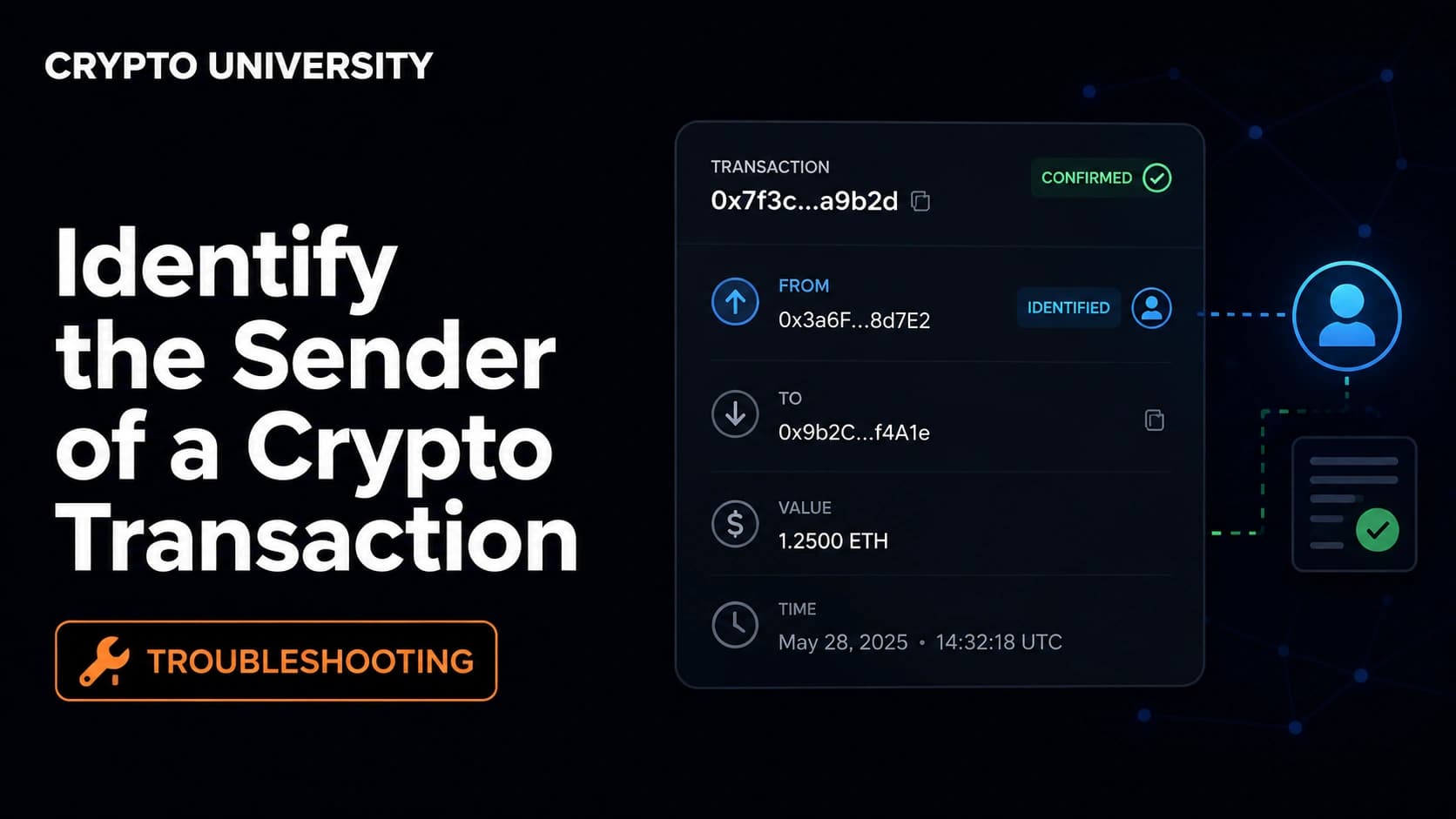
Every confirmed transfer has a unique identifier, usually called the transaction hash, transaction ID, or TXID. You will find it in your wallet app under the transaction details, in your exchange deposit history, or on a receipt sent by the payer.
The hash is the anchor for everything that follows. You can also search your own address, but the hash takes you straight to the payment you care about.
Step 2: Open the Correct Block Explorer
A block explorer is a free website for reading blockchain data. Use the explorer that matches the network the payment arrived on. A USDT transfer on Tron will not appear on an Ethereum explorer, even though the token name is identical.
| Network | Common Explorers | Useful For |
|---|---|---|
| Bitcoin | mempool.space, Blockchair, Blockstream.info | Inputs and outputs, fee data, address history |
| Ethereum and EVM chains | Etherscan, Basescan, Arbiscan, Blockscout | Sender address, token transfers, contract calls |
| Solana | Solscan, Solana Explorer | Token accounts, program interactions |
| Tron | Tronscan | High volume USDT transfers, dust activity |
| Multi chain search | Blockchair, Arkham, MetaSleuth | One search box across several networks |
Paste the hash into the search bar. The result page will show the sender, the receiver, the amount, the network fee, the block number, and the timestamp.
Step 3: Read the Sender Field Correctly
This is where beginners most often go wrong, because the two main blockchain designs behave differently.
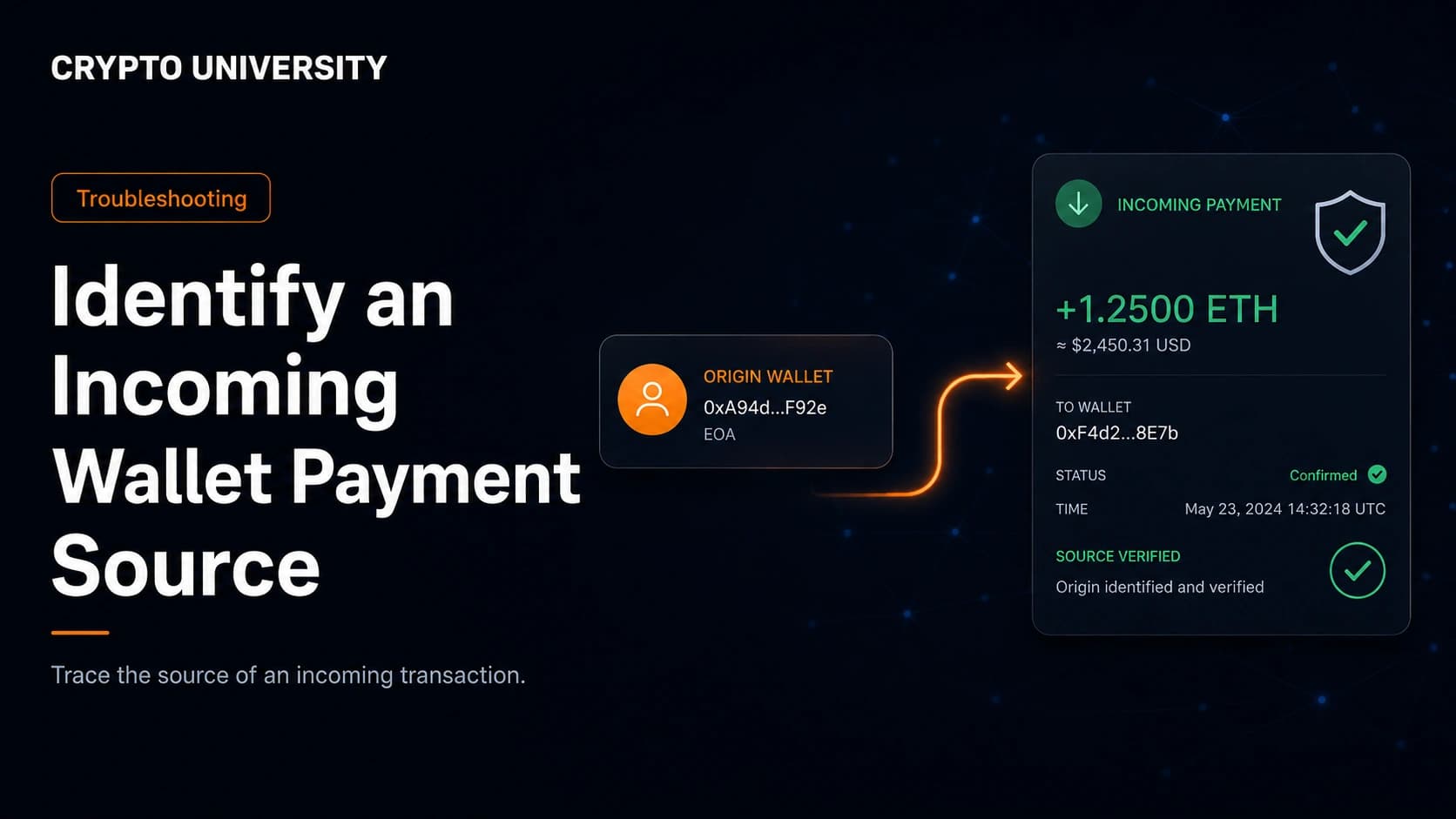
Account based chains such as Ethereum, BNB Chain, Solana, and Tron show a single "from" address. That is the address that signed and paid for the transaction. It is a clean starting point.
UTXO based chains such as Bitcoin have no single "from" field. A Bitcoin transaction spends previous outputs, and one transaction can contain dozens of input addresses. The classic heuristic, common input ownership, assumes all inputs are controlled by the same entity. That is a strong assumption rather than a certainty, and tools such as CoinJoin exist to break it.
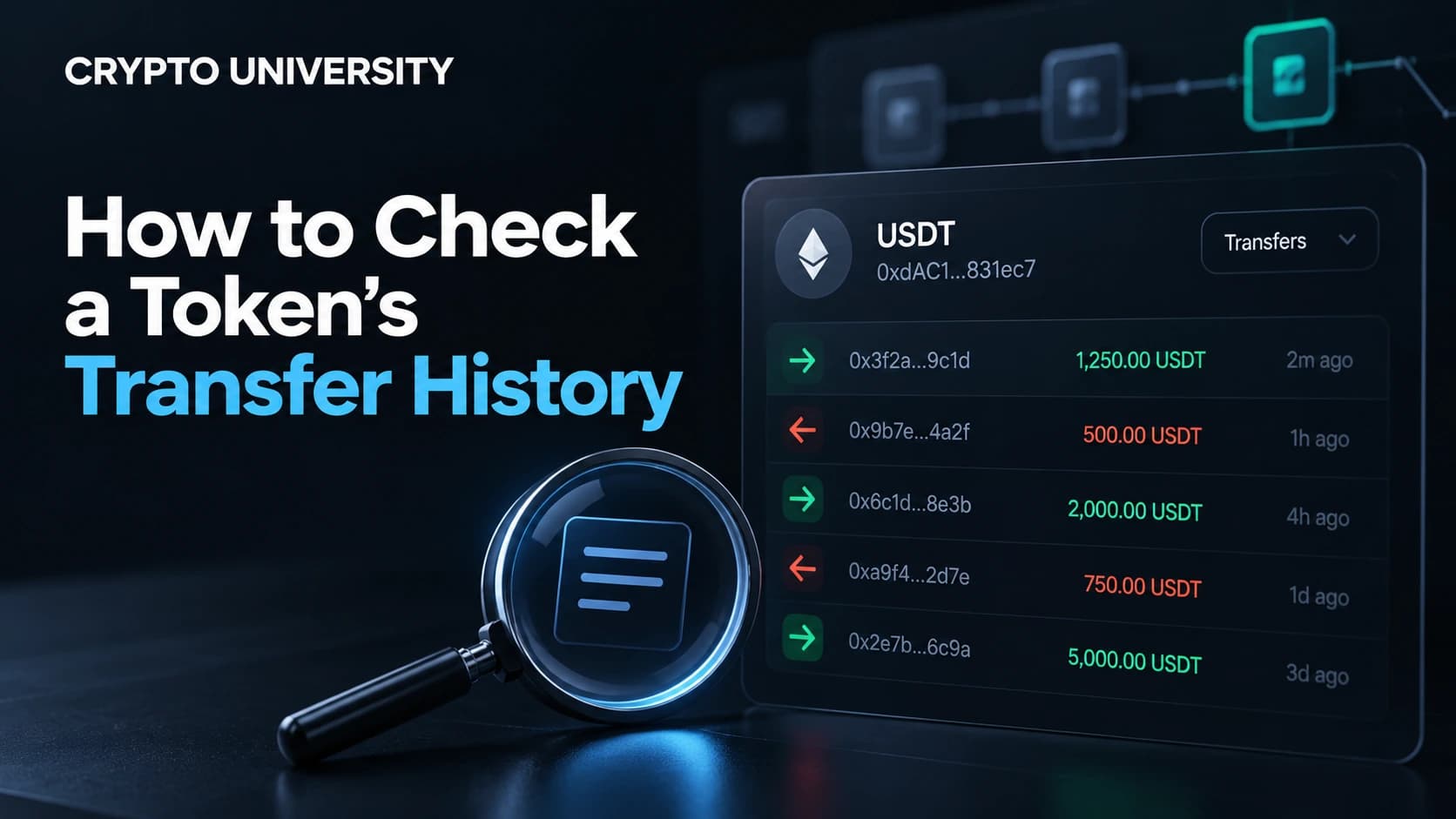
Two details matter on smart contract chains. Token transfers appear in a separate log, so the outer "from" can be a contract or relayer rather than the payer. Transfers triggered inside a contract, shown as internal transactions, do not appear in the main list at all. Check the token transfer tab as well as the overview tab.
Step 4: Check Labels and Entity Tags
A raw address means little on its own. Labels are what turn it into information.
Public labels come from several places. Block explorers tag well known addresses such as exchange hot wallets and major protocol contracts. Analytics platforms maintain much larger databases and expose part of them for free. Arkham states that its library covers billions of labelled addresses and hundreds of thousands of identified entities, while MetaSleuth, built by BlockSec, advertises more than 400 million labels. These are vendor figures rather than audited numbers, but they show the scale of the labelling industry.
If the sender is labelled as an exchange, you have learned something important and something limiting at once. You know the payment left that exchange, but the address is usually a shared hot wallet used by thousands of customers. Only the exchange knows which customer withdrew the funds, and it normally releases that information only through a legal process.
Step 5: Classify the Type of Sender
Even without a name, the shape of the sending address tells you a lot.
| Sender Looks Like | Typical Signals | What You Can Conclude |
|---|---|---|
| Exchange hot wallet | Labelled by explorers, huge balance, thousands of daily outgoing transfers | Funds came from a customer of that exchange, identity held off chain |
| Personal self custody wallet | Low activity, few counterparties, no label | A private individual or small business, identity not visible on chain |
| Smart contract or payment relayer | Address is a contract, transfer appears in internal or token logs | Payment routed through a service such as a payment processor or bridge |
| Bridge or cross chain router | Labelled bridge contract, matching burn or lock on another chain | The real origin is on a different network and needs a second trace |
| Mixer or privacy tool | Labelled mixer, uniform amounts, deliberate delays | Origin is intentionally obscured, treat with caution |
Step 6: Follow the History One or Two Hops Back
If the direct sender is unlabelled, look at that address's own history on the explorer.
Three questions are usually enough for a basic check:
- Who funded it first? The first deposit into a fresh address often comes from an exchange withdrawal, which reveals the platform the owner uses.
- Who else does it pay? Repeated transfers to a known service or merchant give context about the owner's activity.
- How old and active is it? An address created hours before your payment behaves very differently from one with years of ordinary use.
Free graph tools such as Breadcrumbs, MetaSleuth, and Arkham draw these relationships visually, which is easier to read than raw transaction lists. Professional investigators apply the same idea at scale, combining clustering, attribution, and risk scoring inside platforms such as Chainalysis, TRM Labs, Elliptic, and Merkle Science.
Step 7: Use Off Chain Evidence
On chain data alone rarely produces a name. Off chain evidence closes the gap and is often the only step you need.
- Ask the payer. Request the transaction hash and match it to the one in your wallet.
- Request a signed message. The sender signs a short text with the private key of the sending address, and anyone can verify the signature matches. This is the standard proof of address control used by regulated firms.
- Check memos and tags. Networks such as XRP Ledger, Stellar, and Cosmos support a memo or destination tag, and payment processors often place an invoice reference there.
- Match timestamp and amount. If a client says they sent an exact amount at an exact time, the ledger confirms or contradicts it.
Regulated exchanges do a version of this by default. Under the Financial Action Task Force Travel Rule, introduced in 2019 and updated in 2021, firms must collect and pass on sender and recipient details for transfers between service providers. Many platforms now ask you to declare that you own a deposit address, and some hold third party deposits until ownership is confirmed. If an exchange has frozen a deposit, this is usually why, and the answer is documentation rather than on chain detective work.
Warning: Not Every Incoming Transfer Is a Payment
A significant share of unexpected small transfers are attacks rather than mistakes.
Dusting means sending a tiny amount of crypto to many wallets. The original goal was surveillance, since watching how the dust is later spent helps an observer link addresses together. It also creates compliance risk. In August 2026, Kraken reportedly froze several customer accounts after they received unsolicited transfers connected to a sanctioned entity, which the exchange described as a deliberate dust attack.
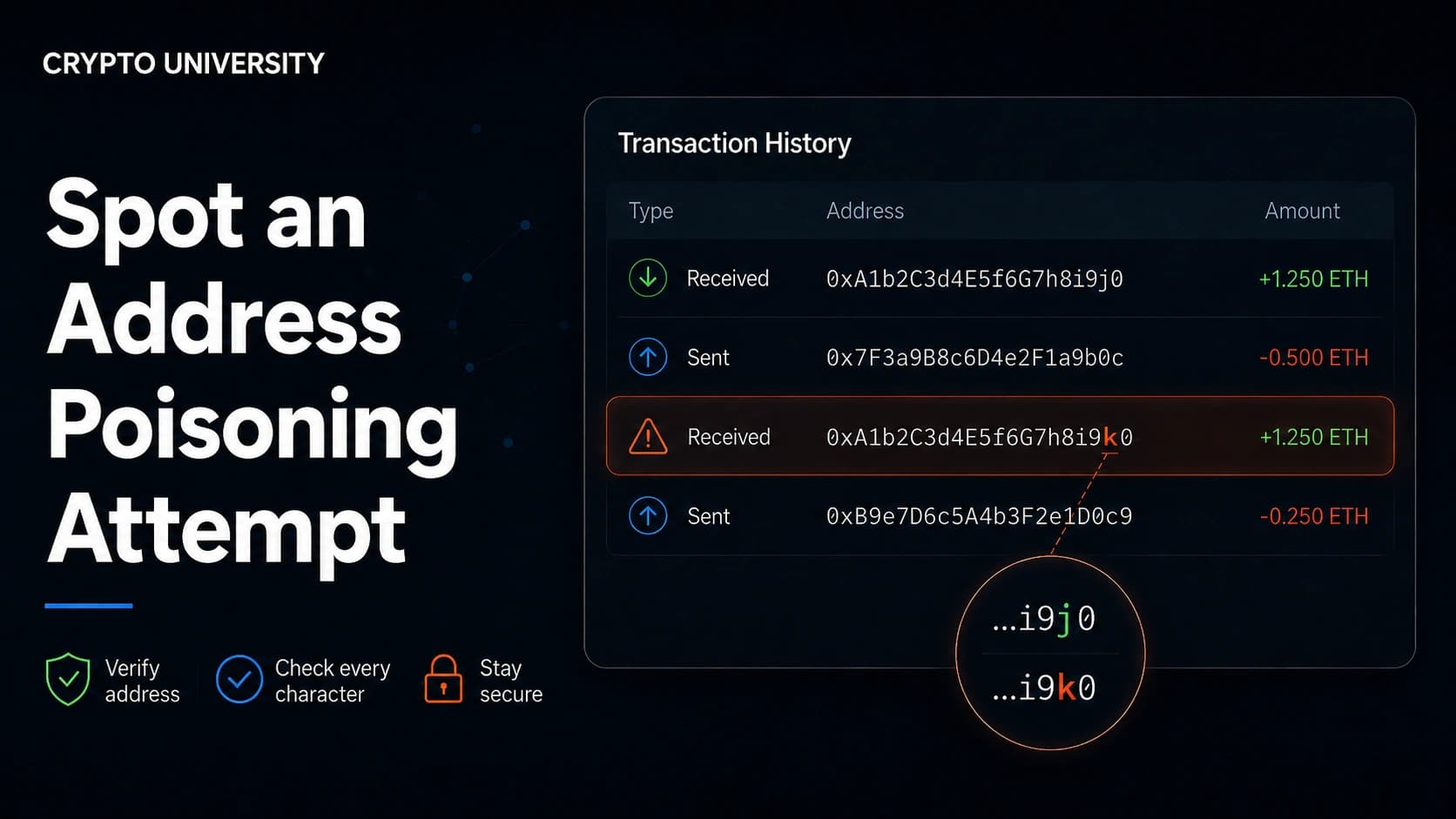
Address poisoning is the more dangerous variant. The attacker creates a vanity address whose first and last characters match one you have paid before, then sends a tiny or zero value transfer so the lookalike sits in your recent history. Later you copy the wrong entry and send real funds to the attacker. Blockaid reported that poisoning attempts on Ethereum rose sharply after fees fell in late 2025, including a January 2026 case in which a user lost 4,556 ETH, widely reported as roughly 12.4 million US dollars. The FBI warned about this pattern in April 2024.
Practical defences are simple and boring:
- Never copy an address from your transaction history. Use a saved address book entry or a fresh copy from the recipient.
- Check the full address, not just the first and last four characters.
- Treat unexpected tokens as spam. Do not interact with them or visit any URL contained in the token name.
- Send a small test payment before a large transfer to a new address.
What Blockchain Data Cannot Tell You
Being clear about the limits saves wasted effort:
- It cannot reveal a legal name, email, or location.
- It cannot tell you which exchange customer withdrew funds.
- It cannot prove intent, so a payment from a flagged address does not make the sender a criminal.
- Labels can be wrong or out of date, and vendor risk scores are opinions, not verdicts.
If You Receive Crypto for a Business
Reconciliation is easier when it is designed in advance. Generate a unique receiving address for every invoice or customer so that each payment identifies itself. A payment processor will handle address generation, matching, and reporting automatically if you have volume. Keep the transaction hash, network, amount, timestamp, and counterparty on record, because tax authorities and banks increasingly expect that trail.
When to Escalate
If a payment appears to be stolen funds, part of a scam, or connected to a sanctioned entity, stop moving it and seek advice. Contact the exchange involved, keep the hashes and screenshots, and report the matter to the relevant authority in your country. Analytics firms and law enforcement have tools and legal powers that public explorers do not. This article is educational and is not legal or financial advice.
FAQ
Can I find out who owns a crypto wallet address? Usually not by yourself. You can often identify the type of entity, such as an exchange, a bridge, or a private wallet, using explorer labels and analytics platforms. Linking an address to a real person normally requires records held by a regulated service, which are released through legal process.
Why does my incoming payment show a company name instead of my client's wallet? Because your client most likely paid from an exchange or a custodial service. The withdrawal leaves the provider's shared hot wallet, so the chain shows the provider, not the individual customer.
Someone sent me a tiny amount of crypto I did not expect. Is that dangerous? The transfer itself cannot drain your wallet. The risk is in your reaction. It is usually dust or an address poisoning attempt, so ignore it, never copy the sending address from your history, and do not interact with unknown tokens.
Do free tools work, or do I need paid software? For a single payment, free block explorers plus a labelling tool such as Arkham, Breadcrumbs, or MetaSleuth are normally enough. Paid platforms matter when you need clustering across many addresses, risk scoring, or an evidence report.
My exchange froze a deposit and asked where it came from. What now? Provide documentation rather than speculation. Supply the transaction hash, the name of the sending platform or person, an invoice or contract if one exists, and proof that you control the sending address if the exchange asks for it.
Related Terms
- Transaction hash (TXID): The unique identifier of a confirmed blockchain transaction.
- UTXO: Unspent transaction output, the accounting model used by Bitcoin, where transactions consume previous outputs.
- Address clustering: The technique of grouping addresses that are likely controlled by the same entity.
- Entity attribution: Linking a blockchain address or cluster to a named service, company, or individual.
- Travel Rule: The requirement for regulated crypto firms to collect and share sender and recipient information on qualifying transfers.
Sources
- TRM Labs, "What Is Crypto Tracing?" glossary entry: https://www.trmlabs.com/glossary/crypto-tracing
- Blockaid, "Address Poisoning: The Growing Threat Draining Millions from Crypto Users": https://blockaid.io/blog/address-poisoning-the-growing-threat-draining-millions-from-crypto-users
- DailyCoin, "Dust Attack and Address Poisoning: The Tiny Transactions That Could Cost You A Lot": https://dailycoin.com/dust-attack-and-address-poisoning-the-tiny-transactions-that-could-cost-you-a-lot
- Merkle Science, "Exploring the Nuances of Address Poisoning": https://www.merklescience.com/blog/exploring-the-nuances-of-address-poisoning
- Arkham Intelligence, "Wallet Screening: What Is It and How Do You Do It": https://info.arkm.com/research/wallet-screening-what-is-it-and-how-do-you-do-it
- MetaSleuth by BlockSec, wallet tracking product documentation: https://metasleuth.io/wallet-tracking-crypto
- Crypto.com Help Center, "Travel Rule FAQ for Crypto Deposits and Withdrawals": https://help.crypto.com/en/articles/6306139-travel-rule-faq-for-crypto-deposits-and-withdrawals
More Reading
- Ledger Academy, "Best Tools For Blockchain Detectives", a practical walkthrough of Breadcrumbs, MetaSleuth, and Arkham: https://www.ledger.com/academy/basic-basics/become-a-crypto-detective/blockchain-detective-tools
- TRM Labs, "Understanding Address Poisoning on the TRON Blockchain", useful for anyone receiving USDT on Tron: https://www.trmlabs.com/resources/blog/understanding-address-poisoning-on-the-tron-blockchain
- Merkle Science, "How Blockchain Analytics Aids Law Enforcement in Tracing Crypto Assets to Off-Ramps", a look at how professional tracing continues past the first hop: https://www.merklescience.com/how-blockchain-analytics-aids-leas-in-tracing-crypto-assets-to-off-ramps
Disclaimer: This article is educational content. It is not financial, investment, tax, or legal advice. Network behaviour, fees, and explorer interfaces change over time, so verify current details against official documentation before relying on them.
Not sure which problem you have?
Use the Fixing Crypto Mistakes hub to identify the transaction, wallet, network, or exchange issue before taking another action.
OPEN TROUBLESHOOTING HUB