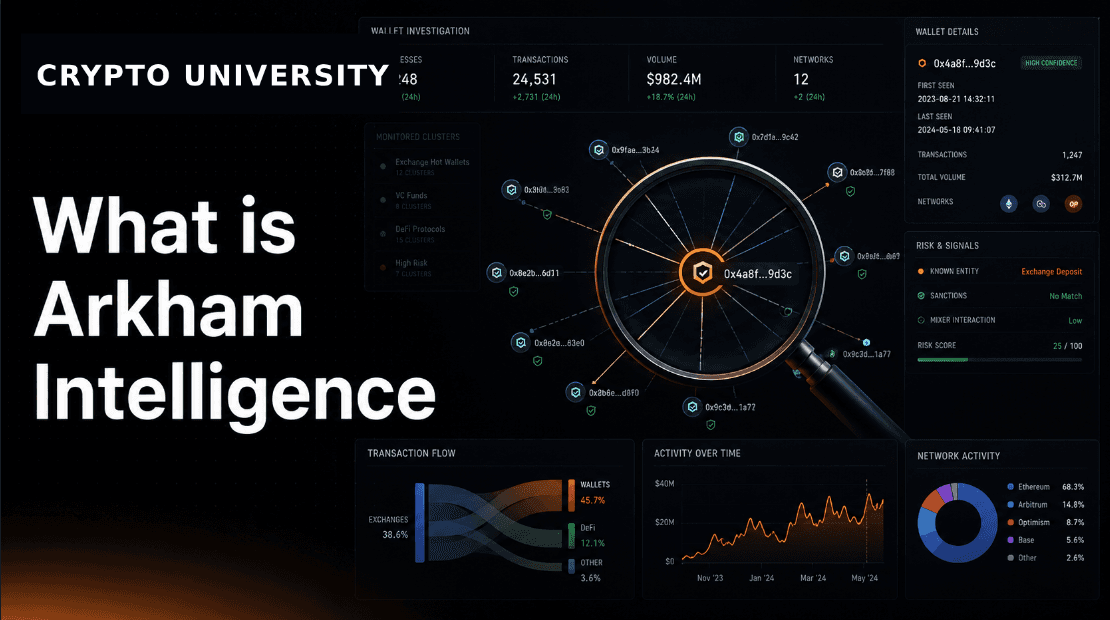
What is Arkham Intelligence?
Arkham Intelligence is a blockchain analytics platform focused on identifying the real-world entities behind cryptocurrency wallet addresses. Its core mission is described as "deanonymizing the blockchain," meaning it works to connect anonymous wallet addresses to identifiable organizations, funds, exchanges, and individuals.
The platform is used by traders, researchers, and analysts who want to understand not just what is happening on-chain, but specifically who is responsible for it. Knowing that a large transfer came from a specific venture capital fund, exchange cold wallet, or government-seized address carries very different implications than simply seeing a large anonymous transfer.
How Arkham Works
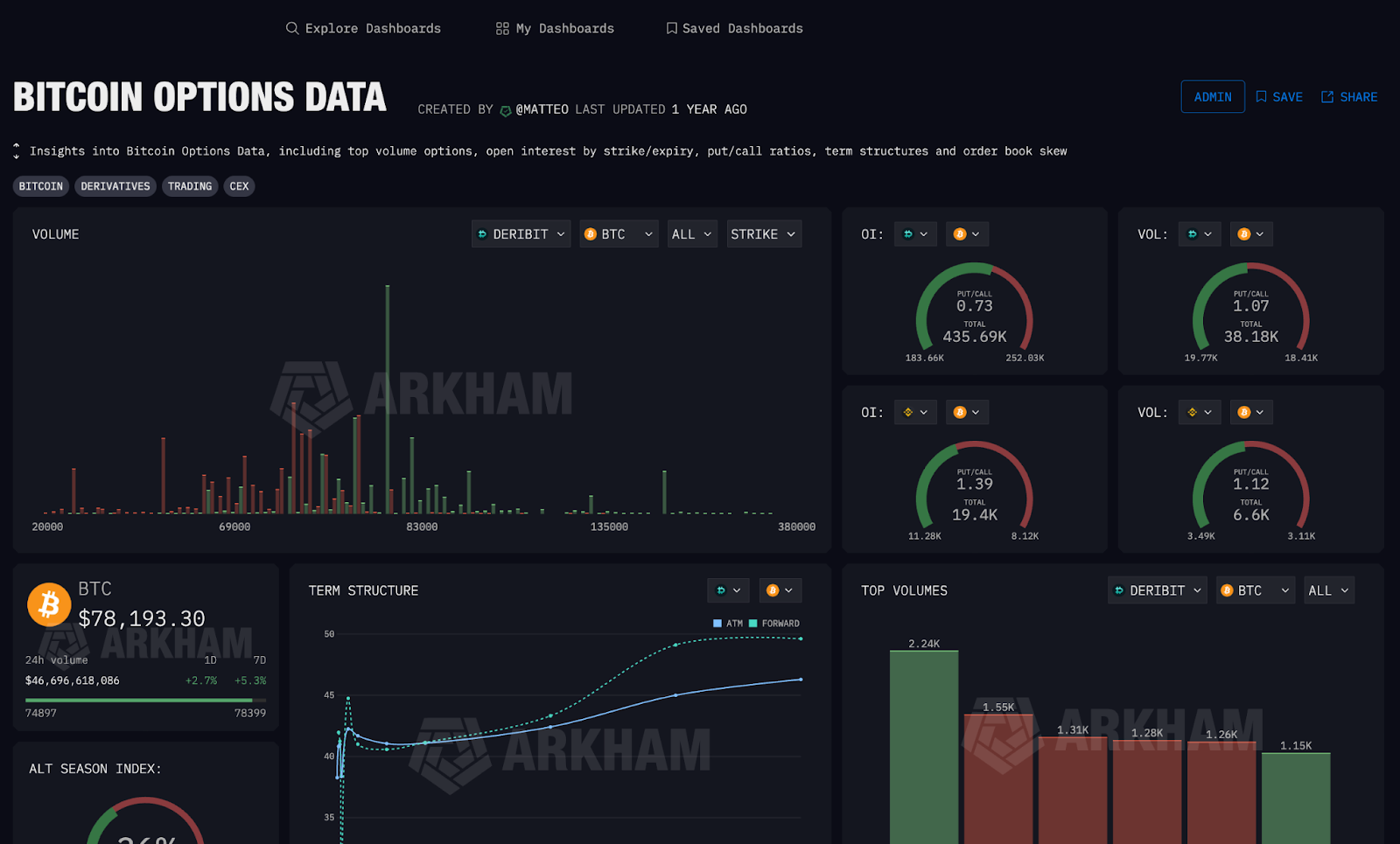
Arkham uses a combination of automated machine learning systems and human analyst contributions to build its entity database. When a wallet is identified through public sources such as exchange deposit disclosures, official announcements, court documents, or blockchain tracing, that label is added to Arkham's database and applied to all related addresses.
The platform's AI system, called ULTRA, continuously analyzes on-chain transaction patterns to cluster related wallets together. If a wallet frequently sends funds to an exchange deposit address that is publicly attributed to a specific fund, the AI can make informed inferences about the ownership of wallets in the same cluster.
Intel Exchange: Arkham operates a marketplace where users can buy and sell intelligence on specific wallet addresses using the platform's native token, ARKM. Researchers who identify new wallet labels can sell that information on the marketplace. This is a distinctive and controversial feature, as it creates financial incentives for blockchain tracing.
What Can You Do on Arkham?
Entity Pages Search for any known entity and Arkham shows all wallets it has attributed to that entity, the entity's total portfolio value across chains, recent transfers, and historical activity. Coverage includes major exchanges, venture capital funds, project treasuries, government-related wallets, and prominent individuals where public attribution is available.
Wallet Investigation Enter any wallet address and Arkham shows its transaction history, attributed label if known, inbound and outbound transfers, and linked wallets. For unknown wallets, it displays any clustering signals that suggest the wallet may be related to other known addresses.
Alerts Set up alerts to be notified when a specific wallet or entity executes a transaction above a threshold you define. This is used to monitor the activity of institutional players, exchanges, or any wallet whose movements are considered market-relevant.
Portfolio Tracker Arkham can track the real-time portfolio value of any labeled wallet, including how that portfolio composition changes over time. This is particularly useful for tracking treasury wallets of DeFi protocols or publicly known institutional addresses.
On-Chain Investigation Tools A visualization layer shows transaction flows between wallets as a diagram, making it easier to trace how funds moved from one address to another across multiple hops. This is used for investigating complex transfer chains.
Arkham vs. Nansen
Both Arkham and Nansen deal with wallet intelligence, but their approaches differ meaningfully.
Feature | Arkham Intelligence | Nansen |
Primary focus | Entity identification and investigation | Smart money flows and behavioral patterns |
Data approach | Entity attribution through tracing and AI | Wallet labeling through behavioral analytics |
Intel marketplace | Yes (ARKM token) | No |
Best for | Tracing specific entities and wallets | Identifying capital flow patterns at scale |
Free tier | Yes | Limited |
Ideal user | Researchers and investigators | Active DeFi traders |
Arkham is stronger for deep investigation of specific wallets or entities. Nansen is stronger for identifying broad patterns in how smart money collectively positions across the market. A quick overview of deeper detail on What is Nansen? Smart Money Tracking Explained for Beginners.
The Controversy Around Blockchain Deanonymization
Arkham's stated goal of deanonymizing the blockchain has been subject to genuine criticism from parts of the crypto community. Arguments include:
Privacy concerns. Cryptocurrency was partly designed to offer individuals financial privacy. Systematic identification of wallet owners raises questions about whether that privacy is being eroded, particularly for users in jurisdictions where financial surveillance carries real risk.
Marketplace incentives. Paying users to identify wallet owners through the Intel Exchange creates an economic incentive structure around exposing private financial data that some consider problematic.
Accuracy risk. Entity attributions based on clustering algorithms can be incorrect. A misidentified wallet label could cause market participants to act on false information.
Arkham counters that its work primarily focuses on publicly known institutions and that the platform's data helps expose fraud, track stolen funds, and bring transparency to markets that have historically lacked it.
These are legitimate ongoing debates in the crypto space. Users of the platform should be aware of them.
Practical Use for Beginner Traders
For most beginners, Arkham is more useful as a research tool than as an active part of a trading workflow. Practical uses include:
Checking whether a large wallet that interacted with a token you are researching is attributable to a known fund or exchange
Monitoring whether a project's treasury wallet is moving funds in unusual ways
Investigating the history of a wallet that made a large trade you spotted in DEXTools or CryptoQuant
Confirming that an exchange hot wallet showing large outflows is correctly attributed
Explore the How To Use Arkham Intel
Pros and Cons
Pros:
The most detailed entity-attribution database available to individual researchers, providing context that raw wallet addresses cannot, including identification of VC funds, exchanges, project teams, and government-related wallets
Real-time alerts and portfolio tracking make it practical for ongoing monitoring, not just one-time research lookups
Free tier provides meaningful access to entity search and wallet investigation without a subscription
Cons:
The Intel Exchange model, where users are financially incentivized to identify and sell wallet attribution data, raises genuine privacy and accuracy concerns that users should consider before engaging with the platform
Attribution errors are possible; the AI clustering system can incorrectly link wallets, and acting on a misidentified label without independent verification creates research risk
The platform's depth and interface complexity make it more suited to intermediate and advanced users than total beginners just starting out with on-chain concepts
FAQ
Is Arkham Intelligence free?
There is a free tier that provides access to entity search, wallet investigation, and basic portfolio data. Premium features and the Intel Exchange marketplace require ARKM tokens or a paid plan.
What is the ARKM token?
ARKM is Arkham's native cryptocurrency, used primarily as the currency for buying and selling intelligence on the Intel Exchange marketplace. It is also used for certain premium platform features.
Is Arkham's wallet attribution accurate?
Arkham's data is generally well-regarded for clearly attributed entities like exchanges and major funds. For edge cases and smaller wallets, attribution confidence varies. Any label should be treated as informational rather than definitive.
How is Arkham different from a blockchain explorer like Etherscan?
A blockchain explorer like Etherscan shows raw transaction data with no entity labeling. Arkham layers entity attribution and AI-powered clustering on top of that raw data, making it much faster to understand who is involved in a given transaction without manual investigation.
Is deanonymizing blockchain addresses legal?
In most jurisdictions, analyzing publicly available blockchain data is legal. However, the ethics and implications of systematic financial surveillance of individuals are actively debated. Arkham's focus is primarily on institutional and exchange-level entities rather than private individuals.
Related Terms
Disclaimer: This content is for educational and informational purposes only and is not financial advice. Nothing here is a recommendation to buy or sell any asset or use any platform. Do your own research and manage your risk.
De.Fi Review 2026: Web3 Security Scanner, Shield and Portfolio Tracker
Backpack Wallet Review: Multichain Self Custody, Swaps, Staking and Exchange Access
What is DEXTools? How Crypto Traders Use It
Rugcheck Explained: How to Spot Scam Tokens on Solana in 2 Minutes