
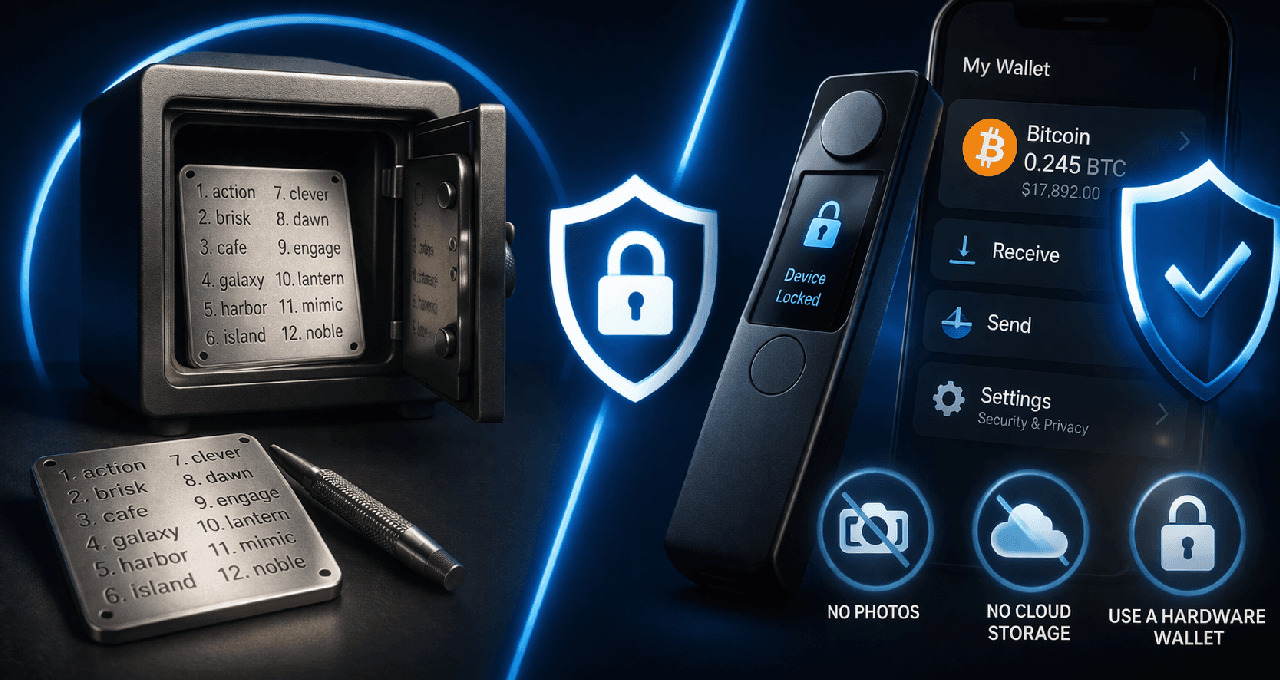
How to Secure Your Seed Phrase and Private Keys
Hey there, if you are just getting started with crypto trading, welcome! One of the very first things you need to understand is how to keep your seed phrase and private keys safe. These are basically the real keys to your money in the crypto world.
If someone else gets them, they can take your crypto. If you lose them, your funds could be gone forever. Unlike a regular bank app, there is no password reset or support team that can fix it. That is why this guide is here to help you in plain, simple language.
We will cover what these things actually are, why they matter so much, the easy mistakes beginners make, and the straightforward steps you can take to protect everything properly.
What Is a Seed Phrase?
A seed phrase (also called a recovery phrase) is usually a list of 12 or 24 words that your wallet creates for you. Think of it as the master backup for your entire wallet.
If your phone, laptop, or device gets lost, broken, or stolen, you can type these exact words into a new compatible wallet and get your funds back.
But here is the big warning: anyone who sees your seed phrase can usually control your crypto too. So treat it like the combination to a super valuable safe.
What Is a Private Key?
A private key is a secret code that gives you control over a specific wallet address or account. Most wallets create private keys automatically from your seed phrase.
Here is a simple way to keep them straight:
Term | Simple Meaning | What It Controls |
Seed phrase | Master wallet backup | Usually your whole wallet |
Private key | Direct access credential | One specific address or account |
The golden rule for every beginner: whoever controls the seed phrase or private keys controls the funds.
Why These Credentials Matter So Much
Crypto is different from traditional banking. When you use a self-custody wallet, you are the boss of your own money – but that also means you are fully responsible for keeping it safe.
Here is a quick comparison to make it clear:
Situation | Traditional Bank Account | Self-Custody Crypto Wallet |
Forgot password | Usually recoverable with support | You need your seed phrase |
Account gets hacked | Bank may help reverse it | Funds can be gone forever |
Device gets lost | Easy to log in from a new device | Recovery depends on your backup |
That is why building safe habits early on is one of the smartest things you can do as a new trader.
Common Mistakes Beginners Make
Most crypto losses happen because of simple, avoidable slip-ups rather than fancy hacker attacks. Here they are in a clear table so you can spot them easily:
Mistake | Why It Is Dangerous |
Taking a screenshot of the seed phrase | It can end up in cloud backups or get hacked |
Saving it in notes, email, or chat apps | Hackers can access your accounts or device |
Typing it into fake recovery websites | Scammers drain your wallet instantly |
Sharing it with fake support staff | No real support team ever asks for it |
Keeping only one backup copy | One fire, flood, or lost paper and it is gone |
Best Practices for Securing Your Seed Phrase
The good news? Keeping things safe does not have to be complicated. Here is what actually works for most beginners:
Write it down clearly by hand on paper.
Double-check every word and the exact order.
Store the paper offline in a safe place.
Make a second copy and keep it somewhere completely different.
Consider a metal backup plate if you are holding larger amounts for the long term.
Best Practices for Securing Your Private Keys
Private keys are usually handled in the background by your wallet, but if you ever export one, treat it exactly like your seed phrase. The rules are the same: keep it offline, never share it, and avoid plain-text digital storage.
Rating the Key Tool: Hardware Wallet (0-5 scale)
Hardware wallets are the top recommended tool for better security once your holdings grow beyond small test amounts.
Rating: 5/5 (excellent choice for long-term safety)
Pros and Cons Table:
Pros | Cons |
Keeps private keys offline and isolated | Costs money (usually $50–$200) |
Protects against malware and phishing | Slightly less convenient for daily small trades |
Easy to use once set up | You still need to protect the seed phrase |
Great for larger or long-term holdings | Not needed for tiny test amounts |
When Should You Enter Your Seed Phrase?
Only enter it when restoring a wallet in the official app or on a trusted hardware device. Before you type anything, ask yourself: Is this the real app? Did I click a random link? Does it feel rushed or suspicious? If yes, stop and walk away.
Protect the Devices Around Your Wallet
Your phone and laptop matter too. Quick daily habits that help:
Use strong, unique passwords
Turn on two-factor authentication
Keep your operating system and apps updated
Avoid sketchy links or unknown browser extensions
What You Should Never Do
Here is the “stay safe” checklist in table form:
Never Do This | Why It Is Risky |
Take a photo or screenshot | It can leak through cloud or malware |
Store it in email or cloud notes | Digital accounts get hacked |
Send it in messaging apps | Chats can be forwarded or exposed |
Type it into random websites | Classic phishing trick |
Trust anyone asking for it | Legitimate help never needs it |
Rely only on memory | Memory fails over time |
Keep only one fragile paper copy | One accident can destroy everything |
A Simple Beginner Setup That Works Great
Start here and you will already be ahead of most new traders:
Create your wallet with a trusted provider.
Write the seed phrase on paper by hand.
Double-check the words and order.
Store the paper securely offline.
Make a second copy in a different safe spot.
Skip any digital copies.
Upgrade to a hardware wallet when your holdings grow.
Final Thoughts
Crypto security really boils down to common sense and a few solid habits. Your seed phrase and private keys are the foundation of everything. Keep them offline, private, accurate, and backed up in more than one place, and you will avoid the most common (and most expensive) beginner mistakes.
You have got this – take it one safe step at a time!
FAQ
What is the difference between a seed phrase and a private key?
A seed phrase is the master backup that can restore your whole wallet. A private key usually controls just one specific address.
Can I store my seed phrase on my phone?
It is safer not to. Phones can get lost, hacked, or backed up to the cloud.
Is it safe to save my seed phrase in Google Drive or Notes?
No. Any cloud or digital note creates extra risk.
When should I buy a hardware wallet?
Most people consider one once they move past small test amounts and want stronger protection for bigger holdings.
What should I do if I think my seed phrase was exposed?
Move your funds to a brand-new wallet with a fresh seed phrase right away. Do not wait.
Disclaimer: This content is for educational and informational purposes only and is not financial advice. Nothing here is a recommendation to buy or sell any asset or use any platform. Do your own research and manage your risk.
Need deeper training?
Join our structured modules with live examples and expert checklists for effective implementation.
JOIN THE ACADEMY