Key Takeaways
- Circulating supply is an estimate of how many tokens are actually available to the public, and it is not the same as total supply or maximum supply.
- No single source is automatically correct. Data aggregators, project documentation and the blockchain itself can all show different numbers, so cross-checking is the real skill.
- The gap between circulating supply and total supply is the part most beginners ignore, because it tells you how much new supply can still arrive through unlocks and emissions.
What Circulating Supply Actually Means
Circulating supply is the number of tokens that are currently held by the public and available to trade. It is the crypto version of what stock markets call public float.
CoinMarketCap describes circulating supply as the best approximation of the coins in the general public's hands, and it uses that figure rather than total supply to calculate market capitalization. CoinGecko takes a similar approach and subtracts uncirculated wallets, which can include locked wallets, vested wallets, and tokens held by a foundation or treasury.
The word approximation matters. Nobody can prove exactly how many tokens are truly liquid, because a wallet balance does not tell you the owner's intention. This is why supply figures are estimates that follow a published methodology, not exact readings.
Supply Types Compared
| Term | Plain meaning | Typical use |
|---|---|---|
| Circulating supply | Tokens available to the public right now | Market capitalization |
| Total supply | Tokens that exist today, minus verifiably burned tokens | Dilution analysis |
| Max supply | The hard cap the token can never exceed, if one exists | Long term issuance limits |
| Locked or vested supply | Tokens that exist but cannot be moved yet | Future unlock pressure |
| Burned supply | Tokens sent to an unspendable address or destroyed by the contract | Supply reduction |
Two formulas follow from this table:
- Market capitalization = price x circulating supply
- Fully diluted valuation, or FDV = price x max supply, or total supply when there is no cap
A token can look small by market capitalization and very large by FDV. That pattern is often called a low float, high FDV launch, and it simply means most of the supply has not reached the market yet.
Method 1: Start With a Data Aggregator
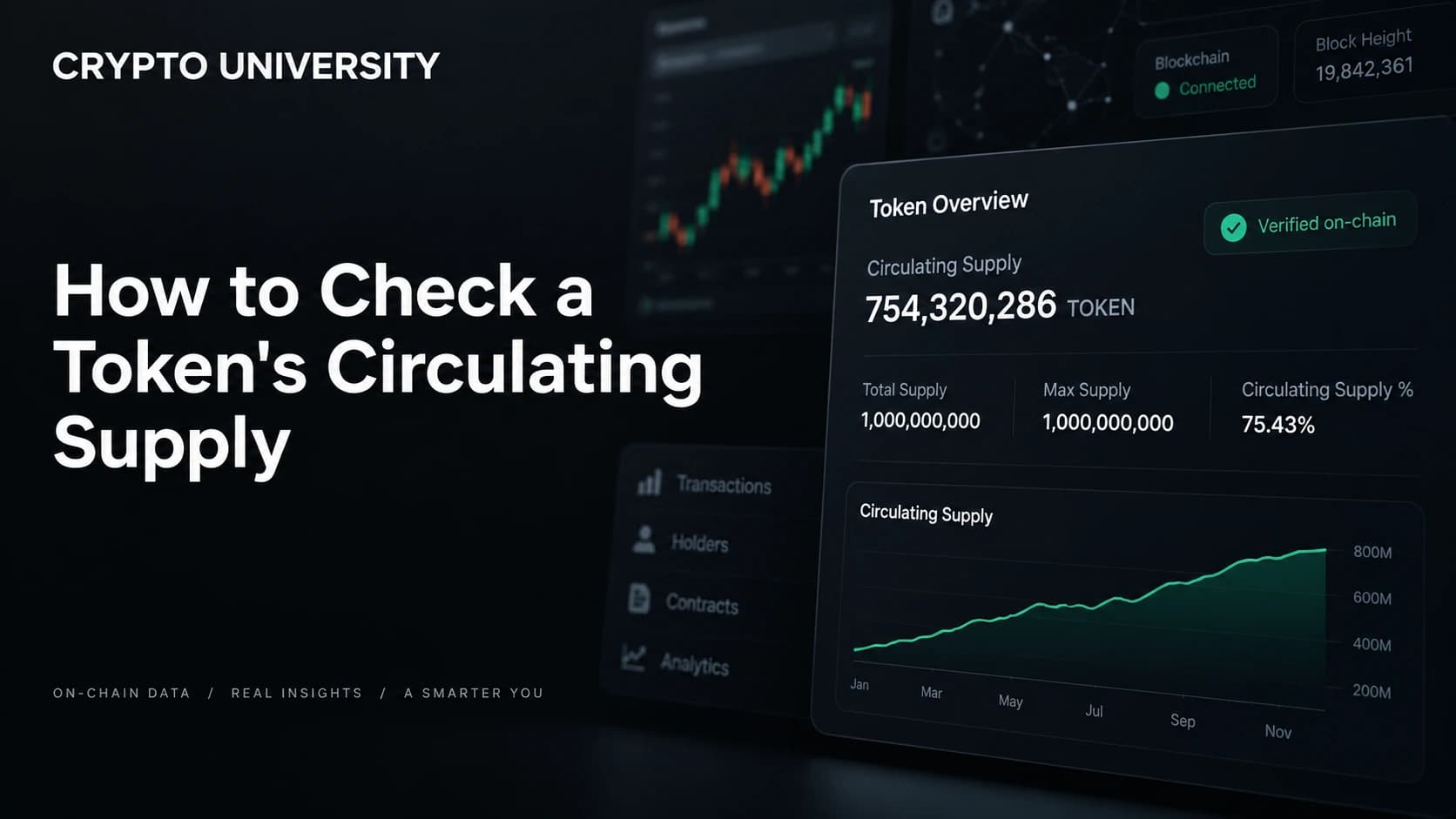
The fastest first check is a major data site such as CoinGecko or CoinMarketCap. Open the token page and read three fields together: circulating supply, total supply, and max supply. Most pages also show the percentage of supply already circulating.
Useful details to know:
- CoinMarketCap can display a self reported circulating supply next to its own verified figure, so read the label carefully.
- CoinGecko marks circulating supply with a dash symbol when it cannot verify the number.
- Aggregators do not always agree, because their rules differ. Staking is a common example. Some methodologies treat voluntarily staked tokens as circulating, since the holder can unstake, while protocol level locks with no exit are excluded.
Treat the aggregator number as a starting point, not a final answer.
Method 2: Read the Project's Own Documentation
Every serious project should publish a tokenomics page or documentation section that lists allocations, cliff dates, vesting length and the addresses holding locked supply.
What to look for:
- The allocation table, showing team, investors, treasury, ecosystem and community shares
- Cliff dates, which release a large block at once
- Linear vesting, which drips tokens out over months or years
- The named wallet addresses for treasury and locked allocations
- Any minting rights, which mean total supply can grow later
If a project publishes no addresses and no schedule, that is a transparency gap worth noting. It does not prove bad intent, but it does mean you cannot verify anything independently.
Method 3: Verify On Chain With a Block Explorer
This is the step that separates a casual reader from a competent user. The blockchain shows total supply directly, and it shows the balances of the wallets that hold the locked portion.
Step by step on an EVM chain such as Ethereum
- Get the official contract address from the project site or the aggregator page. Never trust an address from a social media reply.
- Open the contract address on a block explorer such as Etherscan, BscScan, Arbiscan or Basescan.
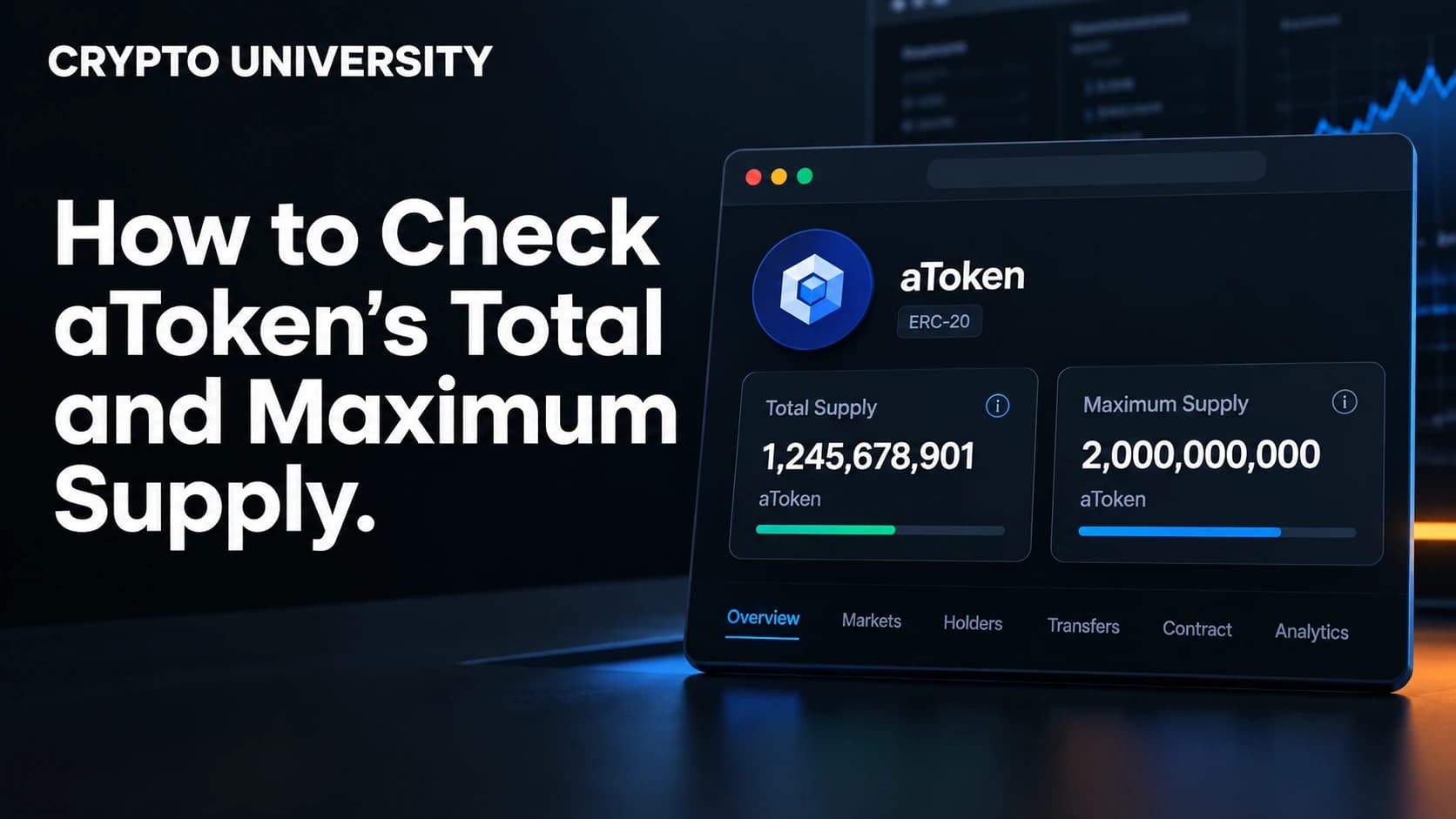
- Read the token overview panel. It shows max total supply, holders and transfers for that contract.
- Open the Contract tab, then Read Contract, and call totalSupply. Divide the raw number by 10 to the power of the decimals value, which is usually 18.
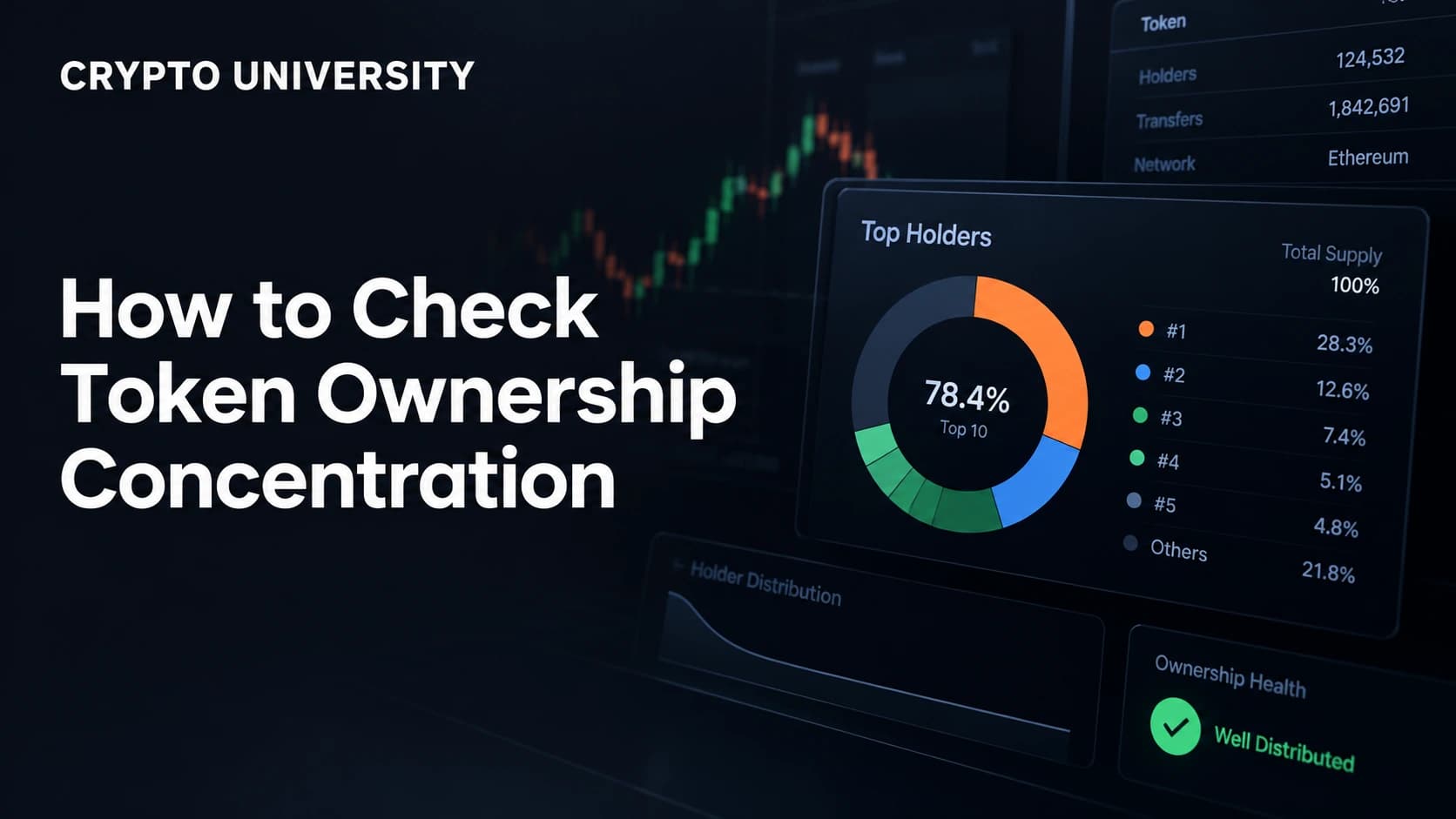
- Open the Holders tab and identify large addresses. Explorers label many of them, for example exchange wallets, bridges and burn addresses.
- Check the burn address balance. Many projects send tokens to 0x000000000000000000000000000000000000dEaD, which is an address nobody can spend from. Some contracts also include a burn function that reduces totalSupply directly.
- Subtract non-circulating locked and treasury balances, and any burn-address balances still included in totalSupply, to build your own circulating estimate. Do not subtract tokens again if a contract burn already reduced totalSupply.
One warning from Etherscan's own knowledge base: some tokens do not implement totalSupply in the standard way, which can produce odd results such as a holder appearing to own more than one hundred percent of supply. If numbers look impossible, inspect the contract code rather than trusting the display.
Other chains
| Chain | Where to check | What you read |
|---|---|---|
| Ethereum and EVM chains | Etherscan and equivalents | totalSupply, holders, burn address balance |
| Solana | Solscan or Solana Explorer, or the spl-token supply command | Mint supply, mint authority, top holders |
| Bitcoin | Any Bitcoin explorer, or a full node command that summarises the unspent output set | Coins issued to date against the 21 million cap |
| Cosmos chains | The chain's REST endpoint or explorer | Bank module supply and community pool balances |
Bitcoin is a useful teaching example. Its issued supply is fully auditable, yet a widely reported estimate suggests several million coins are permanently lost, which means even a transparent chain cannot show true liquid supply.
Method 4: Check the Unlock Calendar
Circulating supply is a snapshot. The schedule tells you where that snapshot is heading.
Unlock trackers such as Tokenomist, which was previously called Token Unlocks, and similar tools from CryptoRank and Messari, map cliff and linear releases for hundreds of assets. Read them for three things: the size of the next unlock as a percentage of circulating supply, which group receives it, and how many unlocks remain.
A five percent unlock into a deep liquid market is a very different situation from a five percent unlock into a thin one. Note the fact, and do not turn it into a prediction.
Worked Example
| Input | Value |
|---|---|
| Max supply | 1,000,000,000 |
| Burned tokens | 50,000,000 |
| Total supply | 950,000,000 |
| Locked team, investor and treasury balances | 600,000,000 |
| Circulating supply estimate | 350,000,000 |
| Token price | 0.50 USD |
| Market capitalization | 175,000,000 USD |
| Fully diluted valuation | 500,000,000 USD |
Circulating supply is 35 percent of the stated maximum in this example. The 600 million locked tokens may enter circulation over time; the 50 million burned tokens do not remain available for release. Nothing here says the price will move in any direction. It simply describes the structure.
Common Mistakes and Red Flags
- Using FDV and market capitalization as if they mean the same thing
- Assuming the aggregator figure is audited, when it may be partly self reported
- Copying a contract address from social media instead of an official source
- Ignoring mint authority, which lets a team create more tokens later
- Forgetting bridged and wrapped versions of the same token on other chains, which can double count supply
- Treating exchange wallet balances as locked supply when they are customer funds
Quick Verification Checklist
- Read circulating, total and max supply on two aggregators.
- Confirm the official contract address on the project site.
- Read totalSupply on the block explorer.
- Identify and total the locked, treasury and burn balances.
- Compare your own estimate to the published figure and note any gap.
- Check the unlock calendar for the next release.
- Check whether minting is still possible.
If your number and the published number differ by a wide margin, that is not proof of wrongdoing. It usually means the two methods classify treasury or staked tokens differently. Write down which definition you are using.
FAQ
Is circulating supply the same as liquid supply? No. Circulating supply counts tokens that are free to move. Liquid supply usually means tokens actually available in order books and pools right now, which is a smaller number.
Why do CoinGecko and CoinMarketCap show different figures for the same token? Because they apply different rules to treasury holdings, staked tokens and unlocked but unmoved allocations. Each site publishes its methodology, and reading it explains most gaps.
Do staked tokens count as circulating? It depends on the methodology. Voluntary staking that a holder can reverse is often counted as circulating, while a protocol enforced lock with no exit is usually excluded.
Can circulating supply go down? Yes. Burns, protocol fee destruction and permanently lost keys all reduce the effective supply, although lost keys are impossible to measure precisely.
Is a low circulating supply good or bad? Neither on its own. It is a structural fact that tells you how much supply can still arrive. Judge it alongside the unlock schedule, liquidity and how the tokens are allocated.
Related Terms
- Tokenomics: the design of a token's supply, distribution and incentives
- Vesting schedule: the timetable that releases allocated tokens over a set period
- Burn address: an address with no known private key, used to remove tokens from use
- Fully diluted valuation: price multiplied by the maximum or total possible supply
- Emissions: new tokens created continuously through mining, staking or reward programs
Sources
- CoinMarketCap, Supply (Circulating, Total, Max) methodology and FAQ
- CoinGecko, Supply Methodology and Supply Update FAQ
- CoinGecko Learn, What Is Circulating Supply and Why It Matters
- Etherscan Knowledge Base, Understanding Inconsistencies in Total Token Supply
- Etherscan API documentation, ERC-20 token total supply endpoint
- Tokenomist, token unlock and vesting documentation
More Reading
- Best Token Safety Checkers in 2026
- How to Research a Crypto Project
- How to Get Started on Robinhood Chain: A Complete Beginner's Guide
This article is educational content. It is not financial advice and contains no price predictions. Supply figures are estimates that depend on published methodologies and can change.
Not sure which problem you have?
Use the Fixing Crypto Mistakes hub to identify the transaction, wallet, network, or exchange issue before taking another action.
OPEN TROUBLESHOOTING HUB