Key Takeaways
1. Tax is the real story. India taxes tokenized stocks like crypto: a flat 30% on gains, a 1% cut taken at source on every trade, and no way to use your losses to lower your bill.
2. The rules are still being written. Crypto is legal to hold, but SEBI's oversight of stock-like tokens is new and unsettled, and it's unclear whether Indian platforms even offer these to residents.
3. There's often a better path. For most Indians who just want US shares like Apple or an S&P 500 fund, the established LRS route to real stocks is usually cheaper after tax and far simpler legally.
Should You Even Bother?
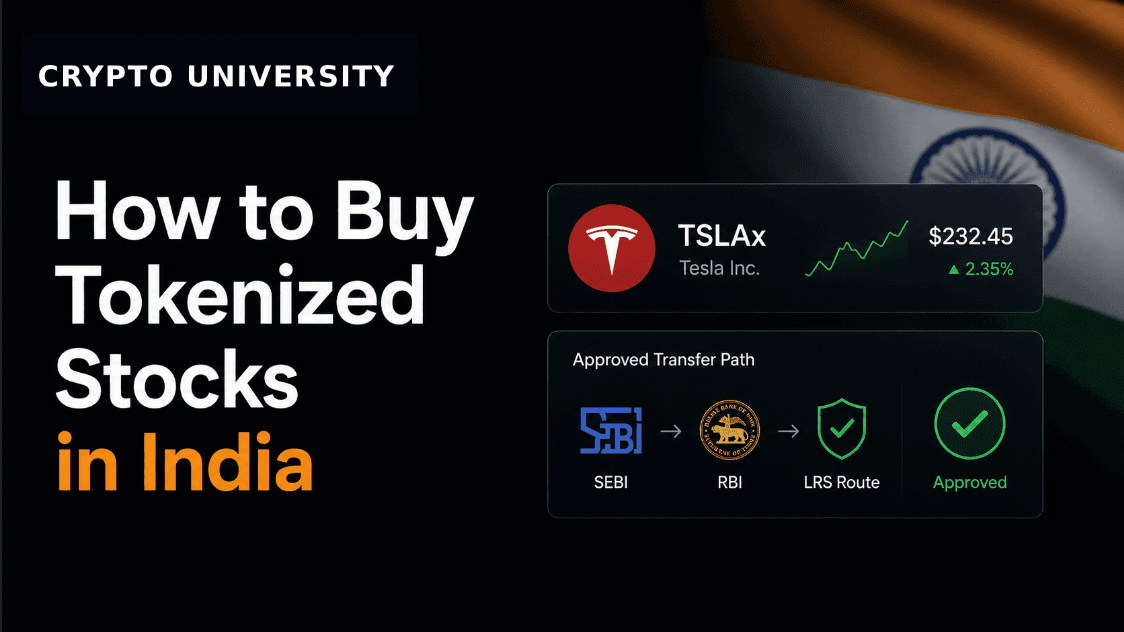
If you're an investor in India, the real question about tokenized stocks isn't whether you can get them. It's whether you should, once you see the tax bill. India has one of the toughest crypto tax systems in the world, and tokenized stocks almost certainly fall under it. Add rules that are still taking shape, plus the fact that Indians already have clean, legal ways to buy US stocks, and the honest advice here leans more toward caution than hype. Let's start with the tax, because it shapes everything else.
The Tax Reality (Start Here)
India taxes what it calls Virtual Digital Assets, or VDAs, using rules designed to discourage speculation. Tokenized stocks would almost certainly be treated the same way. Here's what that means in simple terms.
Tax Rule | What It Means For You |
|---|---|
30% flat tax on gains | You pay 30% on any profit no matter how long you held or what you earn, plus surcharge and a 4% cess. There's no lower rate for long-term holding. |
1% TDS on every transfer | A 1% cut is taken at the source on your transactions. For active traders, that's a constant drag and something to track on every single trade. |
No loss offset | A loss on one token can't cancel out a gain on another, and you can't carry losses forward. Every trade is judged on its own. |
That last rule is the harsh one. Imagine your tokenized Tesla drops 20% while your tokenized Nvidia rises 20%. Normally those would roughly cancel out. In India, you'd still owe tax on the winner and get nothing back for the loser. For a volatile, single-stock-heavy asset like this, that's a serious built-in disadvantage that has nothing to do with the product itself.
Compare that to the usual route. Indians who buy actual US shares through the Liberalised Remittance Scheme (LRS) and regulated brokers face capital-gains rules that, while not simple, generally let you offset losses and reward longer holding periods. So for many people, the tax code itself makes a case for real shares over tokenized ones.
This isn't tax advice. The details are nuanced and keep changing, so have a chartered accountant run your actual numbers before you commit.
Where the Rules Stand
India's position can be summed up as legal, but heavily taxed and still forming. Here's the quick version.
Regulator / Area | Current Position |
|---|---|
Crypto legality | Crypto and other digital tokens are legal to hold and trade. They're taxed as VDAs and platforms must follow anti-money-laundering rules. They are not legal tender. |
SEBI (markets regulator) | From April 2025, SEBI started watching tokens that behave like securities, such as those offering dividends or returns. Tokenized stocks clearly fit that description, but no settled rulebook for retail access existed as of mid-2026. |
RBI and the LRS route | The RBI has long been cautious on crypto. Tokenized US stocks sit awkwardly next to the established LRS route for investing abroad, and whether they fit those rules is genuinely unsettled. |
The bottom line: the ground for retail tokenized stocks in India isn't clearly paved yet, and we couldn't confirm that any major platform formally serves Indian residents for these products. Treat both as open questions until you verify them yourself.
What Indian Investors Can Realistically Do
Given the tax and the unsettled rules, here are the sensible options.
Option | Why It Matters |
|---|---|
Lean toward the established route | Indians have a clear, legal path to US stocks through LRS-based international brokers and domestic platforms. For most people wanting Apple or S&P 500 exposure, this is cheaper after tax and cleaner legally. |
Check eligibility and tax first | If you still want to explore tokenized products, confirm the platform actually serves Indian residents, then ask a chartered accountant how the 30% tax and TDS would hit you. The tax can wipe out the convenience. |
Understand the product first | Read up on what tokenized stocks are and the risks involved before putting money in. Knowing how they work protects you. |
Don't try to dodge restrictions | A VPN or fake residency won't change your tax residency or legal standing, and it breaks platform rules. It's not worth it. |
Frequently Asked Questions
Can Indians buy tokenized US stocks?
In theory, yes, since tokenized stocks resemble VDAs that Indians can legally hold. But platform availability for Indian residents isn't confirmed, and how they fit under SEBI, RBI, and LRS rules is still unsettled. Check eligibility and get local advice first.
How are tokenized stocks taxed in India?
Almost certainly under the VDA regime: a flat 30% tax on gains (plus surcharge and cess), 1% TDS on transfers, and no offsetting of losses. That makes them tax-inefficient compared to buying real US stocks through LRS. Talk to a chartered accountant.
Is it better to buy real US stocks in India?
For many Indians, yes. The LRS route to actual US shares generally allows loss offset and holding-period benefits that the flat 30% VDA regime doesn't, so it's often cheaper after tax and clearer legally.
Does SEBI regulate tokenized stocks?
SEBI began overseeing security-like tokens in April 2025, and tokenized stocks resemble securities. But a settled retail rulebook wasn't in place as of mid-2026, so the position is still evolving.
Can I use a VPN to access these platforms from India?
No. A VPN doesn't change your tax residency or legal position, and it breaks the platform's terms of service. It's not recommended.
Disclaimer: This content is for educational and informational purposes only and is not financial advice. Nothing here is a recommendation to buy or sell any asset or use any platform. Do your own research and manage your risk. Research date: Aug 4, 2026. India's crypto tax and SEBI framework are evolving, so verify the current rules and consult a chartered accountant before acting.
Explore the Crypto University Tokenized Stocks Directory.
Are Tokenized Stocks Legal? Regulations, Restrictions and Investor Rights
The Companies Behind Tokenized Stocks: xStocks, Ondo, Dinari, Robinhood and More
Need deeper training?
Join our structured modules with live examples and expert checklists for effective implementation.
JOIN THE ACADEMY