Most people still think of AI as a chat box.
You ask a question.
It responds.
End of interaction.
That model worked well in the early days, but it is already starting to feel limiting for anyone doing real work. The moment tasks become multi-step, repetitive, or require follow-through, chat-based AI starts breaking down.
This is where agentic AI tools are quietly pulling ahead.
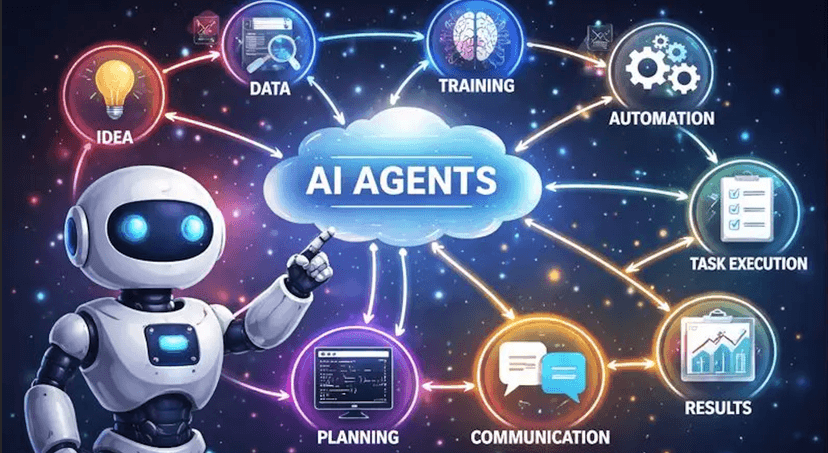
Instead of answering prompts, they execute workflows.
Why the Shift Is Happening Now
The last year made something clear. AI isn’t just about intelligence anymore. It’s about agency.
People don’t want better answers. They want outcomes.
This is why large players are suddenly paying attention to tools that can plan tasks, take actions, and iterate without constant supervision.
It’s also why Meta’s recent acquisition activity around agent-based AI systems raised eyebrows across the industry. The signal was simple. The future of AI isn’t conversational, it’s operational.
Where Chat Interfaces Fall Short
Chat-based tools like ChatGPT are excellent for thinking, writing, and brainstorming. But they still rely heavily on human input to move things forward.
You are the manager.
The AI is the assistant.
That relationship flips with agentic tools.
How Manus Approaches AI Differently
This is where Manus becomes interesting.
Instead of waiting for prompts, Manus is designed to break objectives into steps, execute tasks autonomously, and handle hand-offs between actions.
It behaves less like a chatbot and more like a junior operator that doesn’t get tired or distracted.
For anyone working with research, automation, multi-tool workflows, or repetitive digital tasks, this difference is not theoretical. It’s immediately noticeable.
Who This Is Actually For (And Who It’s Not)
Manus is not for casual users who just want answers or summaries.
It’s better suited for people who think in systems, care about execution speed, and want AI to do things, not just explain them.
If your workflow already involves multiple tools, tabs, or steps, agentic AI becomes a natural upgrade.
The Bigger Picture
The most important part isn’t Manus itself.
It’s the direction this signals.
AI tools are moving away from being reactive and toward being self-directed within constraints. That shift will define which platforms matter over the next few years.
If you want to explore how agentic AI works in practice, you can access Manus here and see how it fits into your own workflows.