Start Here
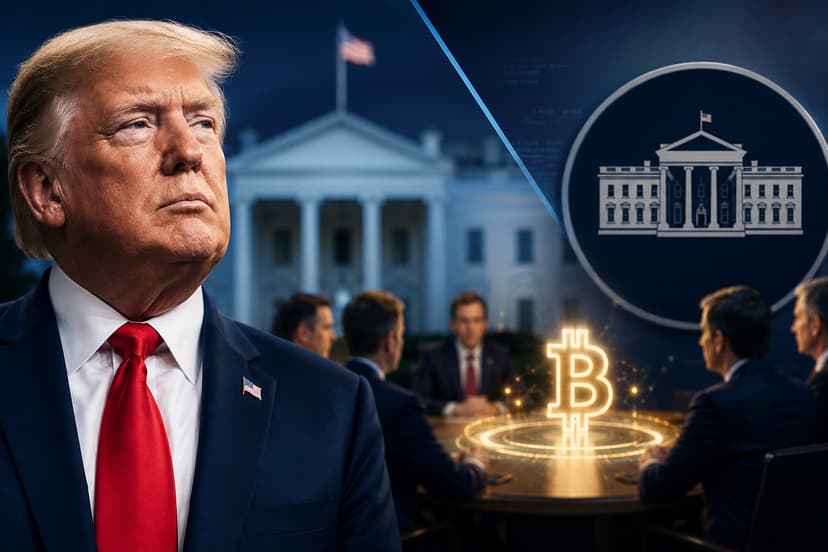
Trump spent August 19, 2026 in a room with crypto's biggest names and the two agency heads who hold the most sway over digital assets. He used the occasion for one purpose: leaning on Congress to move a single bill, the Digital Asset Market Clarity Act, better known simply as the Clarity Act.
Most of the coverage fixated on who got an invitation and on an off-script shout-out to a trading venue called Hyperliquid, which we break down in a companion piece. The real business of the day was smaller and, frankly, more consequential than either angle. Trump was working to unstick a bill that would settle, for the first time in American law, exactly who oversees crypto and by what rules. A hard test for that bill is coming in September, and the gathering amounted to a public pressure campaign to nudge the odds in its favor.
Below is the full picture, laid out step by step.
The Date and Setting
This happened on Wednesday, August 19, 2026, inside the White House. Trump pulled executives into the Oval Office for private feedback, and that sit-down was wrapped into a wider gathering of leaders from crypto, finance, and AI. The timing was no accident. It followed the SEC's release of proposed crypto guidance and came a day ahead of the first session of the CFTC's new Innovation Advisory Committee. Put differently, the administration stacked up a full week of crypto-friendly signals and placed the president squarely in the middle of them.
The Point of the Meeting
Nobody was there to unveil fresh policy. The aim was to pour momentum into policy that already exists.
Three outcomes were on Trump's wish list. He wanted to throw his weight behind the Clarity Act in public, casting its passage as a matter of national interest rather than a handout to an industry. He wanted unfiltered input from the firms that would have to operate under the rules, giving the administration grounds to say the bill was shaped by people who actually run these businesses. And he wanted to remind the senators still sitting on the fence that the White House is personally in the game and expects a result.
Trump spelled out the pitch himself. A "fair version" of the bill, he argued, would "keep us ahead of China, keep us ahead of everyone else" and "open the door to the next wave of innovations." Cut through the phrasing and the note to Congress was blunt: move on this, or watch the business walk out the door.
The Room's Read on It
Nobody in the room treated passage as a lock, though the mood leaned confident. Trump's people characterized what is left as "a few small issues" and pronounced the bill "very doable," even pointing to particular senators who still have to be talked around.
Coinbase chief Brian Armstrong labeled the Clarity Act "a true bipartisan compromise," which is precisely the packaging backers need if the plan is to pull in Democratic votes. SEC Chairman Paul Atkins put the regulatory point plainly, arguing that genuine certainty for crypto rules hinges on the Clarity Act getting across the line. Running underneath all of it was one steady theme: agencies can hand down guidance, but the lasting rulebook can only come from Congress, and that rulebook is exactly what big institutions are holding out for before they go all in.
Who Showed Up, and From Which Firms
The invite list rewards a close look, because it maps out which corners of the industry the White House now treats as the establishment.
From the business side, the room held Coinbase, with CEO Brian Armstrong, plus Gemini, Ripple, Kraken, Anchorage Digital, Grayscale, and the exchange OKX. Chainlink Labs came with its CEO Sergey Nazarov, which stands out given that Chainlink is plumbing rather than a retail exchange. Executives from prediction market and AI outfits rounded out the guest list, a reflection of how the administration keeps folding crypto and AI together into one "America wins in tech" narrative.
From the government side, the two figures who count most for where crypto is headed were both in attendance: SEC Chairman Paul Atkins and the CFTC under Chairman Mike Selig. Seeing them side by side is the part that matters. Because the Clarity Act is essentially a question of splitting authority between these two agencies, having both chiefs in the room and lined up with the president sends a clear message that the regulators themselves are not the roadblock.
The Clarity Act, and the More Realistic September Outcome
This is the piece most reporting skipped over quickly, so it deserves some patience.
What the bill really does. The Digital Asset Market Clarity Act is a market structure law in the making. Right now the thorniest open question in US crypto is one of jurisdiction: does a particular token count as a security, dropping it under the SEC, or as a commodity, dropping it under the CFTC? That one gray area is why so many of these disputes have been decided in courtrooms instead of by regulation. The Clarity Act writes that boundary into statute, hands the SEC and CFTC defined territory, and spells out how digital assets can legally be issued, listed, and traded in the country. The House has already cleared its version. The battle has now shifted to the Senate.
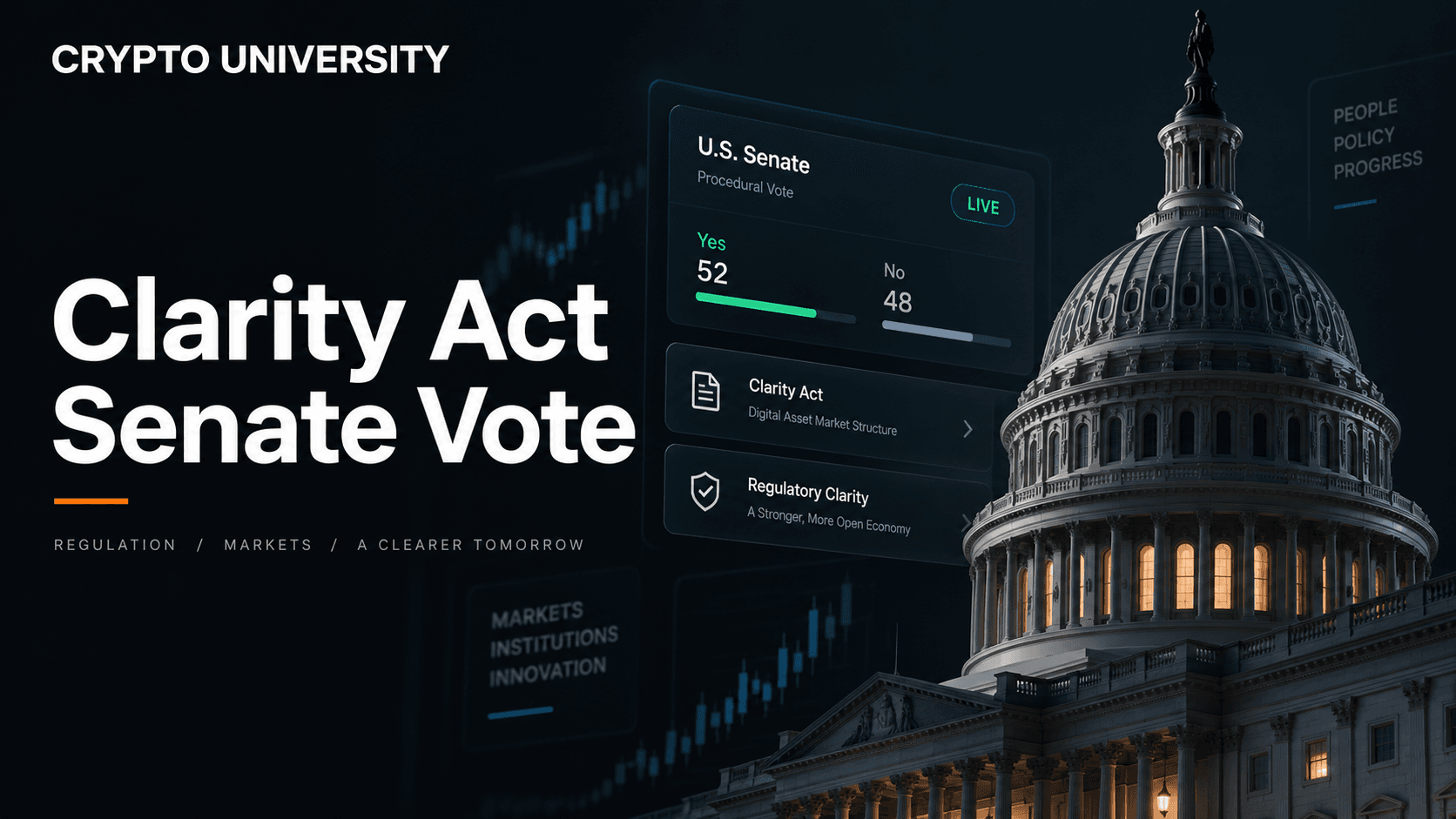
The current state of play. The bill blew past an August 7 target. On August 8, Senate Majority Leader John Thune filed cloture, a procedural step that teed up a vote without locking in an outcome. The opening procedural vote is set for roughly September 15, 2026, right as senators come back from their break.
Why September is a slog. Cloture demands 60 votes. Republicans cannot get there by themselves, so at minimum a handful of Democrats have to come along. A number of sticking points are still open, among them ethics wording designed to bar senior officials and the president from personally cashing in on crypto, rules aimed at illicit finance, and language around stablecoin rewards. Senator Elizabeth Warren has fronted the resistance, contending the bill was "written by the crypto industry to protect and advance the crypto industry." That ethics dispute is no side issue. It ties directly to Trump's own crypto ventures, which makes certain Democratic votes tougher to secure precisely because the president is so plainly wrapped up in it.
The honest forecast. Level with the numbers rather than leaning hopeful. Dragging the September 15 procedural vote onto the floor is realistic. Turning the whole bill into signed law before year end is a far steeper climb, and traders have clocked it. Betting-market prices on 2026 passage slid hard through August, with several venues putting the chance well under a coin flip. Thin floor time ahead of midterm campaigning is the real bottleneck. The grounded take: look for real movement and an actual vote in September, brace for the ethics and consumer-protection fights to eat up the oxygen, and do not pencil in a signed law by December. A gathering like this one nudges the odds a little. It does not rewrite the vote count.
What It Signals for Crypto in the US and Everywhere Else
At home, the meeting is one more marker of a plain shift: Washington has swung from viewing crypto as a hazard to be boxed in toward treating it as an industry to be won and held onshore. Regardless of whether the Clarity Act clears on time, that change in direction is the story with staying power. Real rules, once they land, would let banks, asset managers, and large fintechs get involved without the legal fog that has kept plenty of them on the sidelines.
Beyond US borders, having America set a market structure benchmark carries weight because of what the dollar does. The bulk of crypto trading is quoted in dollars and dollar-linked stablecoins. If the US lays down clear rules and drags activity onshore, it reinforces the dollar's grip inside crypto rather than handing that turf to rival jurisdictions. Europe already runs its MiCA regime, and hubs such as the UAE, Singapore, and Hong Kong have spent years recruiting crypto companies. A credible US framework redraws the competitive picture and puts pressure on other regions to keep their own regimes appealing. The quiet global tug-of-war here is not really about crypto as such. It is about which financial system the next round of digital markets ends up standing on.
How Prices Reacted
Traders treated the week as risk-on, but it pays to peel the meeting apart from everything else landing at the same moment.
Bitcoin climbed back above $70,000 after slipping under $64,000 earlier in the week, and various snapshots across the following day pegged it in the low-to-mid $70,000s. Ethereum tacked on a few percent to sit in the mid-$2,000s. XRP ranked among the strongest large caps, gaining somewhere near 20%, and the advance was wide, with most major coins finishing the day in the green. The real headliner was Hyperliquid's HYPE token, which spiked more than 20% after Trump singled it out by name. The swing was sharp enough that around $3 billion in positions got liquidated market-wide over the surrounding 24 hours as shorts were run over.
Here is the caveat, and it is exactly the sort of thing that divides a useful piece from a hype reel: the meeting was not the lone spark. That same stretch carried Treasury buyback news, a supportive macro backdrop, and new SEC guidance. Prices had already begun turning higher before Trump opened his mouth. The meeting threw on fuel and handed the rally a tidy storyline, but pinning the entire move on one White House event would overstate its part. The truer read is that policy momentum and macro tailwinds showed up together, and the market paid up for the pair.
Watch the Meeting
It is worth watching footage from the White House event to catch the tone firsthand rather than filtered through recaps:
Practical Takeaways
- The August 19, 2026 meeting was a pressure play with one aim: pushing the Clarity Act through the Senate.
- The Clarity Act exists to settle who regulates crypto, carving authority between the SEC and CFTC and fixing the security-versus-commodity line in law.
- The next genuine hurdle is a procedural vote around September 15. It takes 60 votes, so Democrats have to be won over, and passage this year is anything but assured.
- Ethics wording tied to Trump's own crypto holdings is a real barrier, not a technicality.
- The rally was real but had many parents. Policy momentum and macro tailwinds moved together, so do not hand the credit to the meeting alone.
- The wider frame is a US government trying to reel crypto activity onshore and define the global benchmark, with the dollar's dominance as the quiet prize.
FAQ
What is the Clarity Act, plainly?
It is a bill that lays down how crypto gets regulated in the US. Its central job is deciding when a digital asset sits with the SEC (as a security) and when it sits with the CFTC (as a commodity), and mapping out how tokens can be legally issued and traded.
Did the meeting change any law?
No. It was a political and lobbying occasion. Nothing was passed or signed. The purpose was to stack up support before a Senate vote.
When does the Senate vote?
The first procedural vote is slated for about September 15, 2026. Clearing it needs 60 votes, so some Democratic backing is required. Getting the bill fully into law would take further steps and is not guaranteed this year.
Who was in the room?
President Trump, SEC Chairman Paul Atkins, and CFTC Chairman Mike Selig, alongside executives from Coinbase, Gemini, Ripple, Chainlink Labs, Kraken, Anchorage Digital, Grayscale, and OKX, plus prediction market and AI leaders.
Why did prices climb?
A blend of drivers, not just the meeting. Bitcoin pushed above $70,000 on a mix of policy optimism, Treasury buyback news, and a friendly macro setup. The meeting amplified a move already underway rather than kicking it off.