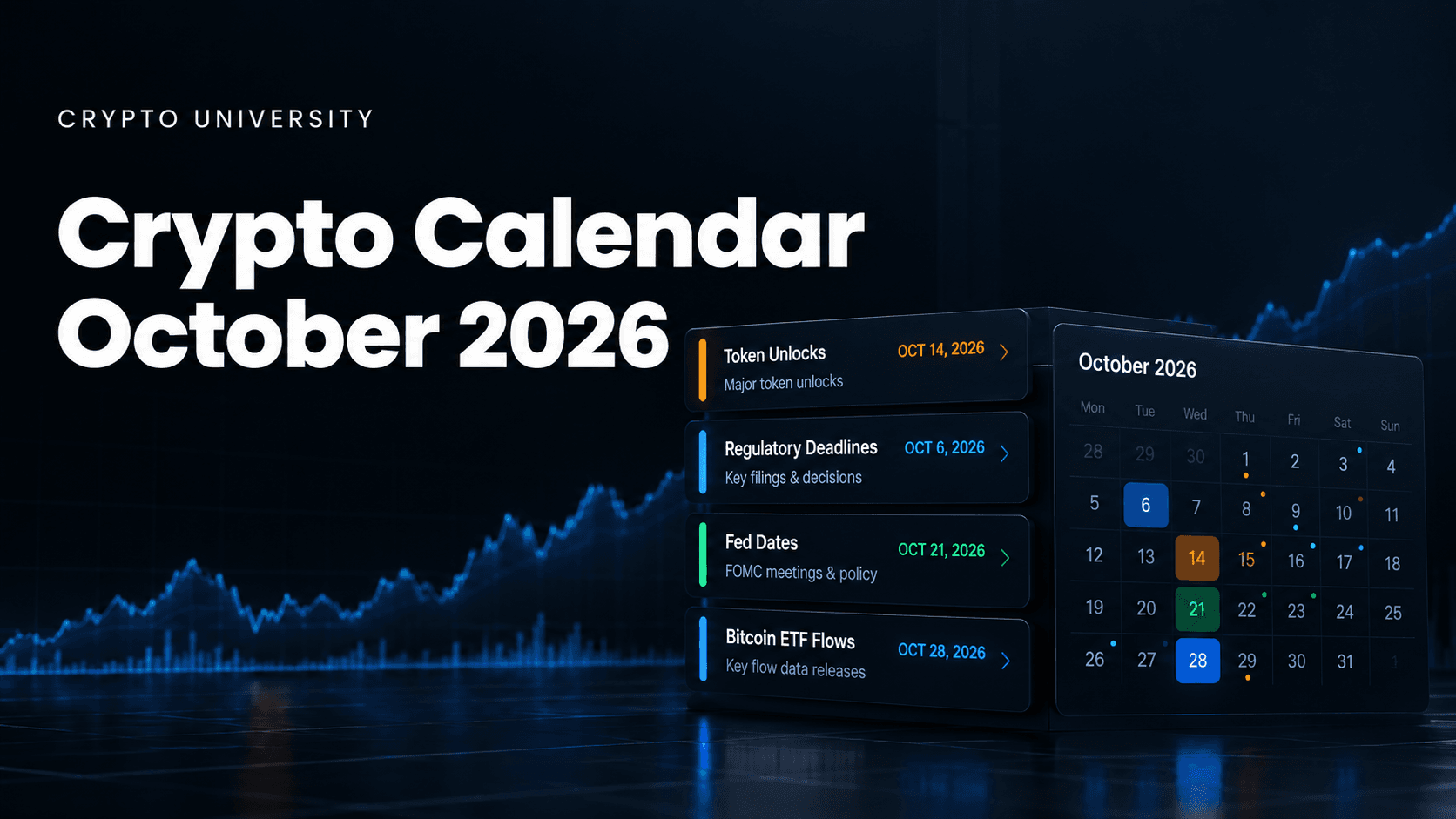

Spot Bitcoin exchange-traded funds (ETFs) approved by the U.S. Securities and Exchange Commission in January 2024 have become a major force in crypto markets. News about these funds often correlates with price movements through supply-and-demand dynamics.
What Are Spot Bitcoin ETFs?
Unlike futures-based ETFs, spot ETFs hold actual Bitcoin. When investors buy ETF shares, the fund’s authorized participants purchase Bitcoin on the open market to back those shares. Large inflows therefore create direct buying pressure.
As of March 2026, the largest spot Bitcoin ETFs include BlackRock’s iShares Bitcoin Trust (IBIT), Fidelity Wise Origin Bitcoin Fund (FBTC), and Grayscale Bitcoin Trust (GBTC), with combined assets under management exceeding $100 billion.
How ETF-Related News Affects Price
Inflow and outflow reports
Weekly or daily inflow data released by issuers show institutional demand. Historical data shows that every $1 billion in net inflows has historically corresponded to roughly 3–3.6% upward price movement, while equivalent outflows exert downward pressure.Regulatory or product announcements
News of new ETF launches, fee changes, or expanded availability (such as options trading) tends to increase market confidence and attract capital.Macro and policy signals
Statements from the SEC, Federal Reserve, or political figures about crypto regulation can amplify ETF flows because institutions view ETFs as a regulated, compliant entry point.“Sell the news” reactions
After major positive events (e.g., initial approval), short-term profit-taking sometimes occurs even as long-term inflows continue.
Historical Context (Factual Examples)
Following the January 2024 launch, Bitcoin rose from approximately $46,000 to new highs above $73,000 in March 2024, partly supported by early ETF demand.
In late 2025, sustained inflows helped push Bitcoin past $100,000 before later corrections.
During drawdowns, ETF investors have shown relatively low redemption rates compared with retail holders.
These patterns illustrate correlation, not causation. Broader market factors such as halvings, macroeconomic conditions, and adoption trends also play roles.
Why Institutions Use Bitcoin ETFs
ETFs offer familiar brokerage access, custody by regulated entities, and no need to manage private keys. This lowers barriers for pension funds, financial advisers, and traditional investors.
Limitations and Considerations
ETF flows reflect only one segment of the market.
Bitcoin held in ETFs is not available for on-chain uses such as DeFi or payments.
Tracking-error and management fees (typically 0.20–0.25% for the lowest-cost funds) slightly reduce returns compared with holding Bitcoin directly.
Bitcoin ETF news remains an important signal of institutional interest, but it should be viewed alongside on-chain metrics and global adoption trends.
Suggested FAQ
Q: Do ETF inflows directly buy Bitcoin every day?
A: Authorized participants create or redeem shares in large blocks, typically once per day, which results in net buying or selling pressure.
Q: Can retail investors buy Bitcoin ETFs?
A: Yes, through standard brokerage accounts in countries where the ETFs are listed.
Q: How do I track daily ETF flows?
A: Issuers publish data on their websites; aggregated figures appear on sites such as The Block or ETF.com.
Q: Are Bitcoin ETFs the only way institutions invest?
A: No. Some use over-the-counter purchases, futures, or direct custody solutions.