Key Takeaways
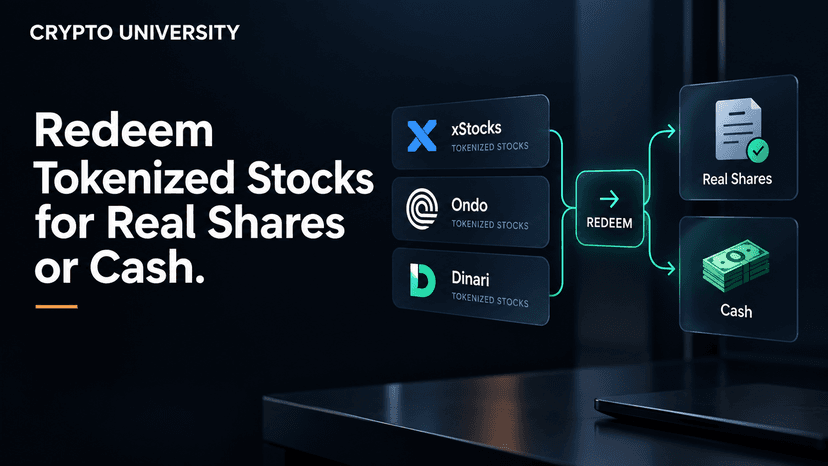
Yes, backed tokenized stocks can technically be redeemed, but that door is built for large professional players, not everyday traders. You'll almost always exit by simply selling on the market.
No mainstream product hands you real registered shares. If you want actual shares in your name, the route is: sell your tokens, move the cash to a broker, then buy the shares.
Redemption quietly keeps your selling price fair. You never touch it, but it's worth watching, because if an issuer pauses it, token prices can drift away from the real value.
"Can I turn my token into the actual share?" is one of the most common questions you'll see in tokenized-stock forums. The honest answer has a specific shape: yes, redemption exists, it holds the whole system together, and you'll almost certainly never use it yourself.
As a regular trader, you get out by selling. Redemption is the behind-the-scenes machinery that keeps that selling price fair. Let's walk through how both exits work, in plain language, product by product.
The Two Ways Out
There are only two real exits, and they play very different roles.
Exit | What you do | What it means for you |
|---|---|---|
Sell on the market | Sell your tokens for USDT, USDC, dollars, or crypto on the exchange or DEX where they trade, whenever the venue is open. | This is how nearly every regular trader gets out. It takes seconds, and it stays fair because the second exit exists in the background. |
Redeem with the issuer | Hand your tokens back to the issuer, receive the value of the underlying asset (usually cash from selling the share), and the tokens are then destroyed. | Technically open for the major backed products, but built for big players. You onboard directly with the issuer, meet minimum sizes, work within processing windows tied to market hours, and pay fees that make small redemptions pointless. |
Here's why the relationship matters. Because professionals can redeem when tokens trade cheap (and create new ones when they trade expensive), market prices stay tied to the real value of the underlying stock. That keeps your simple sell fair. Redemption is infrastructure, not a feature you'll use, a lot like the "creation units" behind regular ETFs that everyday investors never touch.
How It Works, Product by Product
Each issuer handles this a little differently. Here's the quick version for the main products.
Product | How redemption works | The bottom line for you |
|---|---|---|
xStocks (Backed) | You can redeem with Backed for a fee, but Kraken's own docs spell out the easy route: just sell for dollars, crypto, or stablecoins on the platform. Redemption pays out the cash value of the underlying, since these are tracker certificates rather than direct share ownership. | Just sell on the venue. |
Ondo Global Markets | Minting and redemption run 24/5 as a built-in feature, and tokens can be redeemed for the value of shares held at US broker-dealers. Ondo makes this access more visible than most, but you still need to be eligible (non-US, onboarded) and meet minimums. | Casual holders will still use the open market. |
Dinari dShares | These run on US broker-dealer rails and are issued and redeemed through Dinari's regulated setup, with partner platforms (like Gemini in the EU) handling the everyday interface. It's the closest thing to normal share settlement. | You still exit through the platform, not by demanding paper certificates. |
Robinhood stock tokens | These are derivatives and debt securities, so there's no share redemption for holders at all. You simply close your position inside the app. | This is the biggest structural difference between Robinhood tokens and backed products. |
Can You Ever Get the Actual Shares?
The dream version of this question is: "Can I turn my TSLAx into real TSLA shares in my brokerage account?" For regular traders, the answer is basically no across today's mainstream products.
The structures pay out cash value, the minimums and onboarding shut small holders out of the primary flows, and nobody has built a service that ships registered shares across borders to random retail brokerages.
If you want shares in your own name, the path is refreshingly boring: sell your tokens, wire the money to a broker, and buy the shares. Two steps, done in an afternoon, as long as you have brokerage access. And if you don't have that access, that's usually the whole reason you're holding tokens in the first place.
When Redemption Still Matters to You
Even though you'll never redeem tokens yourself, this behind-the-scenes machinery can affect your life in three situations.
Situation | Why it matters |
|---|---|
Redemption pauses | This is your early-warning system. If an issuer suspends minting or redemption, prices lose their anchor and a widening gap can appear during market hours. Checking issuer status pages during stressful times beats scrolling social media. |
Delisting or platform exit | If your exchange drops a token, the backing and redemption still exist. You'd withdraw and sell elsewhere, or (if you're large enough) go through issuer onboarding. Annoying, but not a disaster. |
Issuer wind-down | If a regulated product is shut down in an orderly way, holders are settled at the underlying value according to the terms. The documents you agreed to spell out the process, which is a good reason to have at least skimmed them. |
Frequently Asked Questions
Can I redeem xStocks for real shares?
xStocks are redeemed with the issuer for the value of the underlying (a fee applies), and this is mostly used by professional participants. As a retail holder, you sell on exchanges or DEXs instead. Receiving registered shares in your name isn't the standard mechanism.
Is selling on an exchange worse than redeeming?
Usually it's better for regular traders. Selling is instant, with no issuer onboarding and no minimums, and the price stays fair precisely because redemption arbitrage exists in the background. You pay a small spread; redeemers pay fees and wait through a process.
What happens if redemption is suspended?
The price anchor weakens, and tokens can start trading at a lasting premium or discount. Treat a suspension as a real risk signal about the issuer, not just a minor inconvenience.
Can large holders get better terms?
Yes. Authorized participants and large holders can onboard directly with issuers for primary mint and redeem flows. That's exactly who the mechanism was designed for.
Do Robinhood stock tokens have redemption?
No. They're derivatives and debt securities that you close within Robinhood's platform. There's nothing to redeem because no direct claim on collateral runs to you.
Sources
Source | Link |
|---|---|
Backed legal documentation (redemption terms) | |
Kraken xStocks FAQ | |
Ondo Global Markets docs (24/5 mint/redeem) | |
Dinari / tZERO infrastructure announcements | July 2026 |
Disclaimer: This content is for educational and informational purposes only and is not financial advice. Nothing here is a recommendation to buy or sell any asset or use any platform. Do your own research and manage your risk.
More Reading
Explore the Crypto University Tokenized Stocks Directory.
Tokenized Stocks Explained: A Simple Guide for Beginner Traders
How to Buy Tokenized Stocks: A Step by Step Guide for Beginners
Best Platforms for Tokenized Stocks: Exchanges, Brokers and Onchain Apps
Tokenized Stock Risks: Issuers, Custody, Liquidity and Tracking Error
Can You Buy Tokenized Stocks in the USA? Current Rules and Alternatives