Mastering On-Chain Credit and Undercollateralized Lending: The Next Frontier of DeFi in 2026
For the first half of the decentralized finance (DeFi) decade, the golden rule was absolute: over-collateralization. To borrow $100, you had to lock up $150 in crypto. While this elegantly solved the problem of trustless lending, it severely limited capital efficiency and prevented DeFi from servicing the real-world economy, where undercollateralized credit is the lifeblood of business growth, real estate development, and consumer finance.
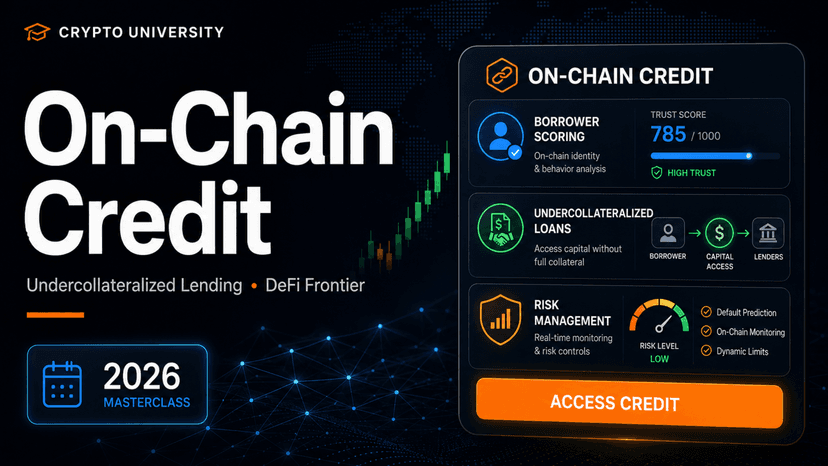
By 2026, this paradigm has fundamentally shifted. The rise of On-Chain Private Credit and Decentralized Identity (DID) has unlocked the next major frontier of DeFi: undercollateralized lending. Sophisticated protocols now use Zero-Knowledge (ZK) proofs, on-chain reputation scoring, and real-world legal wrappers to extend credit to verified businesses and individuals without requiring 150% crypto collateral.
For High-Net-Worth Individuals (HNWIs), family offices, and yield-seeking institutional desks, on-chain credit pools offer something highly coveted: uncorrelated, real-world yield. Unlike inflationary DeFi farming, these protocols generate returns from the actual interest payments of real-world borrowers (e.g., emerging market fintechs, real estate developers, or corporate trade finance). This comprehensive guide breaks down the mechanics of modern on-chain credit, the top-tier platforms for accessing these opportunities in 2026, and the strict due diligence frameworks required to manage default risk safely.
The 3 Pillars of Modern On-Chain Credit in 2026
To participate in decentralized private credit, you must understand the infrastructure that makes undercollateralized lending viable and secure.
Decentralized Identity (DID) and ZK Credit Scoring:
Instead of over-collateralizing with crypto, borrowers build an on-chain credit profile. Using Zero-Knowledge proofs, borrowers can prove they have a verified identity, a clean legal history, and a strong track record of repaying traditional or on-chain debts, without revealing their sensitive personal or corporate data to the public blockchain. This "Proof of Creditworthiness" replaces the need for excessive collateral.
Real-World Asset (RWA) Legal Wrappers:
Top-tier credit protocols do not rely on handshake agreements. Loans are originated off-chain by licensed entities and tokenized on-chain as debt instruments (often structured as Special Purpose Vehicles or SPVs). This legal wrapper ensures that in the event of a default, the protocol has legally enforceable recourse to the borrower’s real-world assets, providing a safety net for on-chain lenders.
Risk Tranching (Senior and Junior Debt):
To cater to diverse risk appetites, on-chain credit pools are divided into tranches. Senior Tranches are paid first and offer lower, but highly protected, yields (e.g., 6-8% APY). Junior (or Subordinated) Tranches absorb the first losses in the event of a default but are rewarded with significantly higher yields (e.g., 12-18% APY) and a share of the protocol's upside. This allows conservative investors to access private credit with defined risk parameters.
Top Platforms and Tools for On-Chain Credit in 2026
Deploying capital into private credit requires a stack that balances rigorous underwriting, regulatory compliance, and precise portfolio tracking.
1. Kraken: Best for Regulated Access to Tokenized Private Credit
For investors who want exposure to real-world yield without navigating the complex, permissioned smart contracts of raw DeFi credit protocols, Kraken offers the most compliant, institutional-grade gateway.
Core Features: Kraken’s institutional and advanced retail offerings increasingly feature access to vetted, tokenized private credit funds and RWA debt instruments. These products undergo strict internal due diligence, ensuring that the underlying borrowers are legitimate, audited entities.
Fiat Integration and Custody: Investors can fund these positions directly with fiat currency and hold the resulting yield-bearing tokens within Kraken’s segregated, insured cold storage environment, completely bypassing the operational risk of self-custodying complex debt tokens.
Why Investors Choose It: It provides the ultimate peace of mind. You gain access to the high yields of private credit markets, backed by the regulatory compliance, proof-of-reserves, and institutional security of a top-tier global exchange.
👉 Access Regulated, Tokenized Private Credit and RWA Yield on Kraken (Use referral code: QjZ0L3)
2. Ledger: Best for Securing Tranche Tokens and Governance Rights
For DeFi natives who prefer to interact directly with decentralized credit protocols (like Goldfinch, Maple, or TrueFi), securing the wallet is paramount. Debt tokens represent a legal claim to future cash flows, making them high-value targets.
Core Features: Ledger hardware wallets provide FIPS 140-2 Level 3 certified Secure Element protection. When you deposit capital into a senior or junior credit tranche, or when you vote on governance proposals regarding loan underwriting standards, Ledger ensures every signature is physically verified.
Clear Signing for Complex Debt Contracts: Credit protocols often involve multi-step transactions (e.g., approving a stablecoin, depositing into a pool, and minting a tranche token). Ledger’s Clear Signing technology parses these interactions, displaying human-readable details to prevent "blind signing" attacks that could disguise malicious approvals as routine deposits.
Why Investors Choose It: It provides the ultimate physical circuit breaker, ensuring that your claim to real-world yield cannot be stolen or manipulated by remote digital attacks.
👉 Secure Your On-Chain Credit Positions with a Ledger Hardware Wallet
3. TradingView: Best for Monitoring Credit Spreads and Default Metrics
Successful private credit investing requires macroeconomic awareness. You are essentially acting as a bond investor, and you must monitor the "credit spread" (the difference in yield between risky on-chain debt and "risk-free" U.S. Treasuries).
Core Features: Advanced investors use TradingView to chart the yield of specific on-chain credit pools against traditional benchmarks (like the iBoxx USD Liquid High Yield Index or the US 2-Year Treasury Yield TVC:US02Y).
Risk Dashboarding: You can build custom watchlists to monitor the Total Value Deployed (TVD) and historical default rates of major credit protocols. A sudden spike in a protocol's advertised APY is often a leading indicator of increased risk or a scramble for liquidity, not a genuine opportunity.
Why Investors Choose It: It provides the quantitative, data-driven visibility needed to determine if the risk premium offered by an on-chain credit pool adequately compensates for the underlying default risk.
👉 Analyze On-Chain Credit Spreads and Yield Curves with TradingView
Step-by-Step: How to Evaluate and Invest in an On-Chain Credit Pool
Investing in undercollateralized debt requires institutional-grade due diligence. Follow this exact blueprint:
Step 1: Vet the Underwriting and Origination Process
Do not invest based on headline APY alone. Investigate who is originating the loans. Does the protocol rely on a centralized, licensed underwriter with a proven track record, or is it purely algorithmic and community-voted? Look for protocols that publish detailed, anonymized borrower financials, collateral schedules (if any), and legal jurisdiction details.
Step 2: Choose Your Risk Tranche Wisely
Conservative Investors: Allocate to Senior Tranches. You will earn a lower yield, but your capital is protected by the junior tranche, which absorbs the first losses in the event of a borrower default.
Aggressive Investors: Allocate to Junior Tranches. Ensure that the higher yield adequately compensates for the risk of total loss on that specific tranche, and never allocate more than a small, speculative percentage of your total portfolio to this sleeve.
Step 3: Execute the Deposit via Hardware Wallet
Navigate to the official protocol interface. Connect your Ledger hardware wallet. Verify the smart contract address against the protocol’s official documentation. When approving the stablecoin spend limit, approve only the exact amount you are depositing. Verify the transaction details on the Ledger’s physical screen before signing.
Step 4: Monitor Borrower Health and Prepayments
Unlike traditional bonds, some on-chain credit facilities allow borrowers to prepay their loans without penalty. If interest rates drop, borrowers may refinance, returning your principal early and forcing you to reinvest at a lower rate (reinvestment risk). Monitor the protocol’s dashboards for prepayment trends and overall portfolio health.
Risk Management: The Hidden Dangers of On-Chain Credit
While on-chain credit offers attractive, uncorrelated yield, it introduces unique risks that must be actively managed:
Borrower Default Risk: This is the most significant risk. If a borrower goes bankrupt or refuses to pay, the junior tranche will be wiped out, and if defaults are severe enough, the senior tranche can also suffer losses. Mitigation: Diversify across multiple, uncorrelated credit protocols and borrower sectors (e.g., do not allocate all capital to emerging market fintech loans).
Liquidity and Lock-Up Risk: Unlike trading a token on a decentralized exchange, capital deployed into private credit pools is often subject to lock-up periods or withdrawal queues. You cannot instantly liquidate your position during a market panic. Mitigation: Only deploy capital you do not need for short-term liquidity, and maintain a robust cash/stablecoin buffer outside of credit pools.
Regulatory and Securities Risk: Tokenized debt instruments are highly likely to be classified as securities by regulators like the SEC. If a protocol fails to comply with registration or exemption requirements, it could be forced to shut down, freezing investor funds. Mitigation: Favor protocols that proactively restrict access to accredited investors via strict KYC/AML gateways and operate in crypto-friendly legal jurisdictions (e.g., Switzerland, UAE, or specific US states).
Tax Complexity: Interest payments from on-chain credit pools are typically classified as ordinary income at the time of distribution. Furthermore, if a loan defaults and is written off, claiming that capital loss requires meticulous, timestamped documentation. Mitigation: Use automated crypto tax software to track these events accurately.
👉 Automate Your Complex Private Credit Tax Tracking with Koinly
Frequently Asked Questions (FAQ)
Q: How is on-chain credit different from traditional DeFi lending (like Aave)?
A: Traditional DeFi lending is over-collateralized and purely crypto-native (e.g., you lock up ETH to borrow USDC). On-chain credit is undercollateralized and bridges to the real world. It relies on legal contracts, identity verification, and real-world cash flows to generate yield, making it functionally similar to traditional corporate bonds or private debt funds, but settled on a blockchain.
Q: How are on-chain credit yields taxed?
A: In most major jurisdictions, the interest or yield distributed from a credit pool is treated as ordinary income based on the fair market value of the tokens at the time they are received or compounded. If you sell the underlying debt token at a loss due to a default, it may be claimable as a capital loss, but this requires strict documentation. Automated tracking via Koinly is essential to navigate this complexity.
Q: Can I lose my entire investment in a Senior Tranche?
A: While Senior Tranches are designed to be protected by the Junior Tranche, they are not risk-free. In a catastrophic scenario where borrower defaults exceed the total value of the Junior Tranche (e.g., a systemic failure of the underwriting process or fraud), Senior Tranche holders can also incur losses.
Q: Do I need to be an accredited investor to participate in on-chain credit?
A: Increasingly, yes. To comply with global securities laws, the most reputable and highest-quality on-chain credit protocols now implement strict, permissioned access. This requires passing a KYC/AML check and, in many cases, proving accredited investor status before you are allowed to deposit capital into their pools.
Risk Warning: Investing in on-chain credit and undercollateralized lending protocols carries significant risks, including borrower default, smart contract vulnerabilities, regulatory crackdowns, and severe illiquidity. Unlike over-collateralized DeFi, your principal is not fully protected by crypto assets, and you could sustain a partial or total loss of your investment.
Not Financial Advice: The information provided in this article is for educational and informational purposes only. It does not constitute financial, investment, legal, or tax advice. Always conduct your own rigorous research (DYOR) and consult with a qualified, licensed professional before deploying capital into private credit or debt instruments.
Affiliate Disclaimer: This article contains affiliate links. If you click on these links and sign up for a service or make a purchase, we may earn a commission at no additional cost to you. We only recommend platforms, tools, and services that we have thoroughly vetted and believe provide genuine value, security, and utility to our readers.