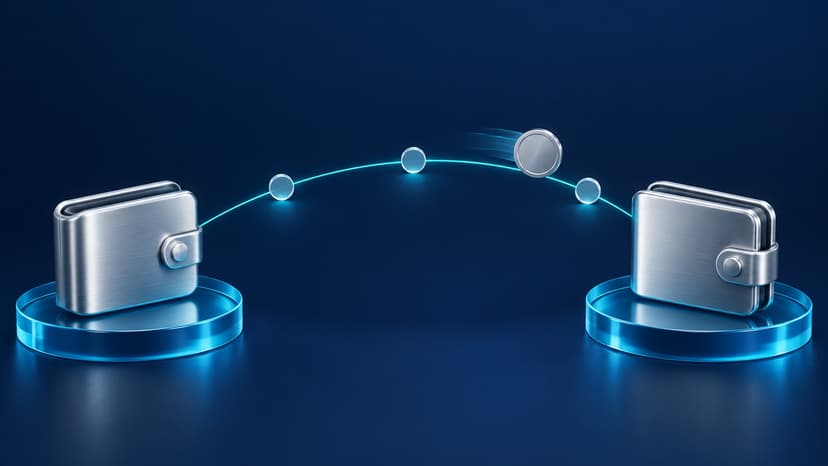
Moving crypto to another exchange sounds simple: create an account, copy an address and send. The mistakes usually happen in the details. The receiving service may not support the network you selected, a required memo may be missing, or funds may still be subject to a withdrawal restriction.
This checklist is for readers considering a move following Binance’s October 2026 security incident. Binance has announced phased withdrawal restoration. Check availability for the exact asset, network and account at the time you act.
Crypto University may earn a commission from the OKX and Bybit referral links below.
1. Decide what you are trying to change
Write down the reason for moving. Are you looking for a different trading interface, a working bank withdrawal route, less dependence on one custodian or a personal wallet for long-term storage?
Those goals lead to different decisions. A second exchange account may provide another trading or cash-out route. A wallet you control changes who holds the keys. Selling an asset for cash is a different transaction again.
A second exchange holds assets under its own terms. A personal wallet puts key management, backups and transaction approval in your hands. Neither choice removes the asset’s market risk.
Avoid making several unfamiliar changes at once. Switching exchanges, changing networks and learning a new wallet in one rushed transfer increases the number of things you need to get right.
2. Confirm the destination can legally serve you
Complete eligibility and identity checks before relying on the destination. Confirm your actual country or state, the legal entity serving you, the asset you intend to deposit and the functions you need afterward.
For eligible readers, OKX and Bybit are worth comparing. US readers can examine Coinbase, while recognising that OKX operates a separate US service. Bybit’s current restrictions exclude US residents.
EEA and UAE readers need the relevant entity and local terms rather than an international product page. If the destination cannot confirm support for your asset or residence, resolve that before funding.
3. Secure the destination before funding it
Use a unique password and strong authentication. Secure the connected email address too, because account recovery often depends on it.
Find support through the official website or app. A direct message, search advertisement or social-media reply does not prove company affiliation. People moving funds after a public incident are likely to encounter persuasive “recovery” offers.
If you use a personal wallet, understand its recovery information before transferring. Anyone who obtains a recovery phrase can potentially control the wallet. Coinbase’s self-custody wallet guidance explains that staff will never request it. A self-custody wallet is distinct from an exchange account.
Keep recovery material separate from ordinary screenshots, messages and cloud notes someone else might access. Make sure recovery does not depend on a single device.
4. Match the asset and network on both sides
Open deposit instructions inside your destination account. Copy a current address from those instructions, rather than a message or old note.
Check four details:
The exact asset, including whether it is a native or tokenised version.
The blockchain network the destination accepts for that deposit.
The complete receiving address.
Any required memo, destination tag or other identifier.
Compare these with the Binance withdrawal screen. A familiar ticker does not make network options interchangeable. An address that looks valid does not prove the receiving platform will credit that asset over that network.
Coinbase’s network guidance explains why sending and receiving networks must match. Bybit’s on-chain withdrawal instructions illustrate chain, minimum and memo checks.
Check the minimum deposit and instructions about unsupported transfers. Select a network supported at both ends, alongside comparing its fee. Resolve conflicting information before sending.
5. Check availability and costs before confirming
Read the withdrawal status, fee, amount to be received and any security delay in the official interface. A visible withdrawal option does not mean a transfer is complete.
During Binance’s phased restoration, an announcement about one network may not apply to another. An earlier suspension notice may also be outdated. Your live account and the latest official update matter more than a circulating screenshot.
The destination has its own conditions. Coinbase’s available-balance guide explains why funds available for some account activity may not yet be available to send or cash out. Check each platform separately.
Do not pay a third party offering to unlock, whitelist or speed up a legitimate exchange withdrawal.
6. Send a small test and verify receipt
Choose a test amount that is small relative to the planned transfer but meets the destination’s minimum after fees. Review the complete address and required identifiers before approving it. Coinbase’s memo guidance also recommends a small test for memo-based deposits.
Wait for the destination to credit the transfer. A submitted request, transaction hash or “processing” status differs from an available balance at the receiving exchange.
A network block explorer can show an on-chain transaction. The receiving platform’s internal crediting process is a separate check. Keep the transaction identifier and relevant account records.
Proceed with the remaining amount only after confirming receipt and rechecking instructions. A successful test helps verify the route; it does not establish the destination’s financial position or future availability.
7. Reconcile the transfer and keep your records
Record the withdrawn amount, fee, network, transaction identifier and credited amount. Investigate unexplained differences.
Save needed statements and transaction history before closing or abandoning an old account. A wallet address or bank statement may not preserve the full purchase and sale history.
If a deposit is delayed, use official support and the requested non-secret transaction details. Keep passwords, one-time authentication codes and recovery phrases private.
8. Decide how much should remain with a custodian
Ask what purpose each balance serves and how you would cope with another period of restricted access.
An exchange’s size and recovery history do not guarantee reimbursement. The PCAOB investor advisory explains why proof-of-reserves reports should not be treated as a full financial-statement audit or a promise of future withdrawals.
Self-custody removes exchange custody exposure while making private keys, backups and transaction approval your responsibility. Choose an arrangement you understand and can maintain.
Where to compare your next account
Check Crypto University’s OKX referral if the regional registration page matches your residence and eligible local entity. US readers must use the official OKX US route; EEA or UAE readers should use the appropriate local route if this referral does not apply.
Check the Bybit referral route where permitted. It does not establish eligibility for the separate EEA service or resolve entity-specific UAE restrictions. Bybit excludes US residents.
US readers can review Coinbase directly.
Compare the options in our Binance alternatives shortlist, OKX comparison and Bybit comparison.
Complete eligibility, network and test-transfer checks before moving a meaningful balance.