The crypto market can be overwhelming, with countless exchanges vying for your attention. Navigating this landscape requires a clear understanding of what truly matters for secure and efficient trading. This guide cuts through the noise, offering clarity on essential selection criteria.
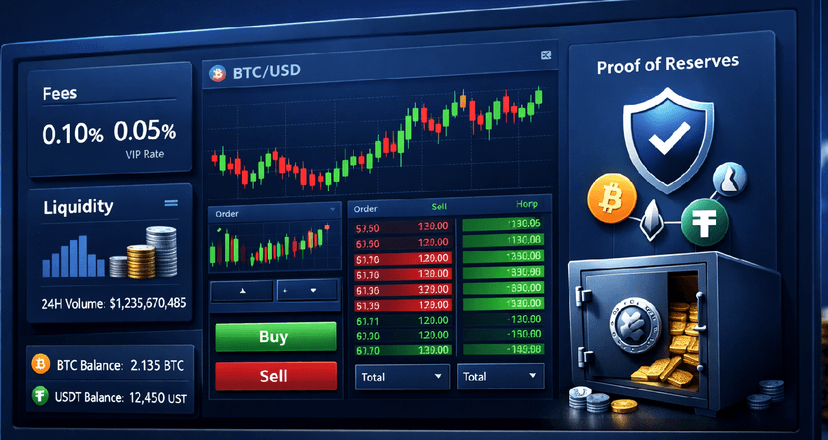
Choosing a crypto exchange is a critical decision that impacts your trading experience, security, and profitability. It involves a careful evaluation of an exchange’s fee structure, the depth of its liquidity, and its commitment to transparency through Proof of Reserves. For example, Weex withdrawal fees are network-dependent, typically costing around 0.00016 BTC, 0.0015 ETH, or 0.8 - 15 USDT depending on the blockchain used. Deposits are free, but withdrawals have minimum thresholds (e.g., 20 USDT minimum). Internal transfers to other WEEX users are free.
Why It Matters
- Cost Efficiency: High fees erode profits for frequent traders.
- Trade Execution: Sufficient liquidity ensures orders are filled quickly and at desired prices.
- Asset Security: Proof of Reserves provides assurance of an exchange’s financial health and ability to meet user withdrawals.
- Regulatory Compliance: Reputable exchanges often adhere to stricter regulatory standards, offering greater user protection.
- User Experience: A well-designed interface and responsive customer support enhance the overall trading journey.
How It Works: A Step-by-Step Guide
1. Assess Fee Structures: Compare trading fees (spot, futures, withdrawal), deposit fees, and any hidden charges. Look for tiered systems or discounts based on trading volume or holding the exchange’s native token.
2. Evaluate Liquidity: Check an exchange’s trading volume for your preferred assets. High volume indicates deep liquidity, meaning you can buy or sell large amounts without significantly impacting the price. Tools like CoinMarketCap or CoinGecko often provide this data.
3. Verify Proof of Reserves (PoR): Look for exchanges that regularly publish audited Proof of Reserves. This involves cryptographic verification that the exchange holds the assets it claims to on behalf of its users. Understand the methodology and frequency of these audits.
4. Consider Security Measures: Beyond PoR, examine other security features like two-factor authentication (2FA), cold storage practices, insurance funds, and withdrawal limits.
5. Review Regulatory Status: Research the exchange’s regulatory licenses and compliance in your jurisdiction. This indicates a commitment to legal and ethical operations.
Example: Choosing Between Two Exchanges
Consider a scenario where an intermediate trader, Alex, wants to invest $10,000 in Bitcoin. Alex is comparing Exchange A and Exchange B.
- Exchange A: Charges a 0.1% spot trading fee, has a daily BTC trading volume of $500 million, and publishes monthly Proof of Reserves reports from a reputable third-party auditor. It offers 2FA and cold storage for 95% of assets.
- Exchange B: Charges a 0.25% spot trading fee, has a daily BTC trading volume of $50 million, and provides an internal attestation of reserves annually. It also offers 2FA but does not detail its cold storage practices.
Alex calculates that on a $10,000 trade, Exchange A would charge $10 in fees, while Exchange B would charge $25. The significantly higher liquidity on Exchange A means Alex’s order is more likely to be filled quickly and at the desired price, minimizing slippage. Furthermore, Exchange A’s frequent and externally audited Proof of Reserves offers greater assurance of asset safety compared to Exchange B’s less rigorous approach. Based on these factors, Exchange A is the more prudent choice for Alex.
Common Mistakes
- Ignoring Fees: Overlooking small percentage fees can significantly impact long-term profitability, especially for active traders.
- Neglecting Liquidity: Trading on low-liquidity exchanges can lead to large price discrepancies (slippage) and difficulty executing large orders.
- Disregarding Security: Prioritizing low fees over robust security measures, including Proof of Reserves, exposes assets to higher risks of loss.
- Not Reading Terms and Conditions: Failing to understand withdrawal limits, KYC requirements, and other critical policies.
- Relying on Unverified Information: Trusting anecdotal evidence or unverified claims about an exchange’s reliability.
Quick Checklist
- Compare trading, deposit, and withdrawal fees.
- Check daily trading volume for key assets.
- Verify Proof of Reserves audit frequency and methodology.
- Assess security features like 2FA and cold storage.
- Research regulatory compliance and licenses.
- Read user reviews and support responsiveness.
- Test the platform’s user interface for ease of use.
Related Terms
- Slippage: The difference between the expected price of a trade and the price at which the trade is actually executed.
- Order Book: An electronic list of buy and sell orders for a specific financial instrument, organized by price level.
- Cold Storage: Storing cryptocurrency offline to protect it from online threats.
- Know Your Customer (KYC): A process by which businesses verify the identity of their clients.
- Market Maker: An individual or firm that stands ready to buy and sell a particular asset on a regular and continuous basis.
- Decentralized Exchange (DEX): A cryptocurrency exchange that operates without a central authority, allowing peer-to-peer trading.
FAQs
Q: What are typical crypto exchange fees?
A: Fees vary but commonly include spot trading fees (0.1% to 0.5%), withdrawal fees (fixed or percentage-based), and sometimes deposit fees.
Q: Why is liquidity important for a crypto exchange?
A: High liquidity ensures that buy and sell orders can be executed quickly and at stable prices, minimizing price slippage.
Q: What is Proof of Reserves (PoR)?
A: Proof of Reserves is an audited verification process that confirms a crypto exchange holds the digital assets it claims to on behalf of its users.
Q: How often should an exchange publish Proof of Reserves?
A: Reputable exchanges typically publish PoR reports monthly or quarterly, often with third-party audits, for enhanced transparency.
Q: Are all crypto exchanges regulated?
A: No, regulatory oversight varies significantly by jurisdiction. It’s crucial to choose exchanges compliant with local laws.
Q: What security features should I look for in an exchange?
A: Essential features include 2FA, cold storage for assets, insurance funds, and strong encryption protocols.
Q: Can I lose money due to low liquidity?
A: Yes, low liquidity can lead to significant price slippage, meaning your trades execute at prices worse than expected, resulting in losses.
Sources
Coin Metrics Research, Investopedia, Chainalysis, Binance Academy
Disclaimer
This article is for informational purposes only and does not constitute financial advice. Cryptocurrency investments are volatile and high-risk.