Key Takeaways
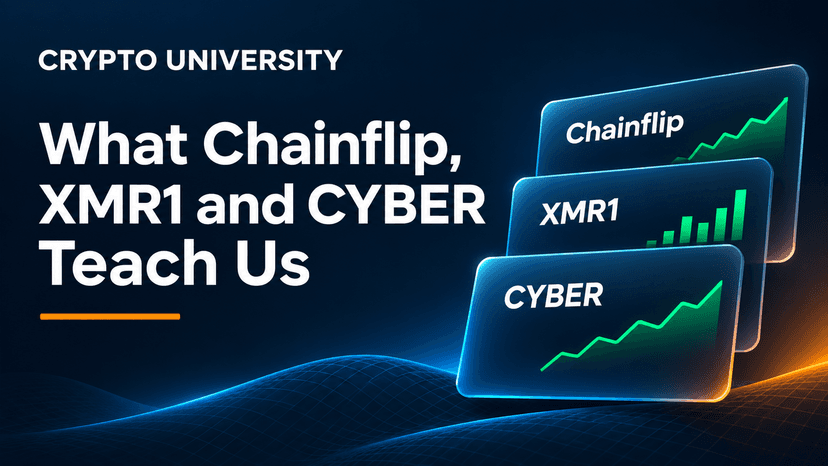
Three different designs, one lesson. A native swap vault, a custodial wrapped token and a lock-and-mint bridge all failed in the same week, and in each case the weak point was whoever had the power to move or create tokens.
None of these was a classic smart contract bug, based on early reports. The evidence so far points to signing keys, a deployer key and unauthorized minting, which are trust and key-management problems.
A wrapped token is a claim, not the asset. Native Monero and the CYBER token on its home chain kept working, while the wrapped or bridged versions carried the risk.
Why This Week Matters
Between November 20 and 22, 2026, three separate cross-chain systems reported losses. Wagyu's wrapped Monero token, XMR1, lost almost all of its market value. Chainflip paused its whole protocol after its vaults were drained. Cyber reported unexpected minting of its CYBER token on Solana, and South Korea's two largest exchanges froze CYBER transfers.
Each case is still under investigation, and every figure below is preliminary. But the three incidents together form a useful case study, because they cover the three main ways crypto moves between blockchains. To understand what went wrong, you first need to understand where the trust sits in each design.
How Cross-Chain Transfers Work
Blockchains cannot read each other directly. Bitcoin does not know what happens on Ethereum, and Solana does not know what happens on Hyperliquid. Any system that moves value between them needs someone, or something, to watch one chain and act on another. There are three common models.
Model | How it works | What you end up holding |
Lock-and-mint | You lock tokens in a contract on Chain A. The bridge mints an equal amount of a representation on Chain B. | A wrapped or bridged token on Chain B, backed by the locked tokens |
Burn-and-release | The reverse trip. You burn the representation on Chain B, and the bridge releases the original tokens on Chain A. | The original token back on Chain A |
Vault or validator swaps | A network of validators controls vaults on each chain. You deposit native BTC, and the vaults pay out native ETH or SOL on the other side. | A native asset, with no wrapped token involved |
Many token bridges, including those that use messaging layers such as LayerZero, use a lock-and-mint and burn-and-release pair. Custodial wrapped tokens work in a similar way, except a company holds the reserves instead of a contract. Chainflip uses the third model, in which validators jointly sign payouts from vaults that hold real assets.
Where the Trust Sits
Every bridge has a small set of powers that, if abused, can drain it. When you assess any cross-chain system, ask three questions.
Who can mint? If an address or a message can create new tokens on the destination chain, that power is worth as much as all the locked collateral.
Who signs releases? Someone must approve withdrawals from the vault or lockbox. That could be one key, a multisig, or a threshold group of validators.
What backs the token? A wrapped token is only worth what it can be redeemed for. If the reserves are missing, frozen or hard to verify, the token can lose its peg.
With those questions in mind, here is what is known about each incident so far.
Incident Breakdowns (Preliminary)
Wagyu XMR1 | Chainflip | Cyber (CYBER) | |
Date (2026) | November 20 | November 21 | November 21 (US time), exchange freezes November 22 (Korea time) |
Design | Custodial wrapped token on Hyperliquid | Validator-controlled native vaults | Lock-and-mint token bridge (LayerZero) |
Reported loss | About $13 million to $13.5 million in sale proceeds | About $12 million (revised up from $4.86 million) | About $968,000 to $1 million in sale proceeds |
Suspected weak point | Compromised deployer key | Signing system or validator compromise | Unauthorized minting and lockbox release |
Status | Service suspended, founder pledged personal refunds | Full safe mode, bounty offered | Under investigation, users told to avoid the bridge |
Wagyu XMR1: When the Wrapped Asset Depegs
XMR1 is a wrapped Monero token issued by Wagyu, a cross-chain swap and bridge service, so that Monero can trade on Hyperliquid. Users deposit Monero and receive XMR1, which they can later redeem. According to The Block, blockchain tracker Lookonchain reported that an attacker received 5.2 million XMR1 from the token's deployer wallet and sold part of it on Hyperliquid. The price fell more than 99%, from close to $500 to below $1.
Wagyu's founder blamed a breach at a hosting provider that exposed the deployer key, and pledged to refund affected users personally. The Block noted that this account had not been independently confirmed, and no refunds had been verified at the time of writing. Analysts also raised questions about the Monero reserves backing the remaining XMR1, which are hard to check because Monero is a privacy coin. Native Monero itself was not affected.
Chainflip: A Valid Signature on a Bad Withdrawal
Chainflip does not issue wrapped tokens. A set of 150 validators jointly controls a signing key, and 100 of them are needed to approve a payout. No single validator holds the full key. On November 21, a transaction carrying a valid signature from that key emptied the Ethereum vault in under ten minutes, The Block reported. Most proceeds were sent to Tornado Cash, and the stablecoin issuers did not freeze the USDC or USDT in time.
On November 22, Chainflip revised the total to about $12 million, including 122.86 BTC from its Bitcoin side. It linked the incident to a newly registered validator and said the specific mechanism had been found and fixed, but it had not yet published a full post-mortem. It offered the attacker a 10% bounty to return the rest. As of November 22, no compensation plan had been announced.
Context: this was not Chainflip's first incident. In September 2026, an attacker added a memo to TRON transactions that validators had already signed. The system read that memo as a separate swap and paid out twice, costing about $736,000 in USDT. Validators later voted to reimburse affected liquidity providers from surplus protocol funds. That earlier outcome does not guarantee the same for the November loss.
Cyber: Unbacked Minting on Solana
Cyber moves its CYBER token between chains through a LayerZero bridge. On Ethereum, CYBER is held in a lockbox contract. According to The Block, 5,213,000 CYBER was minted on Solana, and about two minutes later the same amount left the Ethereum lockbox. Most of it was sold for ETH within the hour.
Cyber described the event as "unexpected minting" and asked users not to use the bridge or deposit CYBER to exchanges. It also told users they did not need to migrate tokens or sign anything, which is a useful signal: follow-up scams often ask victims to "connect a wallet" after a hack. Upbit and Bithumb suspended CYBER deposits and withdrawals. The cause had not been confirmed when this article was written.
Recurring Failure Patterns
These three cases fit patterns that appear again and again in bridge losses.
Pattern | What goes wrong | Where it shows up |
Message validation | The system accepts an instruction it should reject, such as a forged mint message or an extra memo. | Chainflip in September; under review in the CYBER case |
Key compromise | A key that can mint or release funds is stolen or misused, so the contract follows a valid but malicious order. | XMR1 deployer key; Chainflip signing system (suspected) |
Accounting mismatch | Tokens on one chain no longer match collateral on the other, so the representation becomes unbacked. | Minted CYBER on Solana; XMR1 reserve questions |
The common thread is that code can be correct and still be drained. A vault that obeys a valid signature, or a token that lets its deployer mint, is only as secure as the keys and processes behind it.
Checklist: How to Assess a Bridge Before Using It
Find out what you will hold. Will you receive the native asset or a wrapped version? Check the token contract and its issuer, not just the ticker.
Identify who can mint and release. Look for a single admin key, a small multisig, or a large validator set, and read how keys are stored and rotated.
Check proof of backing. Can anyone verify the locked collateral on-chain? If not, you are trusting the operator's word.
Review the security record. Look for public audits, a bug bounty, past incidents and how users were treated afterward.
Limit exposure and time. Bridge only what you need, and avoid holding a wrapped asset for long when the native one is available.
Watch for pause notices. After an incident, use only official channels. Never sign a transaction or share a seed phrase because a "recovery" message asks you to.
A wrapped asset is not the same as the native asset. It is a claim on reserves held somewhere else, and that claim depends on the bridge staying solvent and honest. When the bridge fails, the native chain can be fine while the wrapped token falls to near zero.
Go deeper on smart contract risk in Crypto University's DeFi Security track.
FAQ
What is the difference between a bridge and a cross-chain swap?
A bridge usually locks your token on one chain and gives you a representation of it on another. A cross-chain swap, such as Chainflip, trades one native asset for another native asset using vaults on each chain.
Was Monero hacked?
No. Reports describe a compromise of Wagyu's XMR1 wrapped token on Hyperliquid. The Monero blockchain and native XMR were not affected.
Will victims of these exploits get refunds?
It is not known. Wagyu's founder pledged personal refunds, Chainflip offered the attacker a bounty but had not announced compensation, and Cyber was still investigating. A pledge is not a guarantee.
Why do exchanges freeze deposits after a bridge exploit?
To stop unbacked or stolen tokens from being deposited and sold to other users. Freezes protect the exchange and its customers while the project works out which tokens are legitimate.
Is a wrapped token always riskier than the native coin?
It adds risk, because you depend on the bridge or issuer as well as the base chain. Large, well-audited wrapped assets with verifiable reserves carry less extra risk than small or opaque ones, but the extra layer is always there.
Related Terms
Bridge: Infrastructure that moves or represents assets and messages between separate blockchain networks.
Wrapped Token: A token that mirrors another asset at a 1:1 ratio so it can be used on a chain that does not support the original.
Validator: A network participant that checks and approves transactions, and in some bridges helps sign withdrawals from shared vaults.
Disclaimer
This article is for educational purposes only and is not financial, legal or investment advice. Details of these incidents are preliminary and may change as the projects publish post-mortems. Always do your own research before using any bridge or protocol.All three incidents were still under investigation on November 23, 2026. Chainflip raised its own loss estimate from about $4.86 million to about $12 million on November 22, so the headline hook figure has changed. Recheck every figure, refund statement and cause against each protocol's official post-mortem on publish day.
Sources
The Block: Chainflip vault drain and suspected key compromise
CoinCentral: Chainflip revises loss to $12 million, offers bounty
Cryptonews: Chainflip validator link and compensation status
The Crypto Times: Chainflip September TRON memo exploit
The Block: Wagyu XMR1 plunges after deployer key hack
KuCoin News: XMR1 reserve questions raised by Bitquery
The Block: Cyber investigates suspected bridge exploit
More Crypto University Reading