Key Takeaways
Checking a balance is read-only and safe. A block explorer only needs your public address. It never needs your seed phrase, private key, or password.
One address is often not the whole wallet. Most wallets spread funds across many addresses, so a single lookup may show zero even when the wallet still holds coins.
An extended public key (xpub) shows the full picture. Some explorers and watch-only tools can scan every address in a wallet from one xpub, but it reveals your whole history, so treat it as private.
Why This Is a Good First Step
If you found an old Bitcoin address in an email, a notebook, a screenshot, or an exchange withdrawal record, the first question is simple: is anything still there?
You can answer that without touching the funds. The Bitcoin blockchain is a public ledger. Anyone can look up any address and see what it received, what it sent, and what remains. This lookup does not move coins, does not sign anything, and does not connect to your wallet.
That makes it the safest possible starting point before you spend time searching for a seed phrase or an old wallet file.
What a Block Explorer Shows
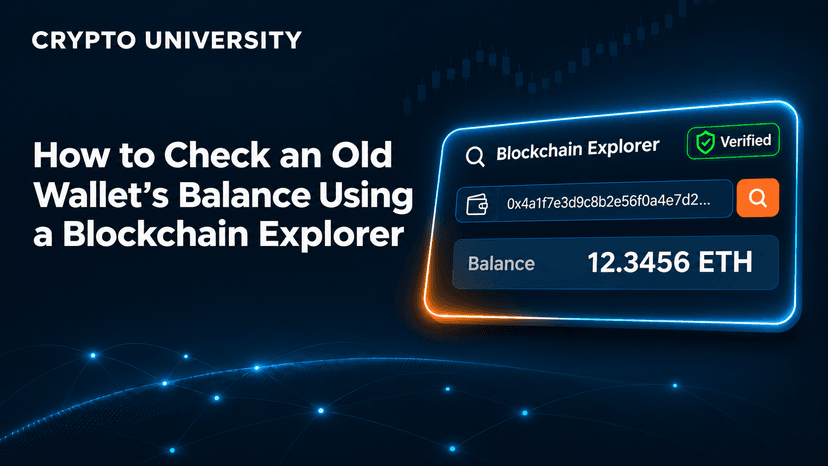
A block explorer is a website that reads blockchain data and displays it in a readable form. When you search an address, you usually see the following.
Field | What it means |
|---|---|
Balance | Bitcoin currently held at this address (its unspent outputs) |
Total received | Every amount ever sent to this address, added together |
Total sent | Every amount ever spent from this address |
Transaction count | How many transactions involved this address |
Transaction list | Each transaction with date, amount, and confirmations |
UTXOs | The individual unspent pieces of Bitcoin that make up the balance |
Balance is not the same as total received. An address can show a large "total received" and a zero balance, which means the coins were spent or moved later.
Popular Bitcoin Block Explorers
All of these are free for basic address lookups.
Explorer | Website | Notable features |
|---|---|---|
Open source, can be self-hosted, Tor version available | ||
Blockstream Explorer | Open source (Esplora), Tor version available | |
Blockchair | Covers Bitcoin plus forks such as Bitcoin Cash and Bitcoin SV | |
Blockchain.com Explorer | blockchain.com/explorer | Long-running explorer, supports xpub search |
For a single Bitcoin address, mempool.space or Blockstream Explorer are common starting points. Using two explorers to cross-check is a simple way to confirm the result.
Step by Step: Check an Old Bitcoin Address Balance
Copy the full address. Avoid retyping it by hand. One wrong character gives you a different address or an error.
Confirm it is a Bitcoin address. Bitcoin addresses start with 1, 3, bc1q, or bc1p. If it starts with something else, it may belong to another network.
Type the explorer address yourself. Go directly to mempool.space or blockstream.info rather than clicking a search ad, which could lead to a lookalike site.
Paste the address into the search bar. Press enter. No account or login is required.
Read the balance and total received. If the balance is above zero, the coins are still at that address.
Open the transaction list. Look at dates and amounts. This often jogs your memory about which wallet or exchange you used.
Cross-check on a second explorer. The numbers should match. If they do not, wait a few minutes and refresh, since explorers sync at slightly different speeds.
Why an Old Address Might Show Zero
A zero balance does not always mean your coins are gone. Here are the common reasons.
Change addresses
When you spend part of a Bitcoin balance, the wallet sends the leftover amount to a new change address that it also controls. So if you sent 0.2 BTC from an address holding 1 BTC, the remaining 0.8 BTC (minus fees) may now sit at a different address in the same wallet. Look at the outgoing transaction. One output went to the recipient, and the other output is often your change.
HD wallets use many addresses
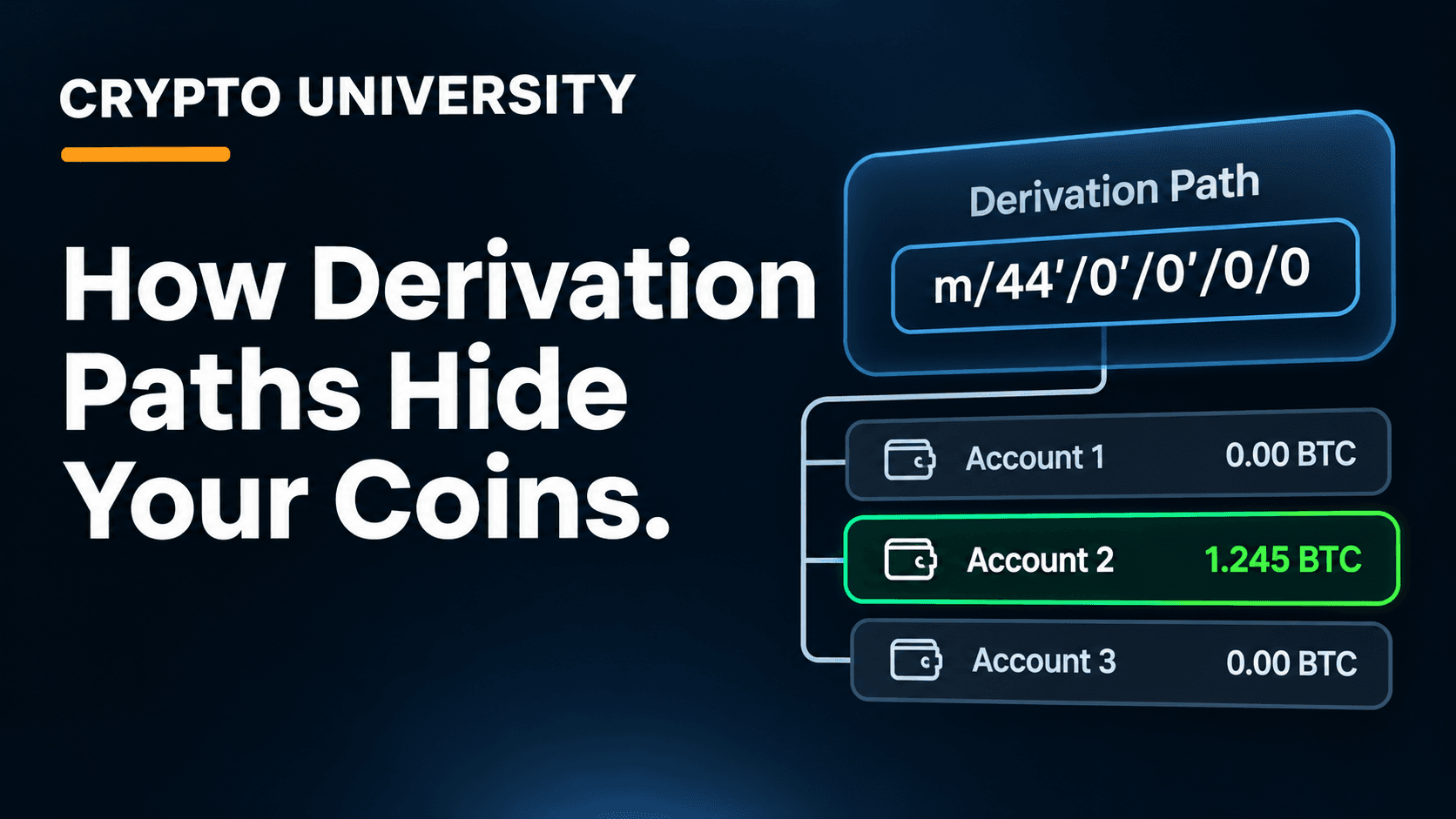
Most wallets since around 2014 are HD (hierarchical deterministic) wallets. They generate a fresh receiving address each time, all from one seed phrase. Your total balance is the sum of all those addresses, not just one.
Exchange deposit addresses
If the address came from an exchange deposit page, the exchange may have swept the coins into its own wallets soon after they arrived. In that case, the funds would be held in your exchange account, not at the address. You would need to contact the exchange or log in to check.
Wrong network
An address starting with 1 or 3 can also exist on Bitcoin Cash or Bitcoin SV, since those networks share Bitcoin's older format. If your records mention BCH or BSV, check a multi-chain explorer such as Blockchair.
Checking a Whole Wallet With an xpub
If you still have the wallet software or a hardware wallet, you can export an extended public key. Depending on the address type, it may start with xpub, ypub, or zpub. This key can generate every public address in that account, but it cannot spend funds.
Option | What it covers | Privacy level |
|---|---|---|
Single address lookup | One address only | Reveals one address |
xpub on a public explorer | Every address in the account | Reveals your full wallet history |
Watch-only wallet (for example, Sparrow or Electrum) | Every address in the account | Depends on the server it connects to |
Your own node with a local explorer | Every address | Queries stay on your own network |
Some explorers, such as Blockchain.com, accept an xpub directly. Some tools only accept the xpub format, so a zpub may need converting first with a trusted converter.
An xpub is not a secret key, but it is sensitive. Anyone who has it can see all your past and future addresses and balances. Do not post it publicly or send it to strangers.
Privacy Considerations
Looking up an address is safe for your funds, but it can leak information. When you search an address on a public explorer, the site can see your IP address alongside the address you searched. Over time, that could link you to the address.
Ways to reduce this:
Use Tor. mempool.space and Blockstream Explorer both offer Tor versions.
Run your own node. Self-hosted tools like the open-source mempool software keep your searches on your own machine.
Avoid searching many of your addresses in one session on the same public explorer if privacy matters to you.
For most beginners checking a single old address once, a normal lookup is a reasonable tradeoff. Just be aware of it.
Safety Rules to Follow
Never type a seed phrase into any website. No explorer, balance checker, or "wallet finder" needs it. Any site that asks is a scam.
Beware of "recovery" services that contact you after you post about a lost wallet online. Many are fraudulent.
A visible balance does not mean you can move it. You still need the private key or seed phrase to spend the coins.
Do not trust screenshots of balances. Always check the address yourself on a real explorer.
What to Do If You Find a Balance
If coins are still there, do not rush. Your next step is to figure out which wallet created the address and whether you still have its seed phrase, private key, or wallet file. Write down the address, the balance, and the date of the last transaction. Then work through your old devices and records methodically, keeping your recovery search offline wherever possible.
FAQ
Is it safe to check my Bitcoin balance on a block explorer? Yes. A lookup only uses your public address and cannot move funds. The main tradeoff is privacy, since the explorer can see your IP address and the address you searched.
Why does my old address show zero but my wallet shows a balance? Your wallet likely uses many addresses, including change addresses. The wallet adds them all together, while the explorer only shows the one address you searched.
Can I see who owns a Bitcoin address? Not directly. The blockchain shows amounts and transactions, not names. Some explorers add labels for known exchanges, but those come from third-party analysis, not the blockchain itself.
Do I need to create an account to use a block explorer? No. mempool.space, Blockstream Explorer, and Blockchair all allow free address searches without signing up.
Can I check Bitcoin Cash I might have from the 2017 fork? If an address held Bitcoin before the August 2017 fork, the same address may hold Bitcoin Cash. Search it on a multi-chain explorer such as Blockchair to check.
Related Terms
Block Explorer: A website that lets anyone search blockchain addresses, transactions, and blocks.
UTXO: An unspent transaction output, the basic unit that makes up a Bitcoin balance.
Extended Public Key: A public key that can generate every receiving address in an HD wallet account without being able to spend funds.
Disclaimer
This article is for educational purposes only and is not financial, legal, or tax advice. Explorer features and privacy policies can change. Always verify you are on the official website before searching, and never share your seed phrase or private keys with anyone.
Sources
Exodus support explains how to use a block explorer and why one address may show only part of a balance.
Spark's Bitcoin block explorer comparison covers privacy, open-source status, and self-hosting for major explorers.
Spark's guide on which Bitcoin explorer to use notes Tor support on mempool.space and Blockstream.
BitBox's guide to creating a web watch-only wallet shows how an xpub is used on Blockchain.com Explorer.
Plisio's Bitcoin address lookup guide explains the difference between balance and total received.