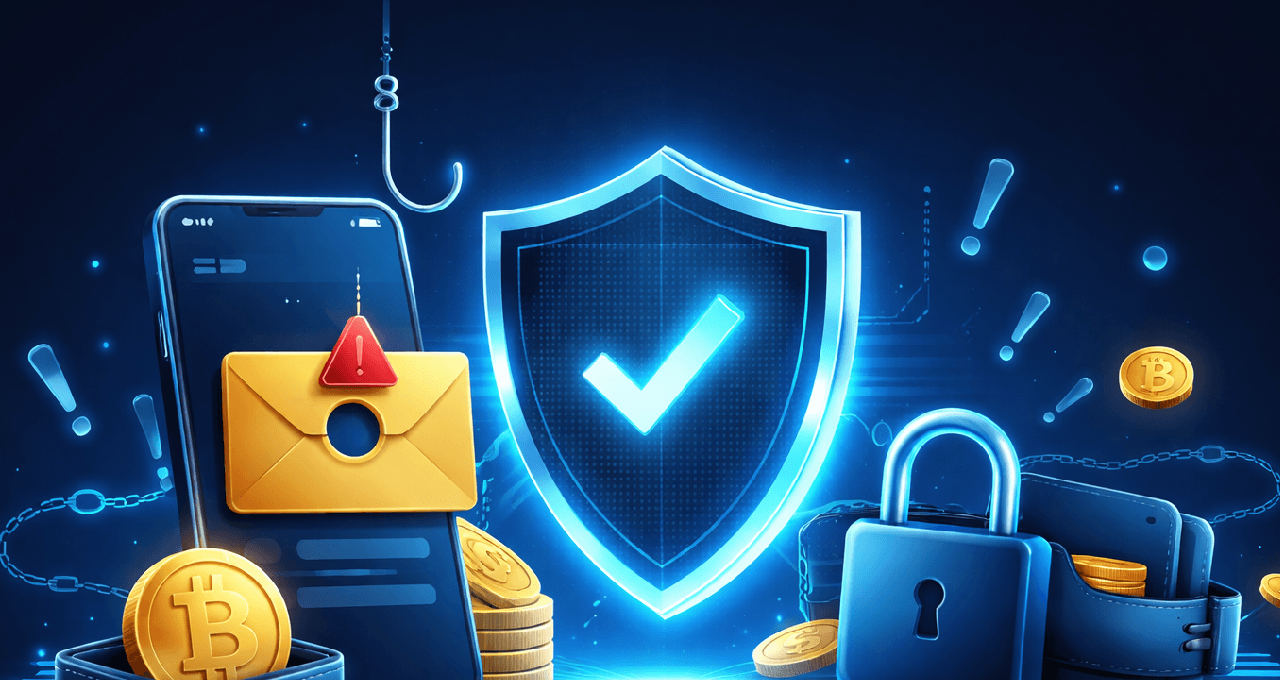
Crypto phishing scams trick users into giving away access to their digital assets. Unlike traditional phishing that targets bank accounts, crypto phishing often aims at wallet seed phrases, private keys, or wallet-connect approvals. Once scammers gain access, funds can disappear in seconds and are nearly impossible to recover.
Phishing remains one of the most common ways people lose crypto. Reports show billions stolen each year through social engineering rather than complex hacks. The good news is that most scams follow predictable patterns. Understanding them helps beginners stay safe.
What Is Crypto Phishing?
Phishing is a social-engineering attack. Scammers pretend to be someone trustworthy—such as a customer-support agent, exchange employee, or friend—to steal sensitive information. In crypto, the goal is usually your 12- or 24-word seed phrase, private key, or permission to drain your wallet through a malicious smart-contract approval.
Common Types of Crypto Phishing Scams
Here are the tactics seen most often:
Fake emails, texts, or direct messages: Scammers send messages that look official. They claim your account is at risk or that you won an airdrop. The message includes a link to a fake login page.
Impersonation scams: Attackers pose as support staff on Discord, Telegram, or X (formerly Twitter). They ask you to “verify” your wallet on a fake site.
Typosquatting and fake websites: Domains that look almost identical to real ones, such as “coinbse.com” instead of “coinbase.com.” The site asks you to connect your wallet or enter your seed phrase.
QR-code scams (quishing): Malicious QR codes at events or in ads lead to draining contracts when scanned.
Malicious airdrops or rewards: You receive unexpected tokens in your wallet. Interacting with them triggers a contract that empties your funds.
Clipboard hijackers and malware: Software swaps a copied wallet address with the scammer’s during a transaction.
Deepfake or AI-enhanced calls: Scammers use voice or video that sounds like a known person to build trust quickly.
These methods often combine. A message might start with urgency (“Your account will be frozen in 24 hours”) and end with a request for your seed phrase.
Red Flags That Signal a Scam
Watch for these warning signs:
Unsolicited contact about your account or an “opportunity.”
Urgent language that pressures you to act immediately.
Requests for your seed phrase, private keys, or 2FA codes—legitimate companies never ask for these.
Links or QR codes in messages; always type the official URL yourself.
Slight spelling or design errors on the site or in the message.
Promises of free tokens, high returns, or “account recovery” help.
Pressure to connect your wallet to an unknown dApp.
If something feels off, it probably is. Take time to verify before clicking or typing anything.
Step-by-Step Guide to Avoid Phishing Scams
Follow these practical habits every time you use crypto:
Never share your seed phrase or private keys. Write them down once on paper and store them offline. Never type them into any website or app.
Use a hardware wallet for larger amounts. Devices like Ledger or Trezor keep your keys offline and require physical confirmation for every transaction.
Bookmark official sites. Only visit exchanges, wallets, and dApps through saved bookmarks or by typing the exact URL. Avoid search-engine results for financial actions.
Enable strong two-factor authentication. Prefer app-based or hardware 2FA over SMS. Many exchanges now support passkeys.
Double-check wallet addresses. When sending funds, paste the address into a note app first and compare it character by character. Use address-poisoning checkers on major block explorers if available.
Revoke token approvals regularly. Use free tools on sites such as revoke.cash or Etherscan to cancel permissions you no longer need.
Test small transactions first. Send a tiny test amount before moving larger sums.
Stay offline when possible. For cold storage, keep your hardware wallet disconnected until you need to sign a transaction.
Educate yourself on new tactics. Follow official security channels of the platforms you use rather than random influencers.
What to Do If You Think You’ve Been Targeted
Stop all interaction immediately.
Do not click any more links or approve anything.
Change passwords on related accounts if you entered them.
Contact the real support team through official channels only (never reply to the suspicious message).
Report the incident to the platform, your local cyber-crime unit, and blockchain analytics services if you have transaction details.
Monitor your wallet addresses on a block explorer. Recovery is rare, but early reporting helps authorities track patterns.
Most losses happen because users act quickly under pressure. Slowing down is your best defense.
Crypto phishing will continue because it exploits human trust rather than code. By learning the patterns and building simple habits, beginners can use crypto with far less risk.
FAQ
Q1: Can I recover funds lost to a phishing scam?
Recovery is extremely difficult. Once a transaction is confirmed on the blockchain, it is final. Report it promptly to help law-enforcement investigations, but treat the funds as gone.
Q2: Are hardware wallets completely safe from phishing?
Hardware wallets protect your keys from online theft, but they cannot stop you from approving a malicious transaction yourself. Always verify what you are signing.
Q3: Should I click links sent by my exchange?
No. Type the official website address yourself. Legitimate companies rarely send clickable links asking for login details.
Q4: How do I check if a website is real?
Hover over the link to see the actual URL. Look for HTTPS and exact spelling. Use official mobile apps when possible.
Q5: What should I do with unexpected tokens in my wallet?
Ignore them. Do not interact. They are often designed to trigger draining contracts.
Read More
Need deeper training?
Join our structured modules with live examples and expert checklists for effective implementation.
JOIN THE ACADEMY