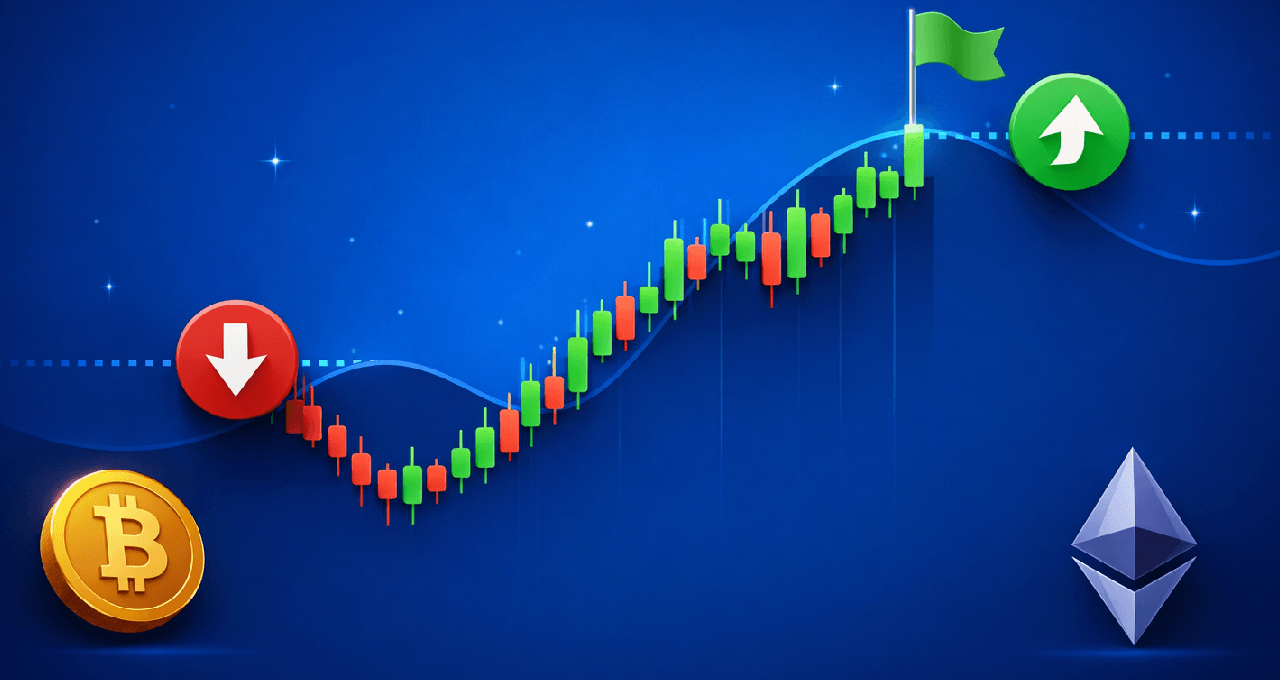
Stop-loss and take-profit orders are automated tools that help crypto traders manage risk and lock in gains without constantly watching the market. They form a core part of disciplined trading and are available on nearly every major centralized exchange.
What Is a Stop-Loss Order?
A stop-loss order automatically sells (or buys, in the case of a short position) your cryptocurrency when the price reaches a specified level. Its purpose is to limit losses if the market moves against you.
For example, suppose you buy Bitcoin at $60,000 and set a stop-loss at $54,000. If the price falls to $54,000, the order triggers and sells your Bitcoin to prevent further losses.
Stop-loss orders come in two main types on most platforms:
Market stop-loss: Triggers a market sell order at the best available price once the stop price is hit.
Stop-limit: Triggers a limit order at a specific price or better. This gives more control but carries the risk that the order may not fill if the market gaps past your limit.
What Is a Take-Profit Order?
A take-profit order automatically sells (or buys back in a short) your cryptocurrency when the price reaches a target level you choose. It locks in profits before the market reverses.
Using the same example: You buy Bitcoin at $60,000 and set a take-profit at $72,000. When the price hits $72,000, the order sells automatically.
Take-profit orders also exist as market or limit versions, mirroring stop-loss mechanics.
How to Set Stop-Loss and Take-Profit Orders (Step-by-Step)
Most exchanges follow a similar process. Here is a general guide:
Log into your exchange account and navigate to the trading pair (e.g., BTC/USDT).
Place your initial buy or sell order.
In the order form, select “Stop-Loss” or “Take-Profit” (sometimes labeled OCO – One Cancels the Other – for pairing both).
Enter the stop price or trigger price.
Choose market or limit execution.
Confirm and monitor via the “Open Orders” tab.
Popular platforms such as Binance, Coinbase Advanced Trade, and Kraken provide clear visual interfaces with price charts that let you drag the stop or target level directly onto the chart.
Why Traders Use These Orders
Risk control: You decide your maximum loss before entering a trade.
Emotion-free execution: Orders remove the temptation to hold a losing position too long or sell a winner too early.
Time efficiency: You do not need to watch the market 24/7.
Common Mistakes and Risks
Even experienced traders encounter pitfalls:
Placing stops too tight: Normal volatility can trigger the order prematurely (“stop hunting” by large players).
Ignoring fees and slippage: In fast markets, your actual exit price may differ from the trigger price.
Over-reliance: No order protects against black-swan events or exchange outages.
Setting take-profits too aggressively: You may miss larger moves if the market continues rising after your target.
Always factor in trading fees and potential slippage when calculating levels.
Practical Risk-Management Example
Assume a $10,000 trading account and a rule of risking no more than 1% per trade ($100 maximum loss).
Buy Bitcoin at $60,000.
Set stop-loss at $54,000 (10% below entry).
Risk per Bitcoin = $6,000.
Position size = $100 risk ÷ $6,000 risk per Bitcoin = 0.0167 BTC.
Pair this with a take-profit at $72,000 for a 1:2 risk-reward ratio (potential $200 gain).
Comparison of Order Types
Order Type | Trigger Mechanism | Best For | Main Risk |
Market Stop | Immediate market order | Fast-moving markets | Slippage in volatility |
Stop-Limit | Limit order after trigger | Precise price control | May not fill |
Trailing Stop | Adjusts with price movement | Trending markets | Can trail too closely |
Trailing stops are a dynamic version of stop-loss that automatically rises (or falls) as the price moves in your favor, locking in gains while allowing the trade to run.
Stop-loss and take-profit orders are not a guarantee of profit, but they are essential tools for consistent risk management in volatile crypto markets. Practice on a demo account before using real capital.
FAQ
Q: Can I use stop-loss orders on decentralized exchanges?
A: Most DEXs do not support traditional stop-loss orders. You would need third-party tools or limit orders that you monitor manually.
Q: Do stop-loss orders work during flash crashes?
A: They trigger, but slippage can be severe. Liquidity dries up, and you may sell far below your stop price.
Q: Should beginners always use take-profit orders?
A: They are useful for discipline, but many beginners start with fixed-percentage rules and adjust as they gain experience.
Q: Are stop-loss orders visible to other traders?
A: On centralized exchanges they are not publicly visible, reducing stop-hunting risk compared to older centralized order books.
Suggested Reading
Crypto Wallets for Beginners: Hot vs Cold. What's the Real Difference?
Need deeper training?
Join our structured modules with live examples and expert checklists for effective implementation.
JOIN THE ACADEMY