Key Takeaways
The reported THORChain exploit is another reminder that cross-chain systems can fail at the infrastructure layer, not just the token or app layer.
For users, the priority is not panic. It is exposure review, approval cleanup, and careful monitoring of official incident updates.
Bridge incidents often create secondary risk through rushed reactions, bad information, and unnecessary wallet interactions after the event.
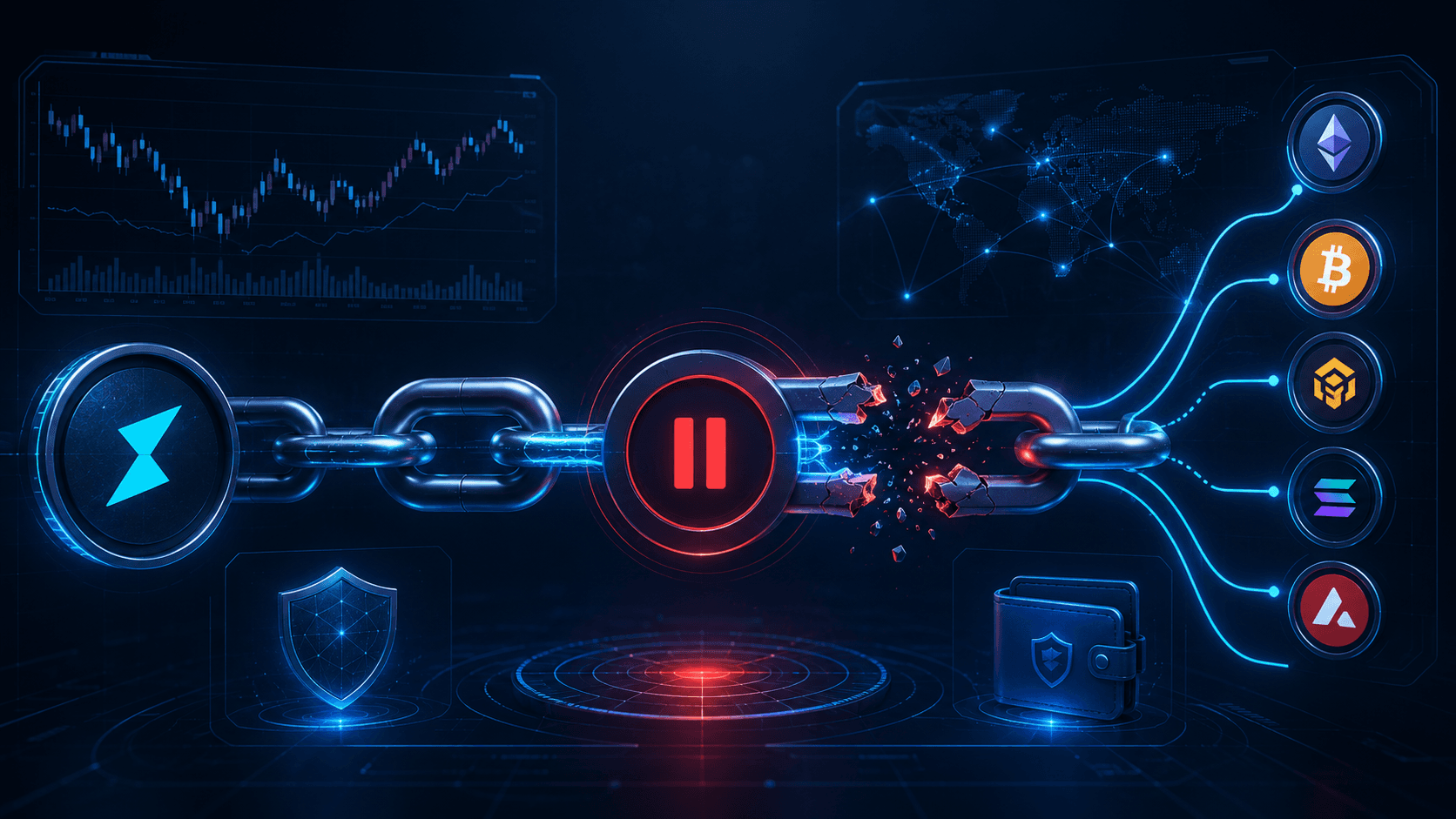
When a major cross-chain protocol halts trading after an exploit, users usually face two problems at once. The first is the technical incident itself. The second is the confusion that follows.
That appears to be the case with the reported $10.8 million THORChain exploit in May 2026, which led to a trading halt and immediate concern across the bridge and liquidity-provider ecosystem. For many users, the headline naturally raises urgent questions: what actually happened, is user capital still at risk, and what should bridge users do right now?
The most useful response is not to guess. It is to separate three things clearly:
what the incident appears to involve
what risks exist for users and liquidity providers
what actions are sensible in the first 24 to 72 hours
This article explains the event in plain English, places it in the broader context of cross-chain bridge risk, and ends with a practical 5-step user action checklist.
What happened?
Based on the reported incident summary, THORChain halted trading after a cross-chain exploit tied to roughly $10.8 million in losses. While technical details in the early stage of any exploit can evolve, the event immediately reinforced a familiar lesson in DeFi: when a protocol sits in the middle of cross-chain value transfer and liquidity routing, failures can spread quickly.
THORChain is not just another token app. It is infrastructure. That matters because infrastructure risk behaves differently from simple price risk.
A token drawdown affects market value. A bridge or routing exploit affects trust in the movement of value itself.
What does a trading halt usually mean?
A halt is not automatically a worst-case signal. In many incidents, halting activity is a containment step.
Why protocols halt trading
Reason | What it usually means |
Containment | Team wants to stop further exploit paths |
Liquidity protection | Prevent additional drain or price distortion |
Forensic review | Team needs time to understand the issue |
User safety | Prevents normal users from interacting with unstable state |
In other words, a halt can be a sign that emergency controls are functioning. The real question is what happens next: how quickly the team communicates, what systems are paused, and whether user instructions are clear.
Why THORChain matters in cross-chain DeFi
THORChain is widely known for enabling cross-chain swaps without relying on wrapped assets in the same way many traditional bridges do. Its design is different from simple lock-and-mint models, but the key user takeaway is the same: when a protocol helps route assets across chains and through liquidity pools, it becomes a high-value target.
Why cross-chain systems are fragile
Component | Why it matters | Risk if it fails |
Chain interaction logic | Moves or verifies value across networks | Cross-chain exploits can create fast losses |
Liquidity pools | Hold assets used in swaps | LPs may absorb losses or impairment |
Routing and settlement | Coordinates trade completion | Errors can spread through multiple markets |
Emergency response tools | Slow or halt damage | Delayed action can worsen losses |
That is why incidents around THORChain are not just "token news." They are infrastructure events.
Cross-chain bridge security is still one of DeFi's hardest problems
Even sophisticated users sometimes underestimate bridge and cross-chain risk.
These systems are difficult to secure because they combine:
complex contract logic
multiple asset types
chain-specific behavior
liquidity management
external integrations
time-sensitive settlement flows
Every extra layer adds another place where assumptions can break.
Common cross-chain risk categories
Risk type | What it looks like |
Smart contract risk | A bug in the code handling swaps or settlement |
Infrastructure risk | Validator, router, or chain-integration weakness |
Liquidity risk | Pools become imbalanced or impaired after an exploit |
Operational risk | Teams respond too slowly or unclearly |
User-side risk | Users panic, click fake links, or bridge into unsafe routes |
The reported THORChain exploit fits into this broader pattern. Even if the exact root cause evolves as forensic work continues, the user lesson remains the same: cross-chain activity carries layered risk.
Liquidity-pool risk after an exploit
THORChain users need to think not only about swaps, but also about liquidity-pool exposure.
If a protocol relies on pooled assets to provide trading depth, an exploit can create indirect effects such as:
pool imbalance
temporary pricing dislocation
delayed withdrawal expectations
uncertainty around asset accounting
wider spreads and weaker routing quality
Why LPs should pay extra attention
User type | Primary concern after incident |
Swapper | Whether routing is safe and active |
LP | Whether pool accounting or asset exposure changed |
RUNE holder | Token sentiment and ecosystem trust impact |
Bridge user | Whether any related approvals or routes remain risky |
For LPs, the key is patience and official confirmation. An exploit is exactly when acting on incomplete information can make things worse.
What users often get wrong after a bridge exploit
A large share of post-exploit damage comes from user behavior after the initial event.
People often:
rush to move assets without checking route safety
trust screenshots or unverified accounts
connect wallets to random "recovery" tools
approve new contracts in a hurry
bridge again just to "get out fast" without understanding current conditions
That is why emergency wallet hygiene matters as much as technical analysis in the hours after an incident.
What bridge users can and cannot control
Users cannot control whether a cross-chain protocol had a hidden vulnerability. But they can control how much extra risk they add after the fact.
What users can control
wallet approval hygiene
information discipline
avoiding rushed new transactions
separating active and long-term wallets
keeping self-custody practices strong
What users cannot control
the original exploit path
protocol-level emergency architecture
liquidity impairment already caused by the incident
how fast the team reaches full root-cause confidence
That distinction is useful because it keeps people focused on actions that actually help.
5-step user action checklist
Here is the practical part. If you used THORChain, bridged assets around it, or approved related contracts, focus on this checklist.
1. Revoke unnecessary approvals
If you previously approved tokens for bridge-related or swap-related contracts you no longer need, review them now.
This does not mean every approval tied to the ecosystem is automatically dangerous. It means this is the right time to clean up stale permissions and reduce attack surface.
A walkthrough is available in Crypto University's Anti-Phishing and Approval Hygiene guide. Many users use approval tools like Revoke.cash to inspect spender permissions by chain.
2. Check your exposure on Revoke.cash and across active chains
Bridge users often forget that risk is not limited to one wallet action on one chain. You may have permissions or exposure across Ethereum, Arbitrum, Base, BNB Chain, or other networks.
Review these items:
active token approvals
old bridge approvals
unknown spender contracts
recent transactions you do not recognize
assets sitting in experimental or low-trust wallets
This is especially important if you used several DeFi apps during the same period.
3. Monitor official channels, not random summaries
After exploits, misinformation spreads fast.
Watch for:
official THORChain statements
known team or protocol channels
incident post-mortem updates
clear guidance around withdrawals, pools, or resumptions
Do not rely on:
screenshots with no source
"insider" Telegram claims
random support messages
fake recovery links
Good post-incident information sources
Source type | Why it matters |
Official protocol site | First place for formal updates |
Verified social channels | Often fastest for public incident notes |
Post-mortem or incident page | Best source for root-cause clarity |
Known on-chain security researchers | Useful for context, but not final instructions |
4. Avoid panic-bridging or panic-swapping
One of the worst reactions after a bridge exploit is trying to flee through the nearest available route without checking whether conditions are stable.
That can expose users to:
more slippage
fake interfaces
impaired liquidity
additional approvals
fresh mistakes under pressure
The better approach is slower:
confirm what is paused
confirm what is functioning
confirm whether you even need to act immediately
avoid moving assets just because everyone else looks anxious
5. Keep a post-mortem watchlist
The most useful thing after the first emergency wave is to follow the right questions.
Post-mortem watchlist:
What was the exact exploit path?
Did it involve contract logic, infrastructure, or chain integration?
Were any pools or user balances impaired?
What emergency controls worked?
What changes are being made before trading resumes?
Were there secondary risks for related protocols or LPs?
This matters because many users only read the headline, then miss the part that actually helps them make better decisions next time.
Practical security habits worth reinforcing
For long-term holders or active DeFi users, self-custody and transaction review still matter. Hardware wallets like Ledger help reduce signing risk, especially when paired with better approval hygiene.
For users watching market response around RUNE or broader DeFi sectors, tools like TradingView can help monitor volatility and liquidity conditions. That is useful for context, but it should not replace direct protocol-safety checks.
Final thought
The reported THORChain exploit is another reminder that cross-chain DeFi still carries serious infrastructure risk. It also shows why user response matters. In the hours after an incident, good habits can prevent a bad situation from becoming worse.
If you used THORChain or similar bridge infrastructure, the right response is not blind trust or panic. It is structured review: clean up approvals, check exposure, follow official updates, and wait for real post-mortem clarity before making new assumptions.
That is how experienced users "grow up" in DeFi. Not by predicting every exploit, but by responding better when one happens.
FAQ
What happened in the THORChain exploit?
Reports described a May 2026 cross-chain exploit tied to about $10.8 million in losses, followed by a THORChain trading halt while the incident was reviewed.
Should I revoke bridge approvals after a THORChain incident?
If you have stale or unnecessary approvals tied to bridge or swap activity, reviewing and revoking them is a sensible security step.
Is a trading halt always a bad sign?
Not necessarily. A halt can be part of incident containment and user protection while the protocol investigates.
What is the biggest risk after a bridge exploit?
For many users, the biggest secondary risks are misinformation, rushed transactions, and connecting wallets to the wrong tools or links.
Should liquidity providers do anything immediately?
LPs should closely follow official updates, review exposure, and avoid reacting to rumors before pool-level implications are clarified.
How can I reduce bridge risk in general?
Use smaller sizes, clean up token approvals, avoid rushed cross-chain moves, monitor official channels, and understand that infrastructure risk is different from simple token volatility.
Read more
Need deeper training?
Join our structured modules with live examples and expert checklists for effective implementation.
JOIN THE ACADEMY