Key Takeaways
Most crypto scams follow predictable patterns. Knowing those patterns is your best defense.
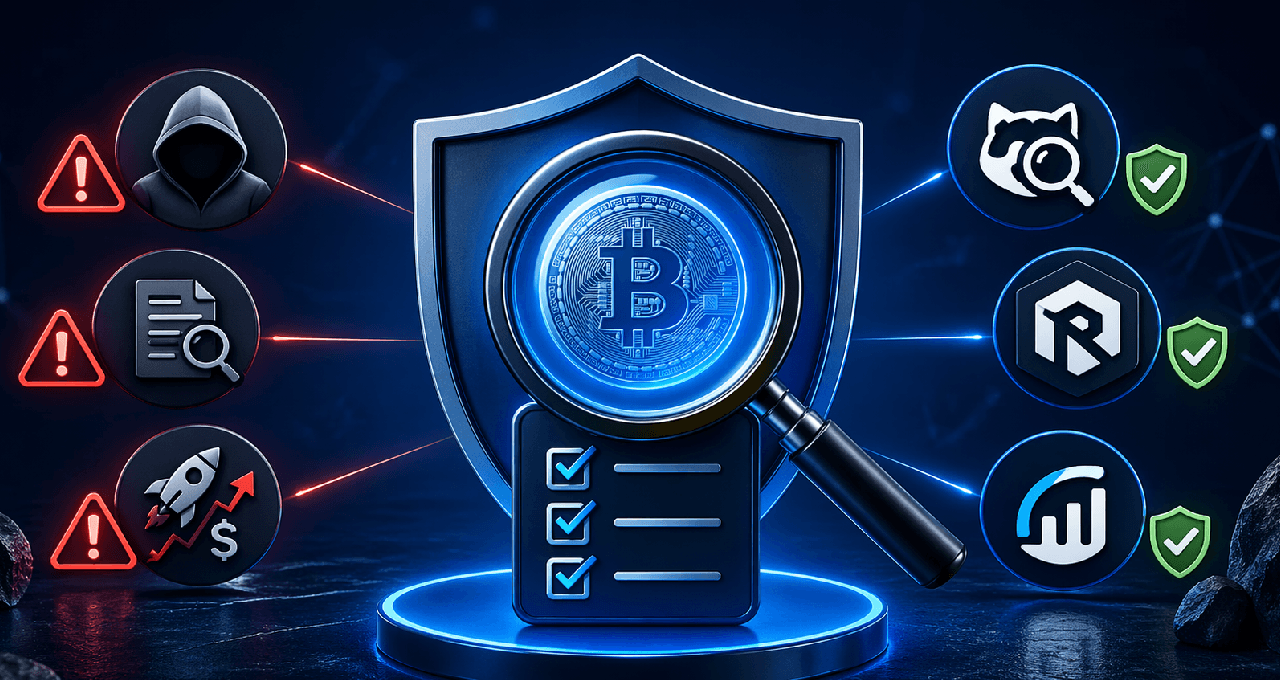
Anonymous teams, unverified audits, and unrealistic yield promises are the three most reliable early warning signs.
Free tools like Token Sniffer, RugDoc, and Etherscan can help you verify a project before risking any funds.
Introduction
Crypto scams took an estimated $5.6 billion from people back in 2023, according to the FBI. By 2026 the tricks have gotten even smarter, with AI-made founder profiles, fake partnerships, and fancy-looking audit certificates.
This guide is written like a friendly chat. It walks you through the most common scam types, the clear red flags to watch for, and the simple free tools you can use to check any project before you put in a single dollar. Let’s keep your money safe and your trading journey fun.
The Most Common Crypto Scam Types in 2026
Knowing the type of scam makes it much easier to spot the danger signals early. Here’s a simple breakdown:
Scam Type | How It Works | Common Platforms |
Rug Pull | The team abandons the project and drains all the liquidity, leaving you with worthless tokens | DeFi and new token launches |
Pump and Dump | A group buys heavily to push the price up, then sells at the top and crashes it | Low-cap tokens and Telegram groups |
Honeypot Contract | You can buy the token easily, but selling is blocked or heavily taxed | EVM chains and meme coins |
Pig Butchering | Scammers build a fake friendship over weeks or months, then push a fake investment | Telegram, dating apps, WhatsApp |
Fake Giveaway | Pretends to be a celebrity or brand and asks you to “send to receive” more crypto | X (Twitter), YouTube, Discord |
Phishing | Fake websites or wallet prompts steal your login or approvals | Email, Google ads, Discord DMs |
Fake Audit | Shows a made-up or misleading security report to look trustworthy | DeFi project websites |
The Red Flag Checklist
Run through this checklist every time you see a new project, token, or platform. It only takes a few minutes and can save you a lot of pain.
Team and Founders
Are the founders named and easy to verify on multiple public sites?
Do their LinkedIn profiles show real activity before this project launched?
Can you find proof they have attended events or published real work?
Is the GitHub active with genuine-looking commit history?
Are anonymous influencers promoting it without saying they are paid?
Red flag: An entirely anonymous team is not always a scam, but it means you must check everything else twice as hard. If the named people have zero history outside this project, treat it as a serious warning.
Audit Claims
Does the project say it has an audit? If yes, by whom?
Can you find the full report on the auditor’s own official website (not just the project’s site)?
Does the audit match the exact contract address that is live?
Is the auditing firm well-known (CertiK, Trail of Bits, Halborn, or Peckshield)?
Are there any unresolved critical or high-severity problems in the report?
Red flag: Many projects show a shiny “Audited” badge that links to a PDF no real auditor ever published. Always go straight to the auditor’s website and double-check.
Tokenomics and Contract
How much of the total supply do the founders and team control?
Is there a clear vesting schedule that is locked on-chain?
Is the liquidity locked, for how long, and on what platform?
Is the contract verified and readable on the block explorer?
Does the contract have a mint function that can create unlimited new tokens?
Does it have a blacklist or pause button that could freeze your funds?
Red flag: If the top 10 wallets hold more than 40-50 % of the supply with no lockups, a big dump is likely. Tools like BubbleMaps let you see wallet concentration visually.
Honeypot Detection
Honeypot contracts let you buy but make selling difficult or impossible. This is one of the most common traps on EVM chains.
Quick check steps:
Go to Token Sniffer and paste the contract address.
Look at the buy/sell tax rates. Anything over 10 % on sells is a big warning.
Test a small buy and sell on Honeypot.is before you touch the token.
Check if the owner wallet still has admin rights that were never removed.
Price and Yield Promises
Does the project promise fixed returns, over 50 % APY, or “guaranteed” profits?
Is there a referral system that pays you for bringing in new people?
Are there claimed partnerships with big institutions but no real press release from those companies?
Red flag: No real financial product can guarantee returns. If someone promises huge yields without a clear explanation of where the money comes from, walk away.
Social Engineering Tactics
Scammers use pressure and fake trust to rush you.
Common tricks to watch:
Urgency: “This offer ends in 2 hours!” (They create fake scarcity so you skip research.)
Celebrity endorsements: Deepfake videos of Elon Musk or others. Always check the official account.
Romantic manipulation: “Pig butchering” builds weeks of friendly chat before the investment pitch.
Unsolicited Discord or Telegram messages from “support” asking you to connect your wallet.
Fake whitelist or early-access spots that create FOMO and push bad wallet approvals.
Scenario Walkthroughs
Here are three common real-life examples turned into a simple table so you can see exactly what happens and how to stay safe.
Scenario | What You See | What Really Happens | How to Stay Safe |
The Too-Good Airdrop | Post on X about a surprise airdrop. Link looks identical to a real protocol. Asks you to connect wallet and approve. | Phishing site that drains tokens once you approve. | Type the real URL yourself or use bookmarks. Never click social links. |
The Telegram Alpha Group | Stranger adds you to a private group full of “gains” screenshots and hype. | Coordinated pump and dump. Insiders sell after you buy. | Never buy from hype groups. Do your own research first. |
The High-Yield Farming Protocol | Polished website offers 300 % APY on stablecoins. Claims CertiK audit but link is fake. | Rug pull. Team drains liquidity after a few weeks. | Verify audits on the real auditor site and check liquidity lock proof. |
Verification Tools
These free tools make checking projects quick and easy. I rated each one for beginner usefulness (0-5, where 5 is perfect for new traders).
Tool | What It Does | Link | Rating (0-5) |
Token Sniffer | Auto-audit for ERC-20 tokens and honeypot checks | 5 | |
Simulates buy/sell to catch sell restrictions | 5 | ||
BubbleMaps | Shows wallet concentration visually | 4 | |
Etherscan / Basescan | Reads contract code, tracks wallets and approvals | 5 | |
RugDoc | Safety checks for DeFi farms | 4 | |
De.Fi Shield | Scans portfolio and revokes approvals | 5 | |
Revokes token approvals on many chains | 5 |
If you hold any meaningful amount of crypto, move it off exchanges and onto a hardware wallet like Ledger. It keeps your keys offline and safe from phishing and contract tricks.
FAQ
Q: Can a project with a doxxed team still be a scam?
A: Yes. Showing real names is nice, but it is not enough. Always check tokenomics, audit quality, and contract permissions anyway.
Q: What should I do if I already approved a suspicious contract?
A: Go to Revoke.cash right now and revoke the approval. Do not send any more transactions to that contract.
Q: Are all anonymous projects scams?
A: No. Bitcoin’s creator is still anonymous and many good projects use pseudonyms. But anonymity means you have to check every other detail extra carefully.
Q: Can AI tools help me detect scams?
A: They can spot patterns quickly, but they are not perfect. Always combine them with this checklist and your own common sense.
Q: Where should I report a crypto scam?
A: In the US, use the FBI’s IC3 (ic3.gov), the FTC (reportfraud.ftc.gov), and the CFTC (cftc.gov/complaint). Also report the contract address to Token Sniffer and the block explorer.
Suggested Internal Links
What Is a Rug Pull? How DeFi Projects Drain Investor Funds
How to Use a Hardware Wallet: Beginner Setup Guide
How to Evaluate a DeFi Protocol Before Putting Money In
What Is Wallet Approval and Why It Matters
Crypto Regulation 2026: What Users Need to Know
Disclaimer: This content is for educational and informational purposes only and is not financial advice. Nothing here is a recommendation to buy or sell any asset or use any platform. Do your own research and manage your risk.
Read More
Bitcoin vs Stablecoins: Simple Guide for Beginner Traders
Understanding Crypto Regulations: A Beginner’s Overview
Understanding Stablecoins: Types, How They Work, and Their Role in Crypto Liquidity
Need deeper training?
Join our structured modules with live examples and expert checklists for effective implementation.
JOIN THE ACADEMY