Stablecoins are cryptocurrencies designed to hold a steady value, usually pegged to a fiat currency such as the U.S. dollar. They act as “digital cash” inside the crypto world and solve one of crypto’s biggest problems: extreme price swings.
Without stablecoins, trading, lending, and moving value 24/7 would be far more difficult. As of early 2026, the total stablecoin market exceeds $310 billion, with daily trading volumes often reaching tens of billions of dollars.
How Stablecoins Maintain Their Peg
Most stablecoins aim for a $1.00 value. They achieve this through different mechanisms:
Reserves and redemption: Issuers hold assets equal to the tokens in circulation and allow users to redeem tokens for the underlying asset.
Arbitrage: Traders buy when the price dips below $1 and sell when it rises above $1, bringing the price back in line.
Smart-contract rules: Some types use algorithms or over-collateralization to adjust supply automatically.
Main Types of Stablecoins
There are three primary categories. Fiat-collateralized coins dominate the market.
Type | Examples | Backing | Key Features | Risks |
Fiat-collateralized | USDT, USDC | Cash, U.S. Treasuries, or equivalents | High liquidity, easy redemption | Centralization, reserve transparency |
Crypto-collateralized | DAI | Over-collateralized crypto assets | Decentralized, on-chain governance | Liquidation risk during volatility |
Algorithmic | (fewer remain) | Smart-contract supply adjustments | No collateral needed | History of depegging (e.g., 2022) |
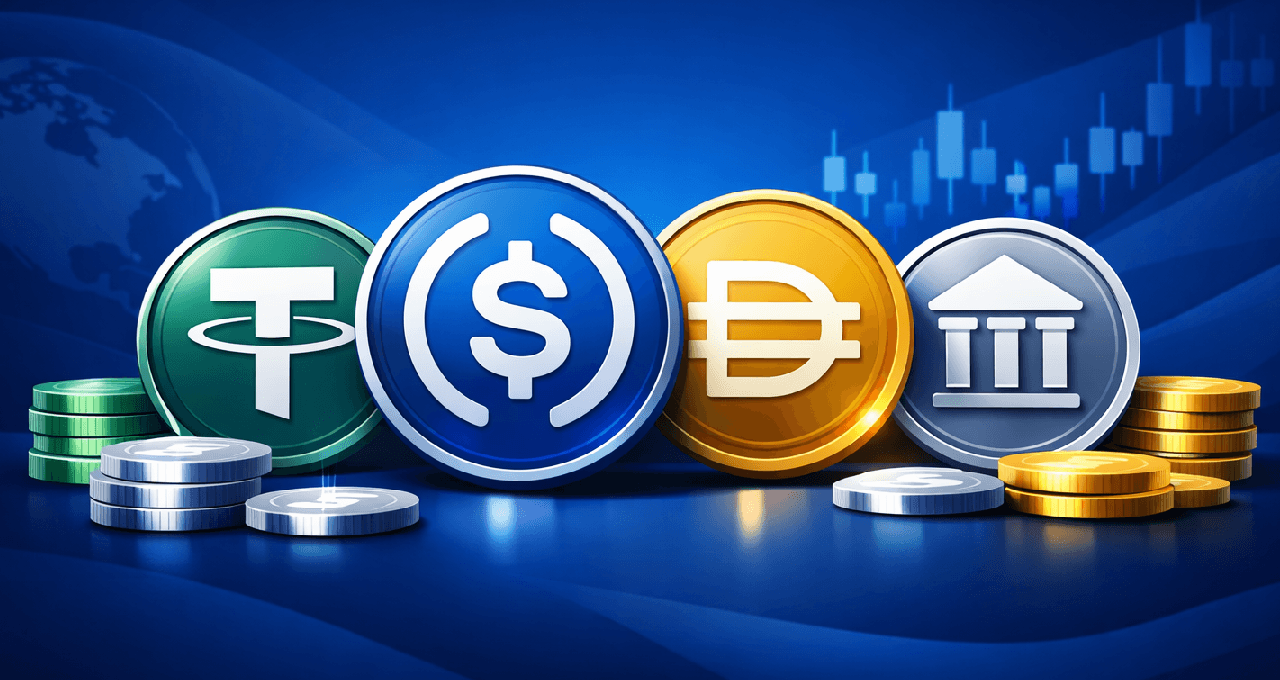
USDT (Tether) remains the largest by far, with a market cap around $184 billion in March 2026. It trades on dozens of blockchains and powers most crypto trading pairs.
USDC (USD Coin), issued by Circle, is the second-largest at roughly $78 billion. It is known for regular attestations of reserves and strong regulatory compliance.
DAI, issued through the MakerDAO protocol, is the leading decentralized option. It is backed by a mix of crypto assets held in smart contracts.
Newer entrants such as Ethena’s USDe use synthetic strategies (delta-neutral hedging) to generate yield while staying stable.
The Role of Stablecoins in Crypto Liquidity
Stablecoins are the glue that holds crypto markets together. Here is why they matter:
Trading pairs: On centralized and decentralized exchanges, most tokens trade against a stablecoin instead of Bitcoin or Ether. This removes volatility from the pricing equation.
DeFi protocols: Lending platforms, decentralized exchanges, and yield farms use stablecoins as collateral or liquidity pools. Users can earn interest without worrying about price drops.
Remittances and payments: Stablecoins enable fast, low-cost cross-border transfers. People in countries with unstable local currencies often hold or send value in USDT or USDC.
Hedging volatility: When Bitcoin or other assets drop sharply, traders move into stablecoins to preserve value without leaving the blockchain.
Bridging traditional finance and crypto: Institutions use stablecoins to move large sums on-chain quickly and cheaply compared with bank wires.
Because stablecoins settle in minutes rather than days, they increase overall market efficiency. Their total on-chain volume frequently surpasses that of major fiat payment networks in certain corridors.
Risks and Regulatory Developments
Stablecoins are not risk-free. Key concerns include:
Depegging: Even major coins have briefly traded below or above $1 during market stress.
Reserve transparency: Users must trust the issuer’s reports. USDT has faced past questions about its backing; USDC publishes weekly attestations.
Centralization: Fiat-backed coins rely on a single company or foundation.
Regulatory changes: The U.S. GENIUS Act (2025) sets rules for payment stablecoins, requiring full reserves and licensing. Other countries have introduced similar frameworks.
Illicit use: Like cash, stablecoins can be misused for money laundering, though regulated issuers now implement stronger compliance checks.
Always check the latest reserve reports and understand the issuer’s redemption process before holding large amounts.
Why Stablecoins Matter for Beginners
If you are new to crypto, stablecoins are often the safest entry point for holding value between trades or learning how wallets and exchanges work. They let you practice sending transactions without worrying about price changes overnight.
Start small. Use a reputable exchange or wallet that supports USDC or USDT on a low-fee network such as Tron or Base. Read the issuer’s transparency page before moving significant sums.
Stablecoins have grown from a niche tool into a foundational part of the crypto economy. Understanding how they work helps beginners navigate markets more confidently and avoid unnecessary volatility.
FAQ
Q1: Are stablecoins the same as dollars?
No. They are digital tokens designed to track the dollar’s value, but they are not issued by a government and carry issuer risk.
Q2: What is the difference between USDT and USDC?
USDT has larger trading volume and broader availability. USDC emphasizes regulatory compliance and publishes clearer reserve attestations.
Q3: Can stablecoins lose their $1 peg?
Yes, though major ones rarely do for long. Smaller or algorithmic stablecoins have depegged dramatically in the past.
Q4: Do I pay taxes when using stablecoins?
Tax rules vary by country. In many places, converting between stablecoins and other crypto or fiat can trigger capital-gains events. Check local regulations.
Q5: Which stablecoin is best for beginners?
USDC or USDT on a low-fee network are popular starting points because of liquidity and availability. Choose based on the platform you use most.
Need deeper training?
Join our structured modules with live examples and expert checklists for effective implementation.
JOIN THE ACADEMY