Key Takeaways
The Covenant AI exit showed how much decentralized AI networks can still rely on a few big operators.
Governance problems are real. They shake confidence, make coordination harder, and can move token prices fast when things get stressful.
If you are new to DeAI, look closely at how deep the infrastructure is, how many operators control it, and how the incentives actually work. Do not just chase the AI story.
Decentralized AI, often called DeAI, is one of the biggest stories in crypto right now. Bittensor sits right in the middle of it. The project uses token rewards to help different computers work together on AI tasks through special sections called subnets. The idea sounds exciting and future-proof, but it can feel shaky when real-world problems like governance stress pop up.
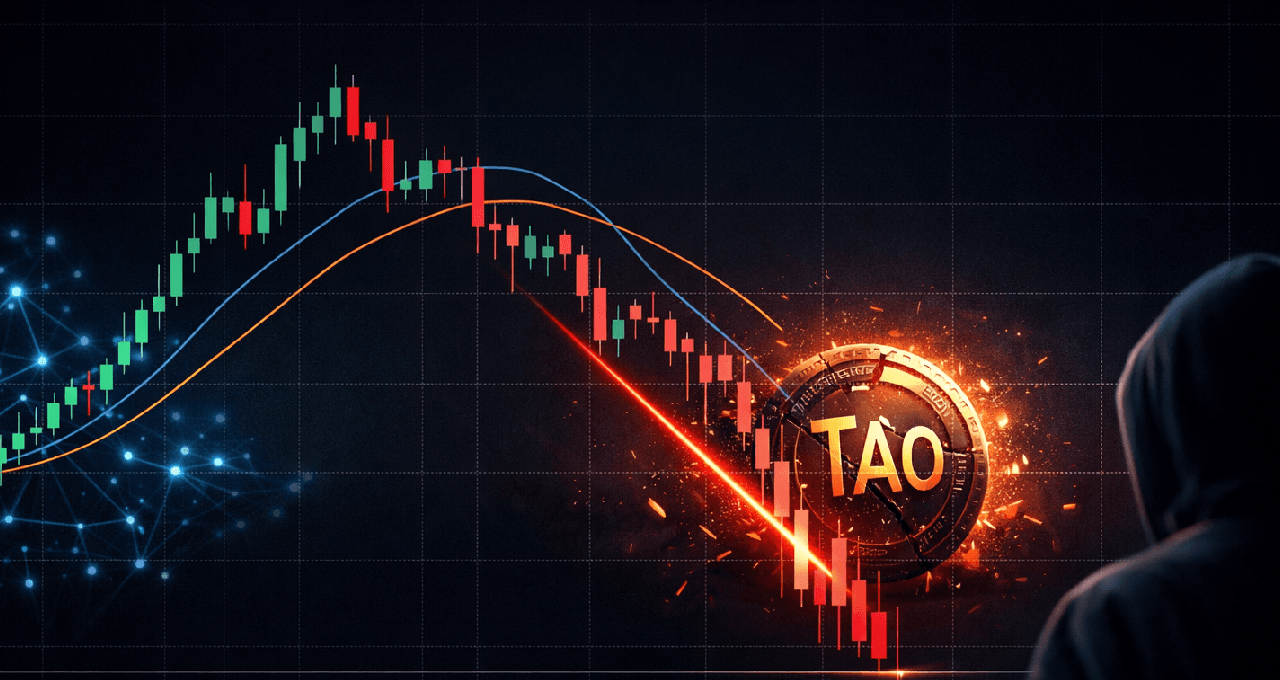
The recent exit of Covenant AI from a Bittensor subnet, plus the drop in TAO’s price, is more than just one company leaving or one token dipping. It shows what happens when a network that calls itself decentralized gets tested in public.
If you are a beginner trader, this story is worth your time. It is easy to get excited by AI plus crypto hype because it feels smart and cutting-edge. What is harder is understanding who actually runs the network day to day, how decisions get made, and what happens when a major player walks away. This article walks you through exactly that, in plain English.
Why the event mattered: subnets can create real dependence on big operators
Bittensor’s design is what makes it interesting, but it also brings clear risks. Here is a simple breakdown:
Network element | Why it matters for you as a beginner |
Subnets | These are specialized teams inside the bigger network |
Major operators | A few big players can carry a lot of the daily work |
Token incentives | Rewards influence who joins and who stays |
When a respected operator like Covenant AI leaves, the market does not just see one exit. It sees a signal about how strong the whole system really is, how well governance works, and whether the incentives keep everyone pulling in the same direction. Even in a decentralized setup, there can still be hidden clusters of dependence.
Covenant AI’s departure raised real governance questions
Operator exits often turn into bigger conversations inside decentralized networks. People started asking:
Are the governance rules fair and clear?
Does the subnet design push power toward just a few players?
Are the incentives balanced, or do they favour big contributors too much?
Do the people actually building the network still trust it enough to stay?
In crypto, a big departure is like a public vote of no confidence. It creates uncertainty, and that uncertainty can quickly show up in the token price. Governance is not just paperwork. It is market structure.
TAO’s price drop reflected a real confidence shock
Crypto prices move fast all the time, so one dip does not prove everything. But look at the context here:
Price reaction context | Why it matters for beginners |
Major operator exit | Signals possible internal strain |
Governance worries | Creates doubt about how the network is run |
Heavy AI narrative | Makes the token extra sensitive to bad news |
The TAO drop was the market’s quick way of saying “we are not so sure about the decentralization story right now.” Token price often acts as the fastest thermometer for trust.
How beginners should actually evaluate DeAI projects
Here is the big lesson: treat DeAI like infrastructure, not just a cool story. Use this simple table to check any project:
Evaluation area | Why it matters | Bittensor rating (0-5) | What the rating means |
Operator concentration | Too much reliance on a few players creates weakness | 2 | Shows clear dependence on big operators |
Governance quality | Decides how well conflicts get solved | 3 | Concerns appeared but the network is still learning |
Incentive structure | Determines who stays and who leaves | 3 | Rewards exist but alignment needs work |
Subnet depth & diversity | Shows if the ecosystem is broad or thin | 4 | Multiple subnets give some real breadth |
Overall resilience | How the system holds up under stress | 3 | Tested but not broken |
(Rating scale: 5 = excellent and beginner-friendly, 0 = high risk and hard to trust. These ratings come directly from what the Covenant AI exit revealed.)
Decentralized does not mean zero influence or zero concentration
Even the best decentralized networks can still have:
A few key builders who matter a lot
Risks of governance capture
Uneven participation
The real test is what happens when pressure hits. Bittensor just passed one of those tests in public.
The AI story brings excitement but also extra fragility
Narrative strength | Risk it creates for traders |
Future-of-AI positioning | High expectations that can crash fast |
Technical complexity | Easier for weak spots to stay hidden |
Fast-growing hype | Sentiment swings become bigger |
AI-themed tokens often get a premium valuation because the story feels huge. But when confidence dips, the price can fall harder than in simpler sectors.
Focus on governance quality, not only technical hype
Good governance shows up as:
Clear and transparent decisions
Fair ways to handle disagreements
Broad participation, not just a couple of big names
Incentives that do not reward only the top players
Technical ambition is easy to market. Strong governance is what keeps the project alive when things get tough.
Simple DeAI due-diligence checklist for beginners
You do not need to be an expert. Just run through these five quick checks:
Do a few operators dominate the network?
Do you understand how the subnets actually work?
Who benefits most from the token incentives?
How does the project behave during conflicts or exits?
Does the AI marketing match the real network depth you can see?
This checklist will not remove all risk, but it stops you from buying pure hype.
Final Thoughts
The Covenant AI exit and the TAO price reaction showed something important: decentralized AI still depends heavily on real-world confidence, good governance, and the commitment of major operators.
For beginner traders, the takeaway is not “Bittensor is bad” or “DeAI is a scam.” The takeaway is that you must judge these projects on how they actually run as institutions, not just on how exciting the AI story sounds. Look at concentration risk, incentive design, subnet strength, and how the network handles it when important people leave.
That is how you move from buying a theme to understanding a real system.
FAQ
Why did the Covenant AI exit matter so much?
Major operator departures can signal deeper problems with governance or incentives inside decentralized networks.
What is a subnet in Bittensor?
A subnet is a specialized section of the network built to handle one specific type of AI-related task or activity.
Why did TAO react negatively?
Markets often read governance stress and big exits as a loss of confidence, and price moves quickly to reflect that.
Does decentralization eliminate concentration risk?
No. Many decentralized systems still rely on a small number of influential operators or builders.
What should beginners evaluate in DeAI projects?
Operator concentration, governance quality, incentive alignment, and whether the AI story matches the actual network depth and resilience.
Need deeper training?
Join our structured modules with live examples and expert checklists for effective implementation.
JOIN THE ACADEMY