Key Takeaways
AI tools such as deepfakes and advanced language models have made crypto scams significantly more convincing and profitable, with AI-linked operations often generating several times more revenue per scam than traditional ones.
The most common evolving threats include pig butchering schemes that build long-term trust before stealing funds, deepfake impersonation of trusted figures, and follow-up recovery scams targeting people who have already lost money.
Effective protection involves independent verification of all contacts and offers, avoiding unsolicited contacts, recognizing psychological manipulation tactics, and using blockchain explorers for basic due diligence on addresses.
Crypto University helps beginners understand crypto clearly before they risk money.
The Growing Role of AI in Crypto Scams
Cryptocurrency scams have become more industrialized and harder to detect. In 2025, blockchain analytics firm Chainalysis estimated that at least $14 billion flowed into scam-related addresses on-chain, with the final figure projected to reach around $17 billion globally.
AI has played a major role in this increase. Scams with clear on-chain connections to AI tools (such as deepfake software and language models sold on platforms like Telegram) were on average 4.5 times more profitable than traditional scams. These AI-enabled operations also showed much higher transaction volumes and efficiency.
The FBI’s 2025 Internet Crime Report recorded nearly $893 million in losses from AI-related complaints in the United States alone, with cryptocurrency investment fraud representing one of the largest categories overall.
Scammers now use AI for realistic video and audio impersonations, automated messaging at scale, and highly personalized social engineering. This does not mean every interaction involving AI is malicious, but it does mean traditional red flags have become less reliable on their own.
Major Scam Typologies in 2026
Several scam categories have evolved with AI and remain dominant.
Pig Butchering (Romance and Investment Scams)
Scammers build trust over weeks or months, often through dating apps, social media, or messaging platforms. They may pose as romantic interests or helpful contacts who share investment tips. Once trust is established, they direct the victim to a fake trading platform that shows fabricated profits. Victims are encouraged to deposit increasing amounts. When they try to withdraw, the platform demands extra “fees,” “taxes,” or “compliance deposits.” The funds disappear.
These operations are frequently linked to organized groups, sometimes operating from compounds in Southeast Asia. They remain one of the highest-volume scam types by number of victims and total losses.
Impersonation and Deepfake Scams
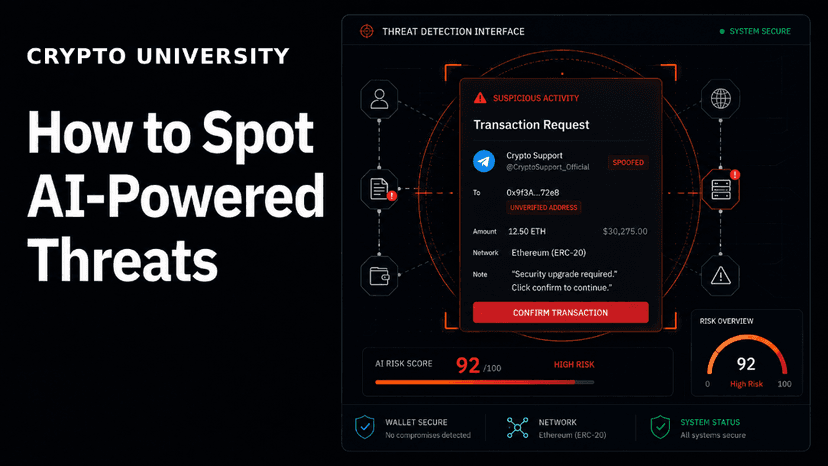
Scammers impersonate celebrities, company executives, government officials, exchange support teams, or even family members. AI-generated deepfakes make video calls or voice messages appear authentic. Common variants include fake giveaway promotions (“send crypto to double it”) and urgent support messages claiming an account has been compromised.
Impersonation scams grew dramatically in 2025, with Chainalysis reporting a 1,400% year-over-year increase in some metrics.
Recovery Scams
After someone loses money to an initial scam, fraudsters contact them offering to recover the funds for an upfront fee or percentage. These “recovery” services are almost always fraudulent and often result in additional losses. They frequently follow pig butchering operations.
Other AI-Enhanced Threats
Wallet drainers: Malicious smart contracts or browser extensions that trick users into approving transactions that empty their wallets.
Phishing with AI assistance: More convincing fake websites, emails, and messages generated or refined by AI.
Fake platforms and apps: AI-generated content makes promotional materials and dashboards look professional.
Case Study: Pig Butchering Scam Followed by a Recovery Scam
To illustrate how these tactics work in practice, consider a widely reported case from early 2025 involving a woman in Maryland. She lost millions of dollars in a classic pig butchering operation that was later followed by a secondary recovery scam.
How the scam unfolded
The scammers, believed to be operating from Southeast Asia, initiated contact through online channels. Over several weeks and months, they built a personal relationship with the victim, showing consistent attention and gradually introducing the topic of cryptocurrency investments. They presented themselves as experienced traders with access to a high-performing platform.
The victim was encouraged to start with smaller deposits that appeared to generate strong returns on the fake dashboard. As trust grew, she was persuaded to transfer increasingly large amounts. When she eventually attempted to withdraw her funds, the platform blocked access and demanded additional payments for “taxes,” “fees,” or “compliance.” At that point, the scammers disappeared with the money.
Shortly afterward, she received contact from a different group claiming to specialize in recovering lost cryptocurrency. They offered to retrieve her funds in exchange for an upfront payment or percentage of the recovered amount. This is a common follow-up tactic that preys on victims who are already emotionally and financially distressed.
Red flags that were present
Unsolicited relationship that quickly shifted to financial advice
Pressure to deposit larger sums after seeing “profits”
A trading platform with no verifiable regulatory oversight or independent reviews
Demands for additional payments to access funds
Follow-up contact from an unknown party offering recovery services (a major secondary red flag)
On-chain perspective
While the victim could not reverse the transactions, blockchain analysis in similar cases often reveals clear patterns: many small-to-medium deposits from individual victims into a central wallet, followed by rapid layering through multiple addresses and eventual movement toward money laundering networks or off-ramps. These patterns are frequently identified by firms using tools like those from Chainalysis.
Lessons from this case
This example shows how pig butchering relies more on psychological manipulation and relationship-building than on technical sophistication in the early stages. The addition of a recovery scam afterward demonstrates how criminals continue to target the same victims.
Applying the checklists in this guide could have helped: independent verification of the platform through official regulatory sources, never mixing personal online relationships with financial decisions, and recognizing that any party demanding upfront fees to “recover” funds is almost certainly running another scam.
Real cases like this one highlight why consistent verification habits and skepticism toward unsolicited financial opportunities are critical.
Psychological Tactics Scammers Use
Scammers exploit well-known principles of influence:
Trust and relationship building — Long conversations create emotional bonds before money is requested.
Authority and social proof — Deepfakes of known figures or fake testimonials create credibility.
Urgency and scarcity — “Act now or lose the opportunity / your funds will be lost.”
Greed and fear — Promises of high returns or warnings that accounts are at risk.
Commitment and consistency — Small initial actions (sharing information or small test deposits) make larger commitments feel natural.
Reciprocity — Gifts, attention, or “helpful” advice make victims feel obligated to respond positively.
These tactics work because they target human psychology rather than technical vulnerabilities alone.
On-Chain Red Flags
Every cryptocurrency transaction leaves a permanent public record. Beginners can use free blockchain explorers (such as Etherscan for Ethereum or equivalent tools for other chains) to perform basic checks before sending significant amounts.
Common patterns associated with scam-related wallets include:
Newly created addresses with sudden high activity.
Multiple small incoming transfers from many different unrelated addresses (often victim deposits).
Rapid outflows to other wallets, mixers, or known high-risk clusters shortly after inflows.
Connections (via clustering analysis) to addresses previously linked to scams or laundering networks.
Repeated use of the same addresses or patterns across multiple suspected operations.
Important limitation: On-chain analysis requires experience and tools. It is a supporting check, not a guarantee of safety. The safest approach remains avoiding unsolicited requests to send cryptocurrency in the first place.
Practical Red Flag Checklists
Use these before taking any action involving cryptocurrency.
General Red Flags
Unsolicited contact via social media, dating apps, email, text, or phone.
Promises of guaranteed high returns with little or no risk.
Pressure to act quickly or send funds immediately.
Requests for private keys, seed phrases, or login credentials.
Demands to send cryptocurrency to “verify,” “unlock,” or “recover” funds.
Links or QR codes provided in unsolicited messages.
Inability to withdraw funds without paying extra fees.
Before Sending to Any Address
Verify the recipient independently through official channels (never use contact details provided by the other party).
Check the address on a blockchain explorer for suspicious history.
Confirm the platform or project exists and is regulated where relevant through official sources.
Use hardware wallets and strong, unique passwords with app-based or hardware 2FA for any accounts.
For Investment or Platform Offers
Research the team, company registration, and regulatory status independently.
Be extremely cautious of platforms that show perfect returns or block withdrawals.
Never connect your wallet to unverified websites or approve unfamiliar transactions.
How to Protect Yourself
Treat all unsolicited cryptocurrency offers or urgent requests as high-risk.
Verify every identity and link through official websites or known contacts using information you find yourself.
Keep the majority of holdings in hardware wallets offline.
Enable strong multi-factor authentication and never share recovery information.
Use separate wallets for testing or small amounts when exploring new platforms.
Stay informed through reputable educational sources rather than social media hype.
Report suspicious activity promptly to platforms and authorities.
Crypto transactions are generally irreversible. Prevention is far more effective than attempting recovery after funds are sent.
What to Do If You Suspect a Scam or Have Been Targeted
Stop all communication and do not send any more funds or information.
Document everything (screenshots, transaction IDs, wallet addresses, communications).
Report to relevant authorities: FTC (ReportFraud.ftc.gov), FBI Internet Crime Complaint Center (ic3.gov), and your local law enforcement.
Contact the exchange or wallet provider involved if applicable.
Consider professional blockchain forensics services for tracing if significant amounts were lost, though recovery is never guaranteed.
FAQ
What is a pig butchering scam?
It is a long-term fraud where scammers build trust (often through romance or friendship) before directing victims to fake investment platforms. Once funds are deposited, withdrawals are blocked and the money is stolen.
How do deepfakes work in crypto scams?
AI creates realistic video or audio of real people (celebrities, executives, or family members). Scammers use these to impersonate trusted figures and convince victims to send cryptocurrency or share sensitive information.
Can lost cryptocurrency be recovered?
In most cases, no. Transactions on public blockchains are irreversible. Recovery scams that promise to retrieve funds are almost always additional frauds. Report losses to authorities anyway, as tracing is sometimes possible.
Are all unsolicited crypto messages scams?
Not every message is malicious, but unsolicited requests to send cryptocurrency or share wallet details are extremely high-risk and should be treated as potential scams until independently verified.
What should I check on a blockchain explorer before sending funds?
Look at the address history for sudden creation, patterns of many small incoming transfers followed by rapid outflows, or connections to previously flagged scam activity. This is a basic check only and does not replace other verification steps.
How can I verify if a crypto platform or person is legitimate?
Research through official regulatory databases, established news sources, and the company’s verified website. Never rely solely on information or links provided by the party contacting you.
Should I use AI tools to detect scams?
Some security tools incorporate AI for pattern detection, but no tool is perfect. Combine technology with personal verification habits and skepticism toward unsolicited offers.
Is it safe to discuss crypto investments on dating or social apps?
Mixing personal relationships with unsolicited investment advice is a common tactic in pig butchering scams. Be extremely cautious and verify everything independently.
Disclaimer: This content is for educational and informational purposes only and is not financial advice. Nothing here is a recommendation to buy or sell any asset or use any platform. Do your own research and manage your risk.
AI + Crypto Convergence in 2026: What It Means for Web3 Developers and Users
AI Meets DAOs: How Artificial Intelligence Is Changing On-Chain Governance in 2026
Real-World Asset Tokenization Hits $31 Billion: What It Means for On-Chain Finance
The Crypto Anti-Phishing Checklist: 12 Habits That Stop Wallet Drainers in 2026