Key Takeaways
Use a licensed platform. The safest way to cash out is through a BSP-licensed Virtual Asset Service Provider (VASP) such as Coins.ph, PDAX or Maya. You sell your crypto for pesos, then withdraw to a bank account or e-wallet.
Avoid blocked global apps. Binance, Coinbase and Gemini have been blocked for Filipino users. Cashing out through unlicensed platforms adds risk and offers no local consumer protection.
Expect tax on profits. Crypto gains are generally taxable in the Philippines. There is no dedicated crypto tax law yet, so profits are commonly reported as ordinary income to the BIR. Keep records and consider professional advice.
Cashing out crypto means converting a digital asset such as Bitcoin, Ethereum or a stablecoin like USDT into Philippine pesos you can actually spend or save. In 2026 the process is more regulated than it used to be. That is good for safety, but it also means the platform you choose matters. This guide explains the standard steps, compares your main options, and covers fees, large withdrawals and tax basics in plain language. It is educational and is not financial or tax advice.
The Basic Process, Step by Step
No matter which platform you use, cashing out follows the same core path:
Move your crypto to a platform that pays in pesos. This is usually a BSP-licensed exchange or e-wallet. If your coins sit in a private wallet, send them to your account's deposit address for that specific coin and network.
Sell the crypto for pesos. On most apps this is a Sell or Convert button. The app shows the peso amount you will receive after its spread and fees.
Check the rate and fees before confirming. The quoted number already includes the platform's markup, so compare it against the live market price to see the real cost.
Confirm the sale. Your peso balance usually appears in the app wallet within seconds.
Withdraw pesos to your bank or e-wallet. Local transfers move through InstaPay or PESONet. Small amounts often arrive in minutes; larger ones may take longer.
Keep a record. Save the transaction details for your own tracking and for tax season.
Typical timing at a glance:
Step | Typical time | Notes |
|---|---|---|
Sell crypto to pesos | Seconds | Rate locks when you confirm |
Pesos to e-wallet (InstaPay) | Minutes | Daily limits apply |
Pesos to bank (InstaPay) | Minutes | Real-time, usually under PHP 50,000 |
Pesos to bank (PESONet) | Same or next day | Used for larger transfers |
Comparing Your Main Options
There are three practical ways most people in the Philippines turn crypto into pesos. Each suits a different need.
Option 1: Licensed local crypto exchanges
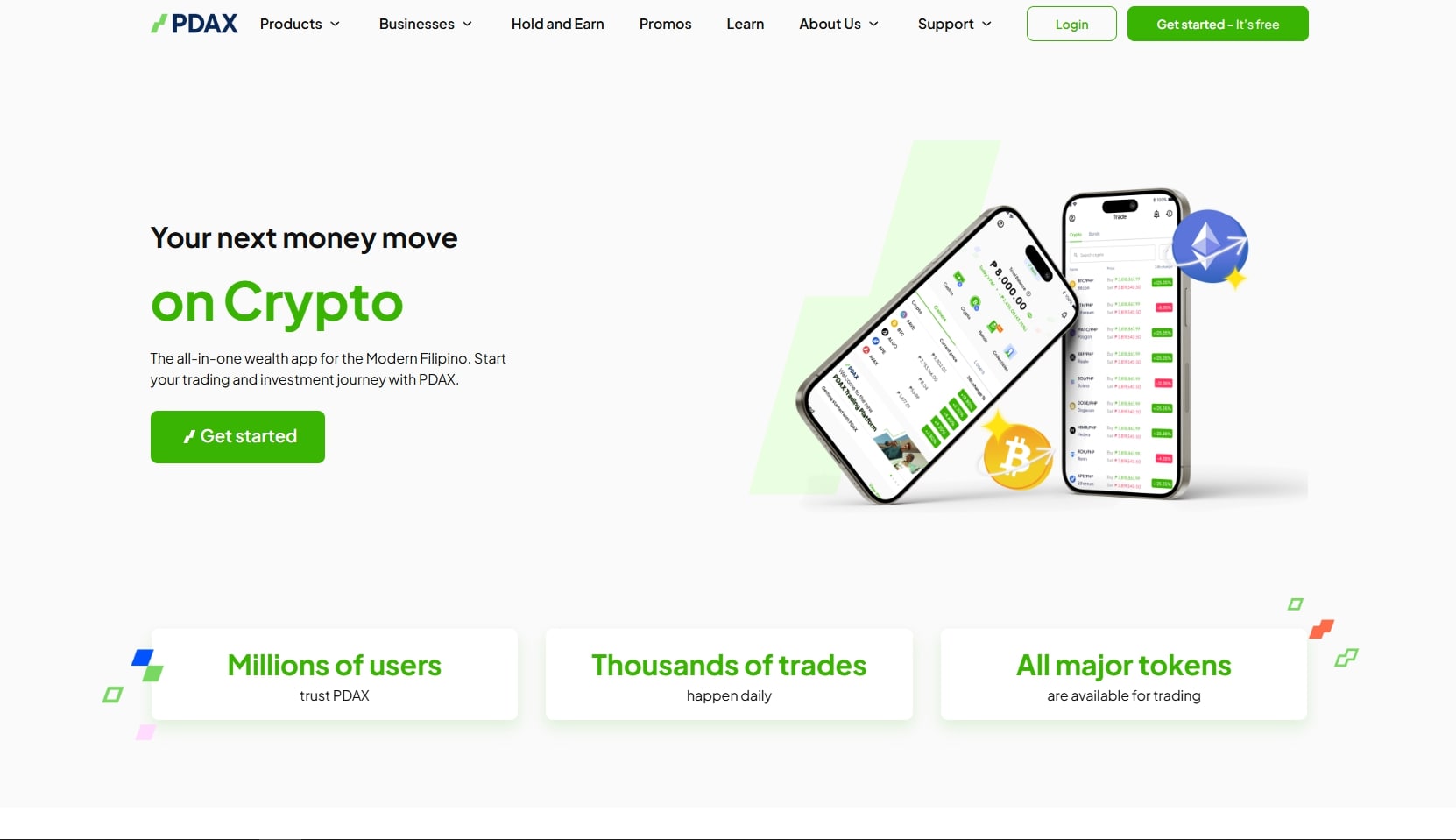
Platforms like Coins.ph and PDAX are dedicated crypto exchanges licensed by the Bangko Sentral ng Pilipinas (BSP). You deposit or buy crypto, sell it for pesos inside the app, then withdraw to your bank or e-wallet. This is the most common route because it supports a wide range of coins, has clear peso withdrawal channels, and operates under local rules. It is a strong fit for regular users and for medium to large amounts.

Option 2: E-wallets with built-in crypto
Everyday e-wallets now include crypto features. GCash offers crypto trading through GCrypto, which is powered by the licensed exchange PDAX, while Maya is itself a licensed VASP with crypto built into its app. These are the most convenient for small, everyday cash-outs because your pesos land in a wallet you already use for bills and transfers. The trade-off is a narrower coin selection and lower limits than a full exchange.
Option 3: OTC desks and physical cash-out outlets
Over-the-counter (OTC) services such as Moneybees let you sell crypto for cash through partner outlets or a dedicated trading desk. This suits people who want physical cash pickup, prefer in-person help, or are moving larger sums that benefit from a quoted price rather than an order book. Availability depends on location and outlet hours.
Quick comparison:
Option | Best for | Examples | Speed |
|---|---|---|---|
Licensed exchange | Regular use, wider coin choice | Coins.ph, PDAX | Fast |
E-wallet crypto | Small, everyday cash-outs | GCash (GCrypto), Maya | Fast |
OTC / cash outlet | Cash pickup, larger sums | Moneybees | Varies |
Note: The active licensed VASP list also includes Bloomsolutions (BloomX), Direct Agent 5 (SurgePay), TopJuan (TopWallet), XenRemit, and bank VASPs GoTyme Bank and UnionBank. The BSP publishes the current list, and it is worth checking before you sign up anywhere new.
Which Crypto Should You Send?
The coin and network you send affect both your fee and your speed. Two rules keep you safe:
Only send what the receiving platform supports. If you send a coin or a network the platform does not list, the funds can be lost.
Match the network exactly. A stablecoin like USDT exists on several networks, for example TRON (TRC-20) and Ethereum (ERC-20). Pick the same network on both the sending and receiving side.
For cashing out, many people prefer a stablecoin such as USDT or USDC because its value tracks the US dollar, which makes the peso amount predictable. Sending on a low-fee network keeps costs down. Bitcoin and Ethereum are also widely supported, but Ethereum network fees can be high at busy times, so check the fee before you send.
Cashing Out Large Amounts
Larger cash-outs run into three practical limits: verification tiers, transfer caps, and reporting rules. Here is a quick overview of deeper detail on How to Cash Out Crypto.
Complete full verification (KYC). Higher withdrawal limits require full identity verification on the platform. Upgrading your account tier ahead of time avoids delays.
Mind transfer channel caps. InstaPay handles smaller, instant transfers, while PESONet is used for larger amounts and settles in batches. A big withdrawal may be split or routed through PESONet.
Expect reporting on large sums. Under anti-money-laundering rules, covered transactions at or above PHP 500,000 in a single banking day are reported to the Anti-Money Laundering Council (AMLC). This is routine and does not mean you did anything wrong, but your bank may ask about the source of funds.
For very large amounts, an OTC desk can quote a single price for the whole trade, which avoids moving the market on a public order book. Keep clear records of where the crypto came from, since banks and platforms increasingly ask for proof of source.
A Word on P2P and OTC Desks
Peer-to-peer (P2P) trading lets you sell crypto directly to another person. A platform holds your crypto in escrow, the buyer sends you pesos by bank or e-wallet, and the crypto is released once you confirm payment. P2P can offer competitive rates, but it carries real risks:
Scams and fake payment confirmations, where a buyer claims to have paid but has not.
Reversed or disputed transfers that can get your own bank account frozen if the funds are linked to fraud.
Reduced protection when the P2P marketplace itself is unlicensed. Binance, a common P2P venue, has been blocked for Filipino users, so relying on it adds legal and access risk.
Licensed OTC desks such as Moneybees are a more regulated middle ground. They act as the counterparty themselves, quote you a price, and operate under BSP rules. If you use P2P at all, trade only with high-reputation counterparties, keep proof of every payment, and never release crypto until pesos have truly cleared in your account.
What About Taxes?
The Philippines does not yet have a dedicated crypto tax law. Instead, the Bureau of Internal Revenue (BIR) applies existing rules under the National Internal Revenue Code. The widely reported position is that crypto is treated as property, and profits are generally taxed as ordinary income at graduated rates from 0 percent to 35 percent, depending on your total income.
A few points people commonly ask about:
Taxable events. Selling crypto for pesos, swapping one coin for another, spending crypto, and receiving it as income or rewards can all trigger tax.
Reporting. There is no dedicated crypto form. Earnings are typically declared as other income on the standard BIR forms (1700 or 1701), and the annual filing deadline for individuals is April 15.
Business use. If you sell goods or services and accept crypto, a 12 percent value-added tax may apply. Business-related crypto activity has its own registration and reporting duties.
Important: Because the BIR has not issued crypto-specific regulations, these are general interpretations rather than settled rules, and some sources describe them differently. Figures and treatment can change. Keep detailed records of your buys, sells, fees and peso values, and consider speaking with a licensed CPA or tax lawyer about your own situation.
The Bottom Line
Cashing out crypto in the Philippines in 2026 is straightforward when you use a licensed platform: sell for pesos, withdraw to your bank or e-wallet, and keep good records. Match the coin and network carefully, plan ahead for large amounts and their reporting rules, and treat P2P with caution. Stablecoins keep the peso value predictable, licensed exchanges and e-wallets cover most needs, and OTC desks help with cash pickup or bigger trades. Finally, remember that profits are generally taxable, so tracking your transactions from the start saves stress later.
Frequently Asked Questions
Is it legal to cash out crypto in the Philippines?
Yes. Buying, selling and cashing out crypto is legal when done through platforms licensed by the BSP. The main rule to remember is to use a licensed VASP rather than a blocked or unregistered service.
What is the cheapest way to cash out?
Costs come from the spread when you sell plus any withdrawal fee. Comparing the quoted peso rate against the live market price, and choosing a low-fee network when you transfer crypto in, usually makes the biggest difference. There is no single cheapest option for everyone.
Can I cash out crypto directly to GCash or Maya?
Yes. GCash offers crypto through GCrypto (powered by PDAX), and Maya is a licensed VASP with crypto built in. You can also sell on an exchange like Coins.ph or PDAX and withdraw the pesos to your GCash or Maya wallet.
Why can't I use Binance or Coinbase?
Binance was blocked for Filipino users in 2024, and Coinbase and Gemini were blocked in late 2025 for operating without a local license. Regulators have restricted access to a range of unlicensed platforms, so it is safer to use a BSP-licensed provider.
How long does a peso withdrawal take?
Selling crypto for pesos is usually instant. Withdrawing to a bank or e-wallet through InstaPay is often a matter of minutes, while larger transfers through PESONet may take until the same or next business day.
Do I have to pay tax when I cash out?
Generally, profits are taxable and commonly reported as ordinary income to the BIR. There is no dedicated crypto tax law yet, so keep records and consult a tax professional for your specific case. This guide is not tax advice.
Sources
The following were used for regulatory, platform and tax context. Details change, so confirm current rules with the BSP, BIR and each platform before acting.
Bangko Sentral ng Pilipinas (BSP), list of registered VASPs and Circular No. 1108 on Virtual Asset Service Providers.
Fintech News Philippines, "List of Licensed Cryptocurrency Exchanges in the Philippines" (updated February 2026).
BitPinas, coverage of BSP VASP licensing and the moratorium on new licenses.
Crypto.news / MEXC news, reporting on the blocking of Binance (2024) and Coinbase and Gemini (December 2025).
Securities and Exchange Commission (SEC) Philippines investor alerts on unregistered platforms.
Bureau of Internal Revenue (BIR) guidance under the National Internal Revenue Code, and 2026 Philippine crypto tax overviews from Taxify.ph and other tax explainers.
Disclaimer: This content is for educational and informational purposes only and is not financial advice. Nothing here is a recommendation to buy or sell any asset or use any platform. Do your own research and manage your risk.
How to Cash Out Crypto in Dubai in 2026
Best Crypto Trading Competitions in 2026: OKX vs Bybit
How RugCheck Works: A Beginner's Guide to Checking Solana Tokens
Best Crypto Off-Ramps in the UAE: OKX, BitOasis and Fasset Compared