What Is DeBank?
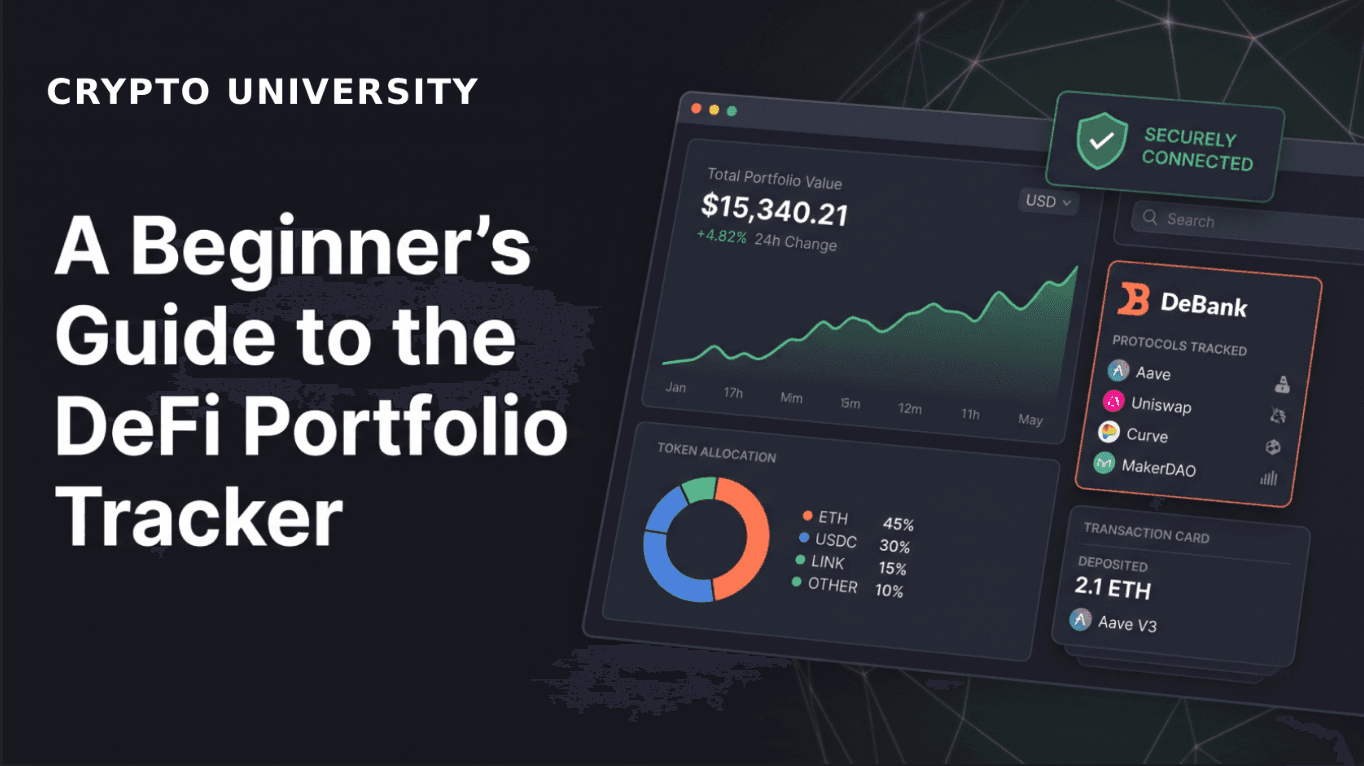
DeBank is a Web3 portfolio tracker that shows your token balances, DeFi positions, and NFTs across Ethereum and other EVM compatible blockchains in a single dashboard. It was founded in 2018 and has grown from a simple tool for viewing DeFi positions into a broader platform that combines portfolio tracking, wallet research, and social features.
The core idea is simple. Instead of checking each chain, protocol, and wallet separately, you enter a public wallet address and DeBank pulls the on-chain data together into one clear view. Tracking is read only, so you do not need to share private keys or seed phrases to look at a wallet. That makes it a low risk way to monitor holdings and to study how other wallets behave on-chain.
Supported Networks
DeBank focuses on the EVM ecosystem. It supports Ethereum along with major Layer 2 networks and sidechains such as Arbitrum, Optimism, Base, and Polygon, plus many others. Reporting in 2026 puts its coverage at more than one hundred EVM compatible chains and over a thousand DeFi protocols, which is one of the widest ranges among portfolio trackers.
It is worth being clear about the limit. DeBank is built for EVM chains. Non-EVM assets, including native Bitcoin and the Solana ecosystem, are generally outside its core coverage. If your portfolio is spread across non-EVM chains, you will likely need a second tool alongside it.
Main Features
Portfolio tracking
The main dashboard groups a wallet's assets by token, by chain, and by protocol. You can see plain token balances as well as more complex DeFi positions such as liquidity pool deposits, lending and borrowing on protocols like Aave, and staking positions. A history tab lists past transactions so you can review activity over time.
Wallet research and whale tracking
Because every DeBank profile is built from public on-chain data, you can look up any wallet address, not only your own. This is widely used for research and due diligence. You can study how large or active wallets, often called whales, move funds between protocols. DeBank also shows a metric called Total Value Followed, or TVF, which measures the combined value of the wallets that follow a given profile.
Token approval manager
DeBank includes an approval tool that lists the smart contracts your wallet has allowed to spend its tokens. Old or unnecessary approvals are a common security risk in DeFi, so being able to review and revoke them in one place is a practical safety feature.
Social and messaging layer
Over the years DeBank has added social products, including a feed called DeBank Stream and a Web3 messenger known as Hi!, which lets users message any wallet address. A DeBank ID can be minted to claim a custom username and profile.
Related products
The same team builds Rabby, a non-custodial browser wallet designed for EVM and DeFi users, and runs DeBank Chain, an OP Stack Layer 2 launched in 2024. As of 2026 the company has not issued its own token, and tokens claiming to be a DeBank coin on small exchanges are widely reported to be unrelated impersonators.
How to Set Up DeBank: Step by Step
Go to the official website at debank.com, or download the DeBank mobile app.
Paste a public wallet address into the search bar to view it instantly, with no sign in required.
To track your own portfolio, connect a wallet such as Rabby or MetaMask, or simply save your address to a watchlist.
Review the Assets, DeFi, NFT, and History tabs to understand what the wallet holds and how it has been used.
Open the approval manager to check and revoke any risky or outdated token approvals.
Optional: follow other wallets to build a research feed, or mint a DeBank ID for a custom profile.
Tool Rating
4.2 / 5.0 Editorial score
DeBank is one of the strongest free options for EVM focused users who want fast portfolio visibility, protocol level position tracking, and wallet research. The score reflects wide chain coverage and useful research tools, balanced against its EVM only focus and the privacy tradeoff of a hosted dashboard.
Fees
Core multi-chain portfolio and DeFi tracking is free.
A DeBank ID (custom username and profile) carries a one time cost, widely reported to be around 96 US dollars. Treat this as an estimate, as pricing can change.
Some reviews reference an optional paid tier for advanced features. Pricing is not consistently published, so any figures should be treated as estimates.
Standard network gas fees apply to any on-chain action, such as minting a DeBank ID or swapping through Rabby. These fees go to the network, not to DeBank.
Frequently Asked Questions
Is DeBank free?
Yes. Core multi-chain portfolio and DeFi tracking is free. Optional extras, such as a custom DeBank ID, have a cost.
Is DeBank safe to use?
Tracking is read only and does not require private keys or seed phrases, so viewing a wallet is low risk. As with any hosted service, be aware that the addresses you view are processed by DeBank's servers.
Which blockchains does DeBank support?
It focuses on Ethereum and EVM compatible chains, with reported coverage of more than one hundred networks. It does not natively cover non-EVM chains like native Bitcoin or Solana.
Does DeBank have a token?
As of 2026, no official DeBank token has been issued. Any token claiming otherwise on small exchanges is widely reported to be unrelated to the project.
Can I track other people's wallets?
Yes. Any public address can be searched, which is why DeBank is popular for wallet research and whale tracking.