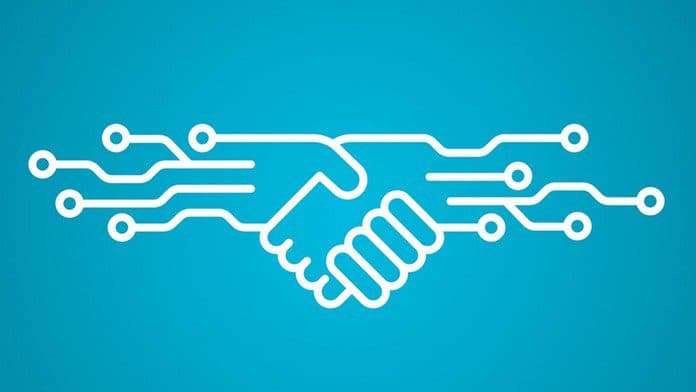
Smart Contracts promise to revolutionize the world of law. It is not just a digital translation of a paper contract, but a more efficient way to close a deal, offering greater security.
But... What are they? What are they for? What are their advantages? We explain everything in this post.
What are Smart Contracts?
A Smart Contract is a computer program that self-executes agreements established between two or more parties.
Self-execution means that certain actions occur as a result of the fulfillment of a series of conditions, those that have been agreed in said contract.
When a previously established condition occurs, the smart contract detects it and automatically executes the corresponding clause. The technology that underlies Smart Contracts is the already popular Blockchain technology.
What is Blockchain?
Blockchain is a public registry of transactions that do not need to be verified by any central authority, since they are based on a distributed and free network of intermediaries, thanks to the use of cryptographic algorithms.
It would be like the accounting records book of a company where all money inflows and outflows are recorded, although in this case we are talking about a digital book that does not require a centralized intermediary to identify and certify the information that is recorded.

Benefits of Smart Contracts
Autonomy
These contracts are always between one or several natural or legal persons, but without any third party as an intermediary. It is not necessary for anyone to validate the contract, such as a lawyer. For this reason, they reduce, and may even eliminate, the intervention of any person who is not involved in the contract.
Cost
Being contracts that do not depend on a third party, costs are reduced. Less human intervention results in reduced costs.
Trust
All smart contracts are recorded on the blockchain. This makes interaction between people who do not know each other possible, without the risk of fraud.
Speed
Smart contracts use software to automate tasks that would otherwise be done by manual means. Therefore, they increase the speed of business processes and are less prone to manual/human error.
Security
Since these smart contracts are based on the public blockchain, they cannot be lost. Everything is recorded immutably. Nothing and no one can make it disappear and you always have access to them.
The decentralized execution process eliminates the risk of tampering, as execution is automatically managed by the entire network rather than by a centralized body.
How do Smart Contracts work?
A Smart Contract is above all a standardized tool that can hardly be applied to the drafting of a specific contract between two entities. Because this type of official document requires negotiations and the approval of a lawyer.
But all "standard" contracts, such as insurance, banking, real estate, auto, etc., are likely to become smart contracts and thus make agents' jobs easier and customer satisfaction easier.
More direct, faster, the smart contract fits perfectly into the daily actions of customers.