Token unlocks, also known as vesting releases, occur when previously locked tokens become available in the circulating supply according to a project's predefined schedule. These tokens are typically allocated to early investors, team members, advisors, or community reserves and are released gradually through cliffs (large one-time releases) or linear vesting (smaller, ongoing distributions).
Understanding unlocks helps beginners and intermediate users grasp tokenomics—the rules governing a project's total and circulating supply. When tokens unlock, supply increases, which can influence market liquidity and holder expectations. The impact depends on factors such as the percentage of supply released, the recipients, the project's trading volume, and broader market conditions. Projects design vesting schedules to align incentives over years, preventing sudden dumps while rewarding long-term contributors.
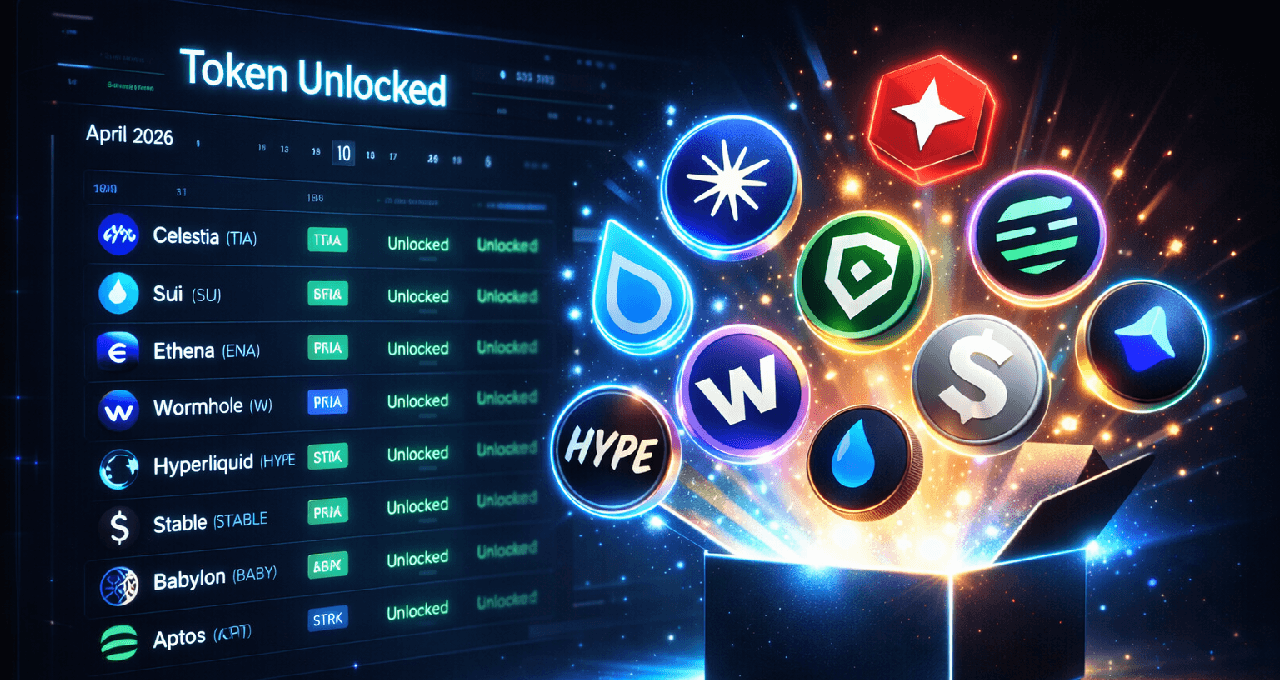
April 2026 featured several notable events across layer-1 blockchains, DeFi protocols, and infrastructure projects. Over $398 million in tokens were projected to enter circulation for the month, according to tracking platforms. Many releases follow monthly or quarterly patterns established at launch. This article covers the top 10 major unlocks by significance (considering both dollar value and percentage of supply), presented in calendar order for clarity. All data is drawn from verified tracking sources and is presented as estimates based on reported figures at the time of scheduling.
April 2026 Token Unlock Summary Table
Rank | Project (Token) | Date | Tokens Unlocked | % of Supply | Est. Value (USD, approx.) | Main Recipients |
1 | Celestia (TIA) | April 1 | 175.6 million | 17.2% (total) | $52.6 million | Seed investors, Series A/B, core contributors |
2 | Sui (SUI) | April 1 | 42.94 million | 1.1% (circulating) | $37–47 million | Community reserve |
3 | Ethena (ENA) | April 2 | 40.63 million | ~0.5% (total) | ~$27–40 million | Team, advisors, private sale |
4 | Wormhole (W) | April 3 | 600 million | 6% (total) | ~$10 million | Not specified in reports |
5 | Hyperliquid (HYPE) | April 6 | 9.92 million (scheduled; actual claims significantly lower at ~330K in some reports) | ~2.66% (scheduled) | Up to $375 million (scheduled) / ~$12 million (actual) | Core contributors |
6 | Stable (STABLE) | April 8 | 888.89 million | 0.89% (total) | ~$23 million | Ecosystem / float |
7 | Rain Protocol (RAIN) | April 10 | Large single-day (reports cite ~$304 million) | Varies by source | $304 million | Early investors / allocations |
8 | Babylon (BABY) | April 10 | 612.5 million | Up to ~37% (certain tranches) | ~$8–10 million | Advisors, early rounds |
9 | Aptos (APT) | April 12 | 11.31 million | 0.68% (released) | ~$9.9 million | Community distributions |
10 | Starknet (STRK) | April 15 | 127 million | 1.27% (total) | Varies by market price | Early investors, contributors |
Notes: Values are estimates based on prices at the time of reporting and may fluctuate. Percentages refer to total or circulating supply as reported by major trackers. Some unlocks are part of linear schedules rather than full cliffs. Actual on-chain releases can differ from scheduled amounts due to team commitments or governance decisions.
1. Celestia (TIA) – April 1
Celestia is a modular blockchain focused on data availability. Its April 1 release of 175.6 million TIA represented one of the largest percentage unlocks of the month at 17.2% of total supply. Recipients included early seed and Series A/B investors plus core contributors. Large investor-focused releases like this are common in early-stage projects to fulfill vesting commitments made during fundraising rounds.
2. Sui (SUI) – April 1
Sui is a high-throughput layer-1 blockchain using an object-centric model for parallel transaction processing. The 42.94 million SUI unlock (about 1.1% of circulating supply) followed its regular monthly vesting schedule, which runs through 2030. This type of predictable release allows the market time to absorb new supply through ecosystem grants and staking.
3. Ethena (ENA) – April 2
Ethena operates a synthetic dollar protocol (USDe) in DeFi. The April 2 unlock of 40.63 million ENA went to the team, advisors, contractors, and private-sale participants. Monthly team unlocks are typical in DeFi projects to retain talent while gradually increasing liquidity.
4. Wormhole (W) – April 3
Wormhole is a cross-chain messaging protocol that connects blockchains. Its 600 million W release (6% of total supply) was a cliff event. With relatively modest daily trading volume, such releases highlight how supply events interact with liquidity—larger relative to normal volume can affect order books more noticeably.
5. Hyperliquid (HYPE) – April 6
Hyperliquid runs a decentralized perpetual futures exchange on its own layer-1. The original schedule projected around 9.92 million HYPE, but actual on-chain claims were reported significantly lower (~330,000 HYPE) due to the team’s committed claim strategy. This discrepancy between scheduled vesting and executed claims illustrates how teams sometimes adjust distributions through governance or commitments.
6. Stable (STABLE) – April 8
Stable focuses on stablecoin and ecosystem infrastructure. The April 8 release of approximately 888.89 million STABLE (0.89% of total supply) added to the circulating float. Smaller-percentage releases to ecosystem participants often have more muted immediate effects compared with investor cliffs.
7. Rain Protocol (RAIN) – April 10
Rain Protocol had one of the larger dollar-value events of mid-April, with reports citing approximately $304 million in RAIN tokens released in a single day. Such scale in a single day underscores the importance of monitoring multiple tracking platforms, as exact figures can differ by methodology.
8. Babylon (BABY) – April 10
Babylon enables Bitcoin staking and security for other chains. The April 10 unlock of 612.5 million BABY stood out for its high allocation percentage in certain investor and advisor categories (reported up to ~37% in some tranches). Bitcoin-related infrastructure projects often attract attention when unlocks coincide with broader BTC market activity.
9. Aptos (APT) – April 12
Aptos is a layer-1 blockchain using the Move programming language. Its recurring 11.31 million APT release (0.68% of released supply) supports community incentives, grants, and staking rewards. Community-oriented unlocks tend to distribute tokens more broadly than pure investor releases.
10. Starknet (STRK) – April 15
Starknet is an Ethereum layer-2 using zero-knowledge proofs for scalability. The 127 million STRK unlock (1.27% of total supply) primarily benefited early investors and contributors. Historical patterns for similar investor unlocks show they are one factor among many in market pricing.
Later in the month, projects such as Arbitrum (ARB) on April 16 and LayerZero (ZRO) on April 20 also had scheduled releases, primarily to DAO treasuries or contributors.
How Investors and Users Can Track Token Unlocks
Reliable tools include Tokenomist.ai (detailed vesting schedules and weekly digests), DefiLlama Unlocks (calendar and impact data), and CryptoRank.io (unlock calendars). Most platforms display countdowns, recipient breakdowns, and historical unlock performance. Checking on-chain data via explorers can confirm when tokens actually move to wallets or exchanges.
FAQ
What is the difference between a cliff unlock and linear vesting?
A cliff unlock releases a large batch of tokens on a single date. Linear vesting spreads smaller amounts continuously over time. Most projects combine both.
Do token unlocks always cause prices to fall?
Not necessarily. Research across thousands of events shows that roughly 90% coincide with some negative price pressure in the days around the unlock, but outcomes depend on recipient behavior, project fundamentals, overall market sentiment, and liquidity. Community or treasury unlocks often have less immediate impact than investor releases.
Why do projects lock tokens in the first place?
Locking aligns incentives. It prevents founders or early investors from selling immediately after launch, giving the project time to build value. Vesting schedules are disclosed in whitepapers and tokenomics documents before launch.
How can beginners prepare for an upcoming unlock?
Review the project's tokenomics page or a tracker like Tokenomist. Note the date, percentage unlocked, and recipient categories. Monitor trading volume in the preceding week. Remember that past performance does not guarantee future results, and no unlock timing strategy replaces fundamental research.
Are unlocks the same as inflation or new token minting?
No. Unlocks move already-created tokens from locked to circulating supply. New minting (inflation) creates additional tokens according to protocol rules, such as staking rewards or emissions.
Where can I find the most accurate unlock data?
Cross-reference multiple sources (Tokenomist, DefiLlama, CryptoRank) and verify on-chain transactions after the event. Official project announcements or governance posts provide the most authoritative details.
Sources
All data in this article is compiled from the following publicly available tracking platforms and reports (as of early April 2026):
Tokenomist.ai (primary vesting data and weekly digests): https://tokenomist.ai/
DefiLlama Unlocks Calendar: https://defillama.com/unlocks/calendar
Bitget Academy – Top Token Unlocks in April 2026: https://web3.bitget.com/en/academy/top-token-unlocks-in-april-2026-top-10-crypto-unlock-schedule-calendar-and-market-impact
Phemex Academy – April 2026 Token Vesting Calendar: https://phemex.com/academy/april-2026-token-vesting-calendar
KuCoin Blog – Major unlocks in April 2026: https://www.kucoin.com/blog/what-cryptocurrency-projects-offered-large-amounts-of-unlocks-in-april-2026
Additional cross-references from CryptoRank.io and project-specific announcements.
Figures are estimates and subject to market price fluctuations and on-chain adjustments. Always verify the latest data directly on the trackers above.