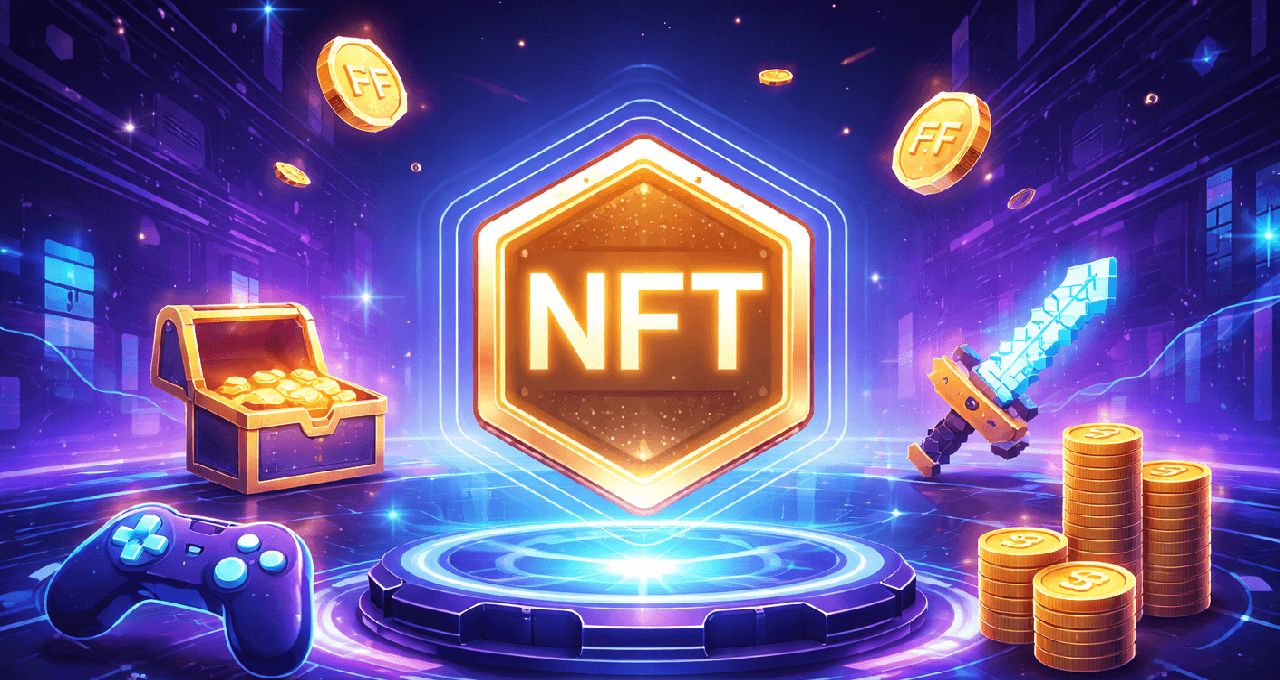
The metaverse, a persistent, shared, 3D virtual space where users can interact with each other and with digital objects, has long been a dream of science fiction. But in 2026, it is rapidly becoming a reality. And at the heart of this new digital frontier, a powerful economic engine is being built, one that is powered by cryptocurrency and the principles of Web3. From player-owned economies and non-fungible tokens (NFTs) to decentralized governance and play-to-earn business models, crypto is providing the fundamental building blocks for a new, open, and user-owned metaverse.
The convergence of gaming, NFTs, and DeFi is creating a powerful new paradigm for interactive entertainment. It is a move away from the closed, walled-garden ecosystems of traditional gaming, where players have no real ownership of their in-game assets, and towards a new model where players are participants, stakeholders, and even owners of the virtual worlds they inhabit.
This article explores the burgeoning world of crypto gaming and the metaverse. We will examine how blockchain technology is being used to create new kinds of gaming experiences, how NFTs are revolutionizing the concept of digital ownership, and how the principles of DeFi are being applied to create new, player-driven economies.
The Ownership Revolution: NFTs and the Player-Owned Economy
At the core of the crypto gaming revolution is the concept of true digital ownership, made possible by non-fungible tokens (NFTs). In a traditional video game, any in-game items you acquire—a rare sword, a unique skin, or a powerful vehicle—are not truly yours. They are simply a line of code on a company's server, and they can be taken away from you at any time. NFTs change this.
By representing in-game assets as unique tokens on a blockchain, NFTs give players true, verifiable ownership of their digital property. This has several profound implications:
Interoperability: Because NFTs are based on open standards, they can be designed to be interoperable between different games and virtual worlds. A sword you earn in one game could be used in another, or a piece of digital art you buy in a virtual gallery could be displayed in your virtual home.
Secondary Markets: NFT-based assets can be freely bought, sold, and traded on open, permissionless marketplaces, creating a vibrant secondary economy that is controlled by the players, not the game developers.
Composability: NFTs can be used as collateral in DeFi protocols, allowing players to borrow against their in-game assets or earn a yield on them.
Play-to-Earn: A New Business Model for Gaming
The concept of the player-owned economy has given rise to a new business model for gaming: play-to-earn (P2E). In a P2E game, players can earn real economic rewards for their time and skill. This can take many forms, from earning crypto tokens for winning battles to breeding and selling NFT-based creatures.
The most famous example of a P2E game is Axie Infinity, which created a digital economy in the Philippines and other developing countries during the COVID-19 pandemic. While the P2E model is still in its early stages and has faced challenges with sustainability, it represents a fundamental shift in the relationship between players and developers. It moves away from a purely extractive model, where players pay for a service, and towards a more collaborative model, where players are partners in the creation of value.
The Metaverse as a Decentralized Society
The ultimate vision for the convergence of crypto and gaming is the creation of a true metaverse, a decentralized society with its own economy, its own governance, and its own culture. In this vision, the metaverse is not a single, monolithic platform controlled by a single company like Meta (formerly Facebook). It is a network of interconnected virtual worlds, built on open standards and governed by its users.
Decentralized Autonomous Organizations (DAOs) are emerging as the primary governance structure for these new digital societies. DAOs allow the community of token holders to vote on key decisions about the future of the virtual world, from the allocation of resources to the implementation of new features.
Conclusion: Building New Worlds
The convergence of crypto, gaming, and the metaverse is one of the most exciting and rapidly evolving areas of technology today. It is a movement that is driven by a powerful and compelling vision: a future where users are not just consumers of digital content, but owners, creators, and governors of the virtual worlds they inhabit.
The challenges are still significant. Scalability, user experience, and the development of sustainable economic models are all major hurdles that need to be overcome. But the pace of innovation is relentless, and the promise of a more open, equitable, and user-owned digital future is a powerful motivator.
The next frontier of the internet is being built, and it is being built on a foundation of crypto. The games we play, the communities we form, and the economies we create in the metaverse will be a testament to the power of this new, decentralized paradigm.