Cryptocurrency Trading Volume Explained
Analysts and traders are always searching for indicators that would provide valuable data to purchase or sell a security, stock or cryptocurrency. There are several indicators that can be used, including moving averages, Bollinger Bands and also the RSI. However, trading volume can also be a good way to understand the price fluctuation of virtual currencies.
In this cryptopedia guide, we are going to share with you how trading volume works, what they represent and how they could have an impact on the price of assets and cryptocurrencies.
What is Trading Volume?
The trading volume makes reference to the number of assets that have been exchanged during a specific period of time. Trading volume can be represented in the asset you are trading (the total number of assets that have been traded) or they can be represented in the monetary value of these assets ($xxxxxx dollars exchanged in a specific period of time).
Volume is an important indicator that will show traders valuable information regarding trend changes, breakouts and the strength of a specific trend. At the same time, trading volume can be used to understand whether a specific move in the cryptocurrency market (or any other market) should be taken into consideration or not.
Let’s go to an example in the cryptocurrency market. Suppose that there are two traders in an exchange: trader A and trader B. Trader A buys 10 BTC from trader B in the course of an hour. During that hour, the trading volume registered in that exchange would be 10 BTC. Trader A is buying 10 BTC while trader B is selling these funds.
In a normal cryptocurrency exchange, there would be hundreds if not thousands of transactions every single hour. All the transfers processed during that hour will later be registered as trading volume.
Trading Volume Effect on Cryptocurrencies
If you trade virtual currencies - or any other asset - you should pay close attention to trading volume. If a cryptocurrency price moves higher and you see that the volume grows or remains high, we can be sure that the trend is strong and that there is a lot of interest for this virtual currency. This allows us to confirm the trend and reduces the chances of a reversal.
The same happens during bear markets. If the price of a cryptocurrency falls with high volume, we can confirm the bears remain in control of the market and we shouldn’t expect a trend change in the short term.
If the trend moves higher or lower with low volume, this should be a red flag. The market is moving but without a clear interest from buyers or sellers. Any large trader could change the trend of the market at any moment if there is low volume.
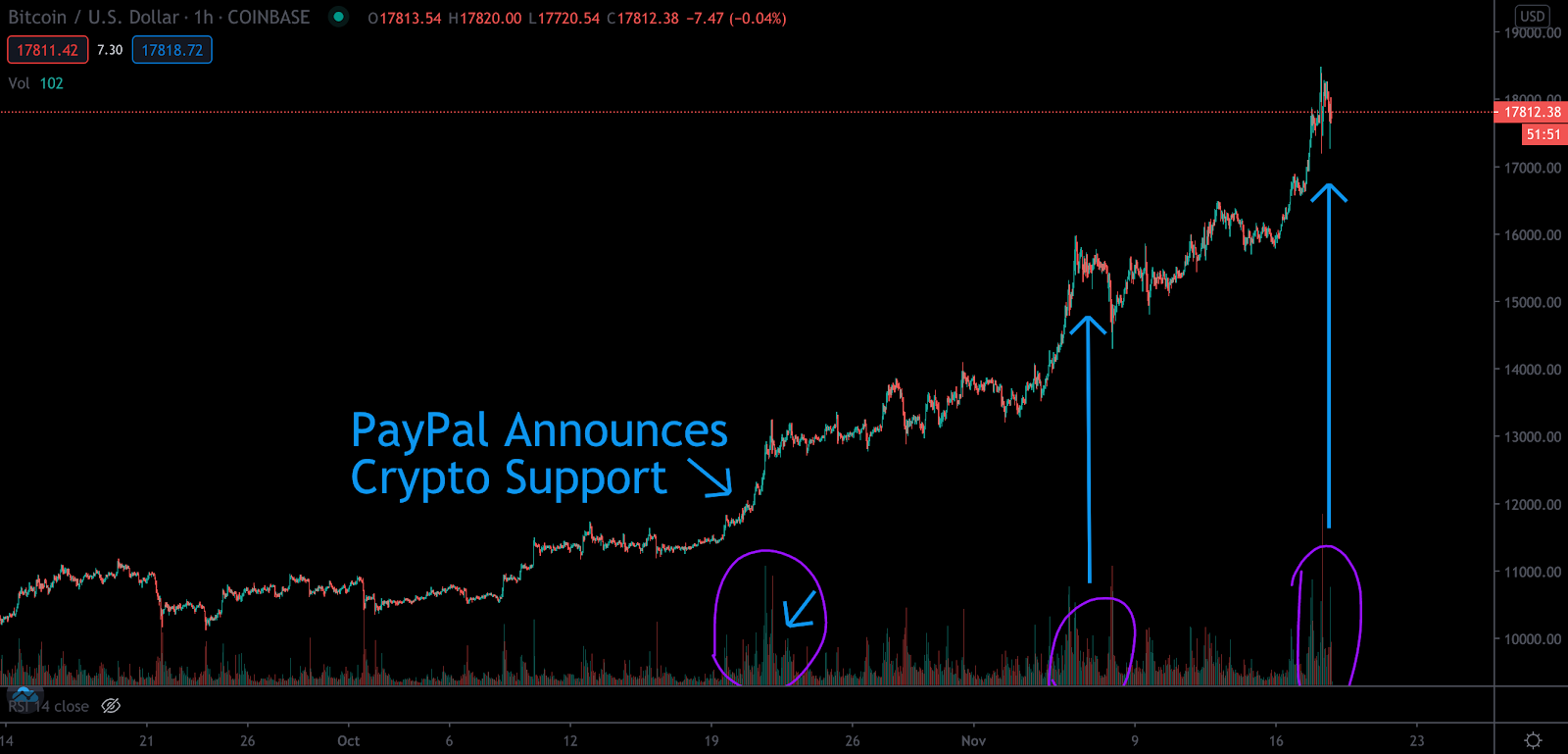
As you can see in the example above, we can see three main moments in terms of volume for the BTC/USD trading pair. In the first circle, you can see the moment in which PayPal announced support for cryptocurrencies. The market reacted in a very positive way. As you can see, the volume surged at that time, confirming the bull trend and momentum.
The second circle shows that trading volume skyrocketed when Bitcoin reached $15,900. This confirmed there was a large interest in purchasing the digital currency at that time. Finally, we see that now there has been a large increase in trading volume as Bitcoin surpassed $18,400.