Key Takeaways
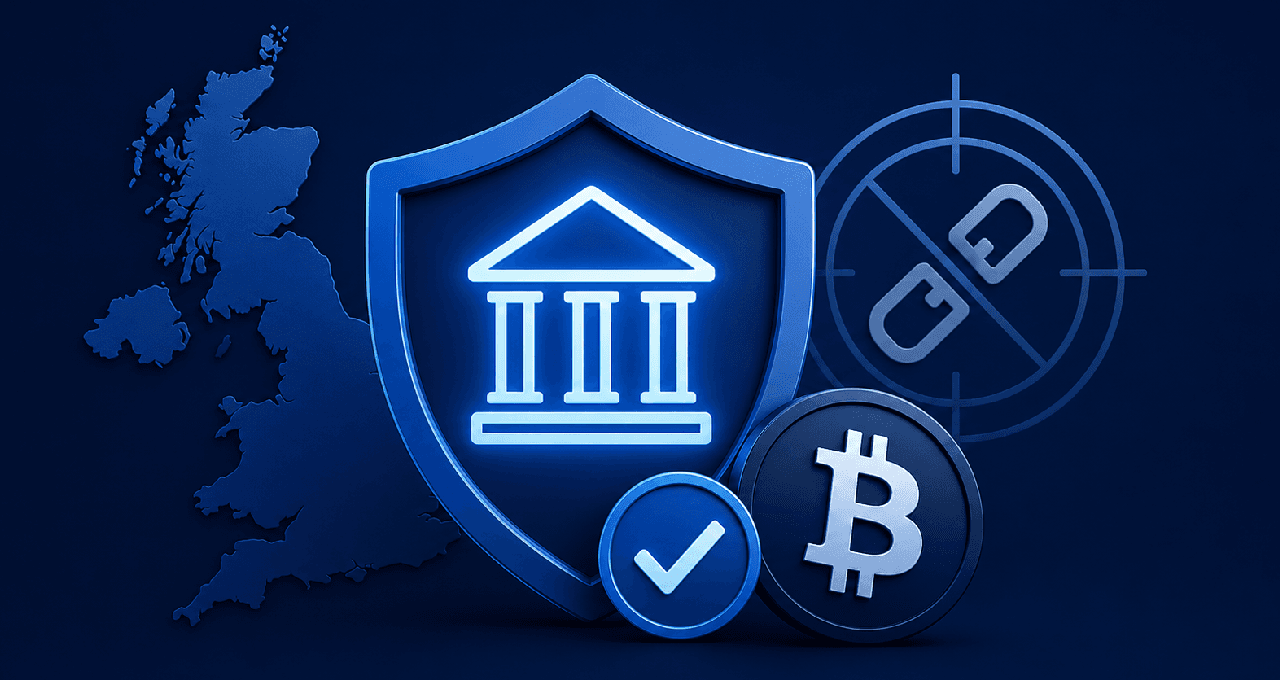
The UK’s Financial Conduct Authority (FCA) conducted a joint enforcement operation with HMRC and the South West Regional Organised Crime Unit (SWROCU) targeting illegal peer-to-peer (P2P) crypto trading — a sign that multi-agency crypto enforcement is intensifying globally.
P2P crypto trading outside of FCA-registered platforms can constitute illegal financial activity in the UK if it involves unlicensed money transmission, tax evasion, or money laundering. “Peer-to-peer” does not mean unregulated.
Traders who use FCA-registered exchanges, follow AML and KYC rules, and keep accurate records of their crypto transactions are the best protected from regulatory risk. Checking the FCA Financial Services Register is a simple but essential step.
Introduction: What the FCA Crackdown Signals
A joint enforcement operation involving the UK’s Financial Conduct Authority (FCA), HM Revenue and Customs (HMRC), and the South West Regional Organised Crime Unit (SWROCU) has sent a clear message to the UK crypto market: operating outside regulated frameworks is no longer a grey area that enforcement agencies are willing to ignore.
The operation targeted individuals and networks engaged in what regulators describe as illegal peer-to-peer (P2P) crypto trading — a broad category that includes unlicensed money transmission, crypto transactions used to obscure taxable income, and crypto trading networks that operate without anti-money laundering (AML) controls.
For most retail traders using major regulated exchanges, this crackdown does not change day-to-day activity. But it does contain important lessons. This article explains what P2P crypto trading is, why it sits in a regulated space, what AML compliance requires, and how to verify that the platforms you use are properly registered.
Note: This article is based on widely reported information about the joint FCA/HMRC/SWROCU enforcement operation and publicly available UK regulatory guidance. Specific operation details may be updated as proceedings develop. This is not legal advice. |
The Three Agencies Involved: Who Are They?
Understanding the agencies behind the crackdown helps explain the scope of the enforcement action.
Agency | Role | Crypto Relevance |
FCA (Financial Conduct Authority) | UK financial regulator | Requires crypto firms to register and comply with AML rules; can prosecute unlicensed firms |
HMRC (HM Revenue and Customs) | UK tax authority | Treats crypto as a capital asset; investigates crypto-related tax evasion and undeclared gains |
SWROCU (South West Regional Organised Crime Unit) | Regional law enforcement body | Investigates organised financial crime, including money laundering through crypto networks |
The involvement of all three agencies in a single operation is significant. It suggests that the activity targeted was not just a compliance oversight but involved potential organised financial crime with both regulatory and criminal dimensions.
What Is P2P Crypto Trading and Why Is It Regulated?
Peer-to-peer (P2P) crypto trading refers to the direct exchange of cryptocurrency between individuals without a centralised exchange platform acting as intermediary. In a P2P transaction, a buyer and seller agree on terms directly, often facilitated by a marketplace platform that matches them but does not hold the assets itself.
P2P trading is legal in many contexts. Regulated platforms such as OKX P2P, Binance P2P, and others offer P2P marketplaces with identity verification and AML controls built in. The issue arises when P2P trading is used to bypass the protections those controls provide.
Reasons P2P networks attract regulatory scrutiny include:
Money laundering: Crypto can be used to convert illicit cash into digital assets and back again across borders, without leaving a conventional banking trail.
Tax evasion: Individuals who do not declare crypto gains or income from high-volume P2P trading may be evading HMRC obligations.
Unlicensed money transmission: Operating as an informal crypto exchange or broker without FCA registration constitutes an offence in the UK.
Terrorist financing: Regulators require AML controls partly to prevent crypto from being used to finance illegal activities.
Key Point: "P2P" does not mean "unregulated." In the UK, anyone operating as a crypto asset exchange provider or custodian wallet provider must register with the FCA under the Money Laundering Regulations 2017 (as amended). Trading between friends informally may be legal, but operating a P2P network or acting as a broker without registration is not. |
UK Crypto Regulation: The AML and Registration Framework
The FCA became the UK’s AML supervisor for crypto asset businesses in January 2020. Since then, any business providing crypto exchange services or custodial wallet services to UK customers must:
Register with the FCA: under the Money Laundering, Terrorist Financing and Transfer of Funds Regulations 2017 (MLRs).
Apply KYC controls: by verifying the identity of customers before allowing them to trade or transfer assets.
Monitor transactions: for suspicious activity and file Suspicious Activity Reports (SARs) with the National Crime Agency when relevant.
Maintain records: of customer identity and transaction data for a minimum of five years.
Screen against sanctions lists: to prevent providing services to individuals or entities under international sanctions.
Importantly, registration is not the same as full FCA authorisation. The FCA has noted publicly that many crypto firms applied for registration but failed to meet the required AML standards and were rejected or withdrew their applications. A firm operating in the UK without FCA registration is operating illegally regardless of whether it is technically a P2P platform or a traditional exchange.
How to Verify an FCA-Registered Crypto Exchange
Verifying whether an exchange is properly registered is one of the most practical steps a UK-based trader can take. Here is how:
Step | Action | Details |
1 | Visit the FCA Financial Services Register | Go to register.fca.org.uk and search for the firm by name or registration number. |
2 | Check for Cryptoasset Registration | Look for the firm’s status as a "Cryptoasset Exchange Provider" or "Custodian Wallet Provider" under the MLRs. |
3 | Verify the firm name and address | Scammers sometimes create lookalike sites. Check the registered name and address match the website you are using. |
4 | Look for FCA warnings | The FCA publishes a warning list of unregistered firms. Search your exchange name at fca.org.uk/scamsmart. |
5 | Check recent news | Run a search for the exchange name plus "FCA" or "FCA warning" to check for any recent enforcement actions. |
Recommended Registered Platforms: A Starting Point
While Crypto University does not provide personalised financial advice, the exchanges below are widely used, have established compliance programmes, and operate with AML and KYC infrastructure. Always verify their current status on the FCA register before opening an account.
OKX — Global exchange with robust compliance infrastructure. Verify FCA registration status before use.
Bybit — Established global exchange. Always check current regulatory status in your jurisdiction.
BTCC — One of the oldest crypto exchanges with a track record in multiple jurisdictions. Verify registration before use.
Ledger Hardware Wallet — For assets not being actively traded, hardware wallets offer self-custody without exchange counterparty risk.
Compliance Checklist for UK and Global Traders
Use this checklist to assess your current crypto practices against the regulatory expectations the FCA crackdown has brought into focus.
Area | Compliance Action | Risk if Ignored |
Exchange registration | Verify your exchange is FCA-registered or registered with the equivalent regulator in your jurisdiction | Using unregistered platforms could expose you to legal risk and loss of funds with no regulatory recourse |
KYC completion | Complete identity verification fully on every platform you use | Unverified accounts are increasingly restricted or suspended |
Tax reporting | Record every crypto transaction including dates, amounts, and values at time of trade | HMRC treats crypto as a capital asset; undeclared gains can result in penalties and interest |
P2P trading | If using P2P features, ensure the platform has AML controls and you are complying with identity requirements | High-volume P2P trading without AML controls is a focus of enforcement activity |
Wallet records | Keep records of wallet addresses and where you received funds from | Inability to explain the source of funds can create AML complications |
Sanctions screening | Do not send or receive funds from wallet addresses on OFAC or UK sanctions lists | Transactions involving sanctioned addresses can trigger investigations regardless of intent |
Professional advice | Consult an accountant familiar with crypto if your trading activity is significant | Complex scenarios (DeFi, staking, yield) may have tax implications not covered by basic guidance |
What the Global Compliance Signal Means
The UK FCA operation is not happening in isolation. Across major economies, crypto enforcement is becoming more coordinated and more technically capable. Regulators now have access to blockchain analytics tools that can trace transaction histories across wallets and chains with considerable precision. The assumption that crypto transactions are private or untraceable is outdated.
Key global trends reinforcing this direction include:
The FATF Travel Rule now requires exchanges in many jurisdictions to share sender and recipient information on crypto transfers above certain thresholds.
The EU’s MiCA regulation (Markets in Crypto-Assets), which came into full effect in late 2024, requires crypto firms operating in the EU to be licensed and comply with AML rules across the bloc.
The US SEC’s Project Crypto framework is pushing toward registered exchanges and classified tokens, reducing the space for informal trading.
Multiple countries including Australia, Singapore, and Canada have introduced or tightened crypto AML registration requirements in recent years.
For traders, the practical message is consistent: using regulated platforms, completing KYC, and keeping tax records is no longer optional in most major jurisdictions. It is the baseline expectation.
Frequently Asked Questions
Is P2P crypto trading illegal in the UK?
Not inherently. P2P trading through regulated platforms that have FCA registration and AML controls is legal. What is illegal is operating as an unlicensed money transmitter, failing to pay tax on crypto gains, or using crypto transactions to launder funds. The FCA crackdown targeted activity that crossed these lines, not casual P2P trading between individuals.
How do I check if a crypto exchange is FCA registered?
Visit the FCA Financial Services Register at register.fca.org.uk and search for the firm. Look for their status as a Cryptoasset Exchange Provider or Custodian Wallet Provider. The FCA also maintains a warning list of unregistered firms at fca.org.uk/scamsmart.
Do I have to pay tax on crypto in the UK?
Yes. HMRC treats cryptocurrency as a capital asset. You may owe Capital Gains Tax when you sell, swap, or otherwise dispose of crypto. Income Tax may also apply if you receive crypto as payment, from mining, or from staking rewards. You should report crypto gains in your self-assessment tax return. Consult a tax adviser for guidance specific to your situation.
What is SWROCU and why were they involved in a crypto crackdown?
SWROCU stands for South West Regional Organised Crime Unit. It is a regional law enforcement body in the UK that investigates serious and organised crime, including financial crime and money laundering. Its involvement in the FCA operation reflects the fact that illegal P2P crypto trading networks can be treated as organised criminal enterprises, not just regulatory violations.
Does this crackdown affect casual crypto traders?
For most retail traders using major regulated platforms, completing KYC, and reporting gains to HMRC, the crackdown does not change daily activity. The enforcement focus is on individuals and networks conducting high-volume, informal P2P trading outside regulated frameworks, often linked to money laundering or tax evasion. That said, it serves as a reminder that all crypto activity in the UK carries tax and compliance obligations.
What is the FATF Travel Rule?
The Financial Action Task Force (FATF) Travel Rule requires crypto exchanges to collect and pass on information about the sender and recipient of transactions above a threshold (typically equivalent to 1,000 USD). It is designed to bring crypto transfers in line with the information-sharing rules that apply to traditional wire transfers. Most major exchanges now implement this rule in jurisdictions where it is law.
Next Step: Always verify your exchange is registered with the appropriate regulator before depositing funds. Use our Top 5 Exchanges guide as a starting point for identifying platforms with strong compliance track records. |
Disclaimer: This content is for educational and informational purposes only and is not financial advice. Nothing here is a recommendation to buy or sell any asset or use any platform. Do your own research and manage your risk.
Read More
How Withdrawal Fees Affect Your Overall Trading Costs
Top 5 Cryptocurrency Payment Gateways for Beginners
Understanding Ethereum Gas Fees: Your Guide to Transaction Costs
Need deeper training?
Join our structured modules with live examples and expert checklists for effective implementation.
JOIN THE ACADEMY