Key Takeaways
A multi-signature wallet needs approval from several people before money moves, which removes the risk of one lost or stolen key wiping out a treasury.
Safe (previously known as Gnosis Safe) is the most trusted multisig tool on Ethereum and Layer 2 networks, and a 2-of-3 setup works well for most small teams starting out.
A multisig is only as strong as the habits behind it. Every signer should use a hardware wallet, separate devices, and a documented recovery plan.
What Is a Multi-Signature Wallet?
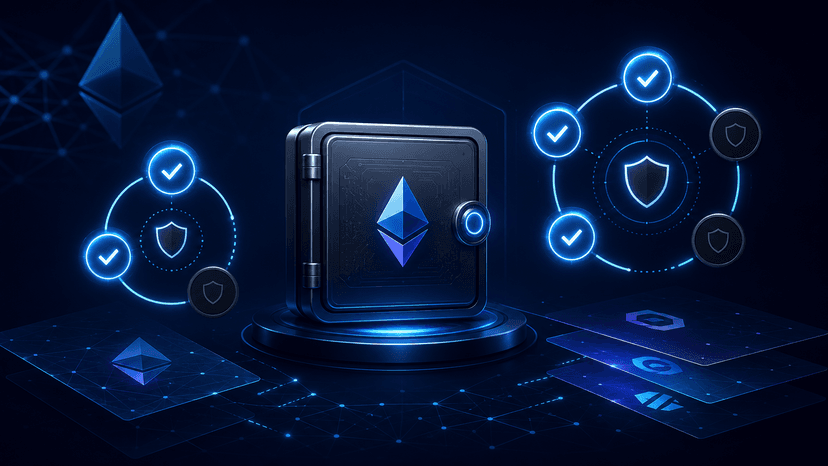
Think of a multi-signature (or "multisig") wallet like a safety deposit box that needs more than one key to open. Instead of one person holding full control, a group of people, called signers or owners, share that responsibility. Before any transaction goes through, a set number of them have to approve it.
This setup gets rid of the biggest weakness of regular crypto wallets: the single point of failure. If one signer loses their key or gets hacked, the funds stay safe as long as the attacker can't reach the minimum number of approvals needed.
Multisig wallets live on the blockchain as smart contracts. That means every approval and every transfer is fully visible on-chain, which is great for transparency and audit trails.
Safe (formerly Gnosis Safe, and now also called Safe Wallet) is by far the most popular multisig solution on Ethereum and its Layer 2 networks. It has been used to secure billions of dollars in assets across team treasuries, DAOs, and even institutional setups.
When You Actually Need a Multisig (and When You Don't)
Multisigs are powerful, but they're not for everyone. They add steps, gas costs, and coordination headaches that a solo user simply doesn't need.
Situation | Best Wallet Choice | Why |
Solo investor | Hardware wallet plus a hot wallet for daily use | No need for multiple approvers |
Small team managing a shared treasury | Multisig (Safe), often 2-of-3 | Distributes control, creates accountability |
DAO governance | Multisig with optional modules | Adds on-chain voting and spending rules |
Larger company or institution | Multisig with extra controls | Enterprise-grade transparency and security |
In short, if you're the only one touching the funds, a well-protected hardware wallet is usually enough. Once two or more people share responsibility, a multisig becomes the right tool.
Choosing a Threshold: 2-of-3 vs 3-of-5
The "threshold" is just the minimum number of signers who have to approve a transaction. Picking the right one is about balancing safety, backup, and how easy it is to coordinate.
Threshold | Total Signers | Backup if Keys Are Lost | Coordination Effort | Attack Resistance | Best For |
2-of-3 | 3 | Can lose one key safely | Low | Good | Small teams, early-stage DAOs |
3-of-5 | 5 | Can lose up to two keys | Medium | Very high | Larger orgs, high-value treasuries |
A 2-of-3 setup works for most growing teams. As the treasury grows or more people get involved, moving up to 3-of-5 gives you stronger protection and more redundancy.
Why Safe Stands Out
Safe isn't just a basic multisig contract. It's built as a programmable smart account, which means it can be upgraded and extended without moving your funds to a new wallet.
Feature | What It Means for You |
Works on Ethereum and major L2s | Use the same setup on Arbitrum, Base, Optimism, Polygon, and more |
Transaction simulation | See what a transaction will do before you sign it |
Optional modules | Add features like spending limits and recovery |
Same address across chains | One easy-to-remember address on many networks (when supported) |
Full audit trail | Every action stays visible on-chain forever |
Step-by-Step: Creating a Safe Multisig
You can set up a Safe at the official site, app.safe.global. The process deploys a new smart contract, so you'll need a bit of gas, but it only takes a few minutes.
Step | What to Do |
1. Open the Safe app | Go to app.safe.global and connect a wallet like MetaMask. This wallet becomes one of your signers. |
2. Start a new Safe | Click "Create new Safe" on the dashboard. |
3. Pick your network | Choose Ethereum mainnet or a Layer 2 like Base or Arbitrum to save on fees. |
4. Add owners | Enter the addresses of everyone who should be a signer. Most teams use three to five people. |
5. Set the threshold | Choose how many approvals are needed (for example, 2 out of 3). |
6. Review and deploy | Check the summary, confirm the deployment in your wallet, and wait for it to confirm on-chain. |
7. Test it out | Ask every signer to log in and confirm they can see the new Safe. Send a tiny test transaction before moving real money. |
Once that's done, your Safe is live and ready to receive funds. If you need the same address on other networks, you can repeat the process there.
Signer Security Checklist
A multisig is only as safe as the weakest signer. Here's what every team should follow:
Practice | Why It Matters |
Every signer uses a hardware wallet (Ledger, Trezor, etc.) | Keeps private keys offline and away from hackers |
Dedicated wallet just for Safe signing | Avoids mixing personal and treasury activity |
Seed phrase stored offline in multiple secure spots | Survives fire, theft, or natural disasters |
Strong passphrase and full device security enabled | Adds another layer if a device is lost |
Clear written recovery plan | No scrambling when something goes wrong |
Test the setup with small amounts first | Catches mistakes before they get expensive |
Use different devices and networks across signers | Prevents one bad actor or hack from affecting everyone |
Pro tip: combine your multisig with hardware wallets. Every signer should be signing from cold storage, never from a hot wallet on the same laptop.
Modules and Recovery: Useful but Be Careful
Safe lets you add optional "modules," which are extra smart contracts that give your wallet more abilities.
Module Type | What It Does |
Spending limits | Lets smaller transfers go through without full approvals |
Social recovery | Lets trusted addresses help restore access if keys are lost |
Role-based controls | Limits what certain wallets can do |
One important warning: modules can move funds on behalf of your Safe. Only enable modules that come from the official Safe ecosystem and have been properly audited. A bad module can completely undo the security of your multisig.
The good news is that changing signers or thresholds still requires the usual number of approvals, so no single person can quietly take over.
Common Mistakes to Avoid
Mistake | What Goes Wrong |
All signers use hot wallets | Defeats the purpose of multisig if keys are always online |
Poor communication | Approvals get delayed because people miss the notifications |
Skipping a test transaction | Large funds get deployed before the setup is verified |
Same device or backup pattern for every signer | One vulnerability hits everyone at once |
Adding too many modules | Each one adds new ways things can go wrong |
Forgetting gas costs | L2s help, but complex actions still need planning |
No documented recovery plan | The team panics during an emergency |
A simple habit: review your setup every three months and write down every change.
Conclusion
Multi-signature wallets like Safe give teams a serious level of security by spreading control across several people and keeping a permanent record of every action. With the right threshold, careful setup, and solid signer habits, your team can manage crypto assets confidently without depending on one person or one device.
If you're a solo holder, a good hardware wallet is usually enough. But the moment more than one person needs access to the same funds, a Safe multisig is one of the most trusted tools out there.
Next step: pair this guide with a hardware wallet setup, since every Safe signer should be signing from cold storage.
FAQ
Question | Answer |
What's the difference between a multisig and a regular wallet? | A regular wallet uses one key. A multisig needs several keys to meet a set threshold before anything moves. |
Is Safe free to use? | There's no platform fee, but you'll pay gas on the network you choose. |
Can I change the threshold or owners later? | Yes, but any change still needs approval from the current threshold of signers. |
Does Safe work on Layer 2 networks? | Yes, on Ethereum mainnet and all major L2s, often at the same address across chains. |
What if one signer loses their key? | The Safe keeps working as long as the remaining signers can still meet the threshold. |
Are modules safe? | Only when they come from the official Safe ecosystem and have been audited. Always review before enabling. |
Disclaimer: This content is for educational and informational purposes only and is not financial advice. Nothing here is a recommendation to buy or sell any asset or use any platform. Do your own research and manage your risk.
Read More
What Is a DAO? Governance Models, Voting Mechanisms, and Their Real-World Limitations
Gas Fee Optimization on Layer 2s: How to Pay Less on Every Crypto Transaction
Perpetual DEX vs. CEX: Key Differences, Risks, and How to Choose the Right Platform
Layer 2 Scaling Solutions 2026 Fee Comparison, Security, and Daily Usage Tutorial