
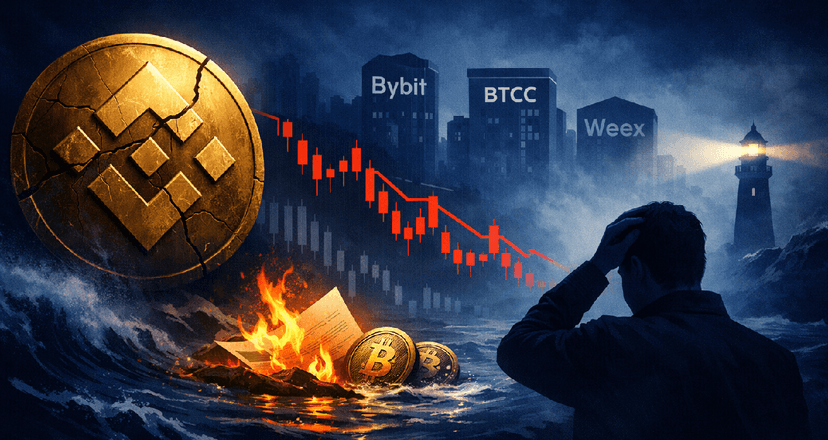
The specter of FTX still haunts the crypto market. Every time a major exchange faces a crisis, the question inevitably arises: Could this be another FTX? Today, that question is being asked about Binance. As the world’s largest exchange battles a storm of FUD, insolvency rumors, and a mass exodus of users, it is crucial to analyze the fundamental differences between the current situation at Binance and the catastrophic collapse of FTX. While the fear in the market is real, a closer look reveals three key differences that could determine Binance’s fate.
Difference 1: The On-Chain Evidence (Reserves)
The most significant and undeniable difference between Binance and FTX lies in the on-chain data. In the days leading up to FTX’s collapse in November 2022, blockchain analysis revealed a horrifying truth: the exchange’s reserves were being rapidly and catastrophically depleted. There was a clear, verifiable bank run happening in real-time on the blockchain.
Fast forward to February 2026, and the situation with Binance is starkly different. Despite the social media panic and the #BinanceExodus trend, on-chain data from multiple analytics firms, including CryptoQuant, shows that Binance’s reserves are stable. Their Bitcoin holdings have remained steady at approximately 659,000 BTC, and the flow of funds in and out of the exchange is within normal, historical ranges [1].
Exchange | On-Chain Reserve Status | Implication |
FTX (Nov 2022) | Rapidly Depleting | Verifiable Bank Run |
Binance (Feb 2026) | Stable | No Evidence of a Bank Run |
This is not a matter of opinion or speculation; it is a matter of verifiable data. The on-chain evidence that signaled the death of FTX is simply not present for Binance.
Difference 2: The Nature of the Accusations (Fraud vs. FUD)
The collapse of FTX was not the result of a market crash or a temporary liquidity crisis. It was the result of a massive, multi-year fraud. Sam Bankman-Fried and his inner circle were found to have been commingling customer funds and using them for risky bets through their sister trading firm, Alameda Research. The hole in their balance sheet was not a temporary shortfall; it was a chasm created by deception and malfeasance.
The accusations currently being leveled at Binance, while serious, are of a different nature. They are centered on allegations of market manipulation (related to the “10/10” crash), a lack of transparency, and potential insolvency. While these are significant concerns, they are not, as of now, backed by evidence of the kind of systemic fraud that brought down FTX.
The current crisis is being driven by FUD (Fear, Uncertainty, and Doubt), amplified by a viral legal letter and a general climate of fear in a bear market. While FUD can certainly trigger a bank run, it is a different beast than a crisis born from a proven, multi-billion-dollar fraud.
Difference 3: The Response (Transparency vs. Obfuscation)
In the face of its crisis, FTX’s response was a masterclass in obfuscation and delay. Sam Bankman-Fried issued a series of cryptic and misleading tweets, all while the exchange was imploding behind the scenes. The lack of clear, honest communication only served to accelerate the panic.
Binance’s response to the current crisis has been, by comparison, more direct. While their handling of the cease-and-desist letter has been widely criticized as heavy-handed, they have also been proactive in pointing to on-chain data to rebut the insolvency claims. The fact that they have not halted withdrawals (other than a brief, temporary pause attributed to technical issues) is a significant sign of confidence.
However, there is still a major trust deficit. The exchange’s failure to provide a full, transparent accounting of the “10/10” crash has created a breeding ground for suspicion. To truly put the FUD to rest, Binance will need to embrace a new level of radical transparency.
The Prudent Path: Diversify and De-Risk
While the evidence suggests that Binance is not another FTX, the current crisis is a stark reminder of the inherent risks of centralized exchanges. The prudent path for any crypto investor is to de-risk by diversifying their holdings across multiple platforms.
Bybit: A powerful and reliable alternative with a strong focus on derivatives and a growing spot market. Explore Bybit here.
BTCC: A veteran exchange with a 15-year track record of security, offering a safe haven for traders concerned about platform risk. Trade with confidence on BTCC.
Weex: A rising star in the futures market, offering a specialized and high-performance trading environment. Discover Weex today.
Conclusion: Not a Repeat, But a Rhyme
History may not be repeating itself, but it is certainly rhyming. The crisis facing Binance is not a carbon copy of the FTX collapse, but it is born from the same underlying fear and distrust that pervades the crypto market. While the on-chain data provides a strong case for Binance’s solvency, the exchange faces a long road ahead to rebuild the trust it has lost. For investors, the lesson is clear: in a world of centralized risk, diversification is the only true form of security.
Reference
[1] AInvest. (2026, February 6). Binance’s Liquidity: On-Chain Data vs. Social Panic.