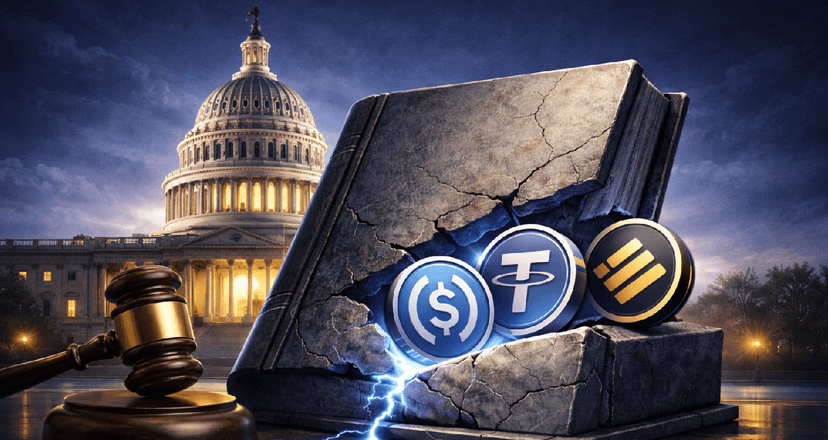
The Guaranteed, Enforceable, Neutral, Interoperable and Uniform Standards (GENIUS) Act became law on 18 July 2025 and aims to legitimize payment stablecoins in the United States. By mid‑2026 regulators are preparing final rules.
Key provisions
Permitted issuers: Only banks and licensed entities may issue payment stablecoins; unauthorized parties are prohibited .
1:1 reserve backing: Issuers must hold high‑quality liquid assets (cash or short‑maturity Treasury bills) equal to outstanding tokens. Reserves must be segregated from the issuer’s corporate assets and cannot be lent or rehypothecated except in limited circumstances .
Monthly disclosures: CEOs or CFOs must certify reserve reports and publish audited attestations by PCAOB‑registered accountants .
Investor protections: Stablecoins are deemed neither securities nor commodities, removing SEC/CFTC uncertainty . In bankruptcy, holders have priority claims on reserves.
AML compliance: Issuers are treated as financial institutions under the Bank Secrecy Act and must implement KYC/AML programs and cybersecurity measures .
Impact on users
For consumers, the GENIUS Act promises more transparent stablecoins. You should verify that your chosen stablecoin issuer publishes monthly reserve reports and is licensed. Expect fewer algorithmic or synthetic stablecoins available in the U.S., while regulated fiat‑backed tokens gain market share. Note that the act’s effective date is the earlier of December 2026 (18 months after enactment) or 120 days after final rules are issued , so some stablecoins may still be adjusting. Diversify across compliant issuers to reduce counterparty risk.