
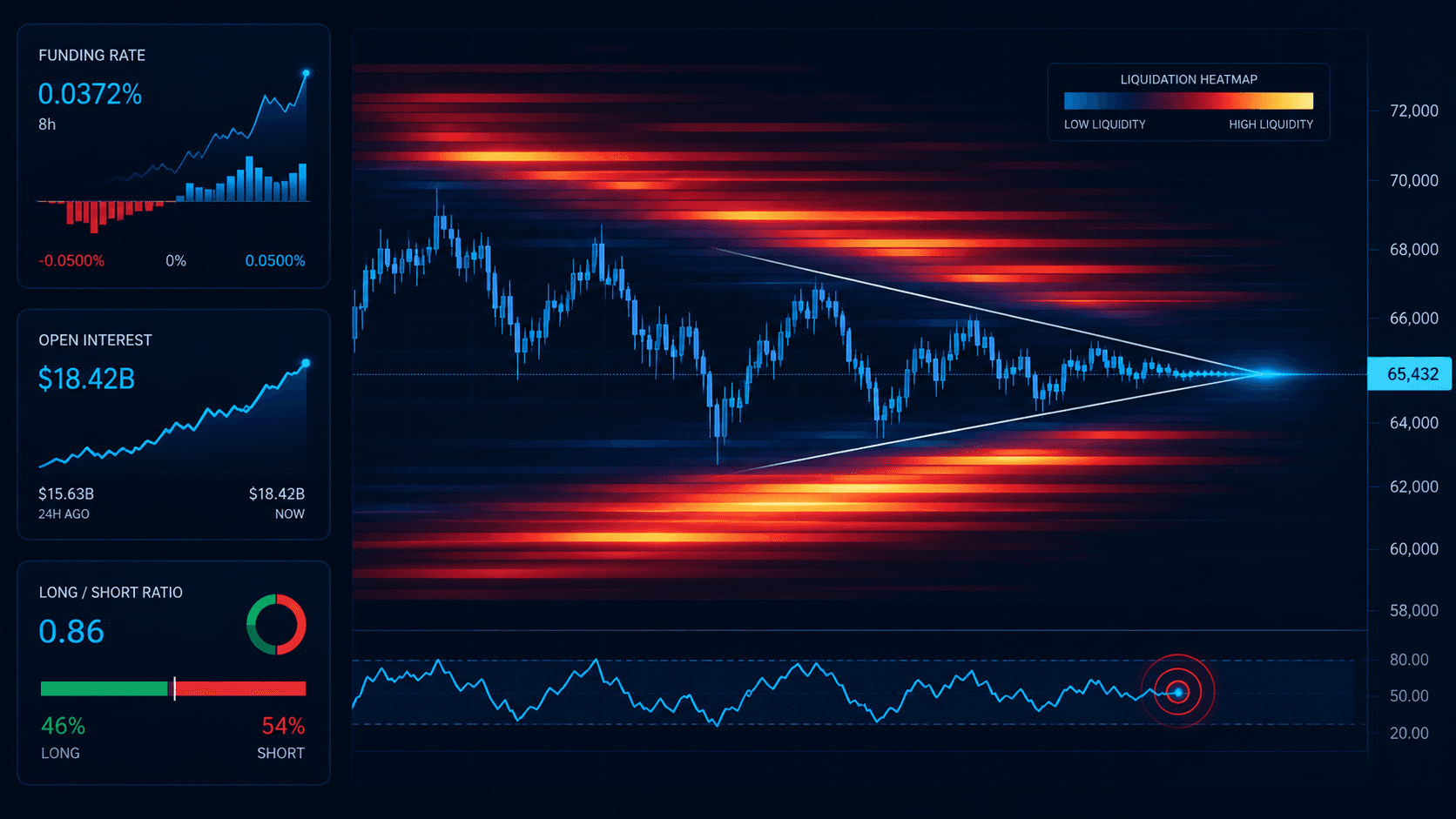
Reading Crypto Liquidation Heatmaps and Funding Rates: A Practical Trader's Guide
Learn how to read crypto liquidation heatmaps, funding rates, open interest, and long-short ratios to spot squeezes and market stress.
Crypto University • 19 May 2026
 No Adverts are available
1 | The Bhutan and Arkham story shows how on-chain forensics is changing the way people understand sovereign Bitcoin holdings. |
2 | Wallet attribution can be powerful, but it is still probabilistic in many cases. Do not treat it as courtroom-level proof by default. |
3 | On-chain data can show movements, clustering, and possible sale patterns, but it cannot always prove motive, beneficiary, or the exact off-chain deal structure. |
For a long time, the question of how much Bitcoin governments actually hold was answered with rumors, leaks, and rough guesses. That world is fading fast.
On-chain analytics tools have become much better at peeking behind the curtain. Today, governments, state-owned investment arms, and sovereign funds can be partly tracked just by looking at the blockchain. The case involving Bhutan, Arkham Intelligence, and Druk Holding and Investments is one of the clearest examples of how blockchain detective work is changing the conversation around sovereign crypto.
This is not just a fun topic. The moment the market believes a government-linked wallet is moving Bitcoin, traders react fast. They start asking whether a sale is coming, whether the coins are heading to an exchange, whether an OTC deal is in play, and whether the move means a policy shift or just routine treasury work.
The catch is that on-chain data is powerful but never perfect.
In this article, we will walk through why Bhutan matters as a case study, what wallet attribution can and cannot actually prove, how tools like Arkham fit in, and how a beginner trader should think about sovereign Bitcoin tracking in a smarter way.
Bhutan caught everyone's attention because of reported Bitcoin holdings linked to Druk Holding and Investments, the country's state-owned investment arm. When wallets believed to be tied to Bhutan started moving funds, analysts and traders jumped in to figure out what was happening.
That reaction makes sense. Sovereign wallets are not like regular retail wallets or even corporate treasury wallets. When they move, they can signal a lot of different things, including reserve management, liquidity shifts, mining revenue activity, policy experiments, or even partial sales and restructurings.
But sovereign entities also have plenty of reasons to move funds quietly without making any public announcement.
Reason | Why Markets Care |
Scale | Sovereign wallets often hold very large balances |
Signaling effect | Government-related movement can shift sentiment fast |
Policy implications | Wallet activity may hint at broader state strategy |
Transparency gap | On-chain data often appears before any official disclosure |
This is exactly where Arkham-style attribution gets its power to influence the public story.
Arkham Intelligence is one of several on-chain analytics platforms that try to connect blockchain addresses with real-world entities. This process has a name. It is called wallet attribution.
In plain terms, attribution tries to answer questions like which addresses likely belong to the same entity, whether a wallet is tied to an exchange, a fund, a government, or a miner, and whether recent transactions look like internal transfers, exchange deposits, or possible sale flows.
Arkham and similar platforms reach these conclusions by combining clustering techniques, transaction pattern analysis, public disclosures, counterparty behavior, and other signals.
If a platform can convincingly link a cluster of wallets to a state-linked entity, the market can react before any official statement is ever made. That alone changes the information landscape.
Type | How It Appears | Limitation |
Official sovereign disclosure | Public filing, statement, or report | Often delayed or selective |
Media reporting | Journalists cite sources or documents | Depends on sourcing quality |
On-chain attribution | Analysts identify wallet behavior publicly | May be probabilistic, not definitive |
That is the heart of the Bhutan case. On-chain analysts can sometimes see more than official channels reveal, but they are still working with incomplete information.
On-chain analytics is at its best when it is answering structural questions about what happened on the blockchain.
Signal | What It May Indicate |
Transfer to a known exchange wallet | Possible sale preparation or liquidity move |
Transfer between linked internal wallets | Treasury reshuffling, not necessarily a sale |
Repeated miner payout patterns | Operational revenue flow from mining |
Large dormant wallet activation | Strategic movement or a new custody action |
These are not small details. In a sovereign context, even basic signals like these can move the market.
This is the part most beginner traders miss. On-chain data is not mind-reading. It does not automatically reveal intent.
By itself, on-chain data usually cannot prove why the transfer happened, whether the move was a sale or a collateral placement, whether the receiving address is acting for another party, whether an OTC deal already took place off-exchange, whether the beneficial owner changed after the transfer, or whether the move was political or operational.
That is why a wallet movement should never be read with full certainty just because it is visible on the chain.
Wallet attribution works on a sliding scale. Some attributions are very strong because they are backed by public disclosures, repeated behavioral patterns, counterparty confirmation, linked operational wallets, or known service relationships. Others are softer and more inferential.
Confidence Level | What It Usually Means |
High confidence | Direct public linkage or repeated strong evidence |
Medium confidence | Strong clustering and behavioral clues, but no direct confirmation |
Low confidence | Suggestive activity, but not enough to lean on too hard |
When you read a story about a wallet, ask not only what Arkham shows, but also how confident the attribution is and what evidence supports it.
The Bhutan story gained even more weight because Druk Holding and Investments is not a random company. As a state-owned investment arm, its wallet activity tends to be treated as sovereign or at least quasi-sovereign.
That framing can be useful, but it should still be handled with care.
Question | Why It Matters |
Is the wallet directly linked to Druk Holding and Investments, or only associated through clustering? | Determines confidence in attribution |
Are funds moving to exchanges, custodians, or internal treasury structures? | Helps distinguish sale risk from reorganization |
Is there evidence of a spot-sale path, or only movement? | Avoids false dump narratives |
Could the transfer reflect custody reorganization, collateral, or partnership activity? | Adds important alternative explanations |
Without these distinctions, it is easy to overstate what the blockchain is really saying.
One of the most common mistakes in market commentary is assuming every large wallet movement is a dump waiting to hit the market. That is simply not always true.
A sovereign-linked wallet might be moving Bitcoin through direct exchange deposits, OTC desks, custodians, internal treasury addresses, or even collateral and borrowing arrangements.
Transfer Pattern | What Traders May Assume | More Careful Interpretation |
Deposit to known exchange address | Immediate sale pressure | Possible sale preparation, but not guaranteed |
Movement to OTC-linked counterparty | Hidden bearish signal | Could be a negotiated sale with lower visible market impact |
Internal cluster reshuffle | Sale incoming | Often just treasury reorganization |
Multi-hop routing | Attempt to obscure an exit | Could also reflect custody or settlement structure |
This is exactly why on-chain forensics needs context. A screenshot alone is rarely the full story.
Dashboard screenshots can be eye-catching, but the real lesson is what those tools teach a beginner to look for.
UI Element | Why It Helps |
Labeled entity cluster | Shows likely wallet grouping |
Flow arrows or transaction map | Helps interpret the movement path |
Counterparty labels | Indicates exchange, fund, bridge, or service links |
Time-stamped transfers | Adds sequence and event context |
Historical balance chart | Shows whether movement is unusual or routine |
A screenshot only helps when you can tell the difference between a label, a strong inference, and a fully proven fact.
This simple framework is useful any time a sovereign wallet story shows up in your feed.
Question | Usually Answerable On-Chain? |
Did funds move? | Yes |
Where did they likely go? | Often yes |
Was it definitely a sale? | Not always |
Was it OTC or spot? | Sometimes partially, rarely conclusively |
Why did the state move the funds? | Usually no |
Keeping this in mind is the core of responsible on-chain analysis.
Sovereign crypto holdings are going to get easier to track, not harder. As analytics improves, governments will have fewer chances to move major on-chain assets without the public weighing in on what those moves mean.
That creates several new realities. Sovereign entities may end up facing a kind of quasi-public disclosure through blockchain analysis. Analysts may shape market narratives before any official statement appears. States may adjust custody structures to reduce visibility or avoid being misread. And traders will need stronger frameworks to separate real signals from noise.
This is bigger than Bhutan. It is about the direction of public blockchain finance overall.
If you want to read sovereign wallet stories more intelligently, run them through five simple questions. Is the wallet attribution strong or just suggestive? Does the movement point to an exchange, an OTC desk, a custodian, or an internal transfer? Is there evidence of actual sale pressure or only movement? What does the analyst truly know on-chain, and what are they inferring? And finally, has any official or semi-official source confirmed the context?
If you are new to this, start with a beginner on-chain analytics guide before trying to interpret sovereign flows as if every transfer is obvious. It rarely is.
The Bhutan and Arkham case matters because it shows both the strength and the limits of modern on-chain forensics. Public blockchains have made sovereign crypto movement more visible than many people once assumed. But visibility is not the same thing as certainty.
Good analysis takes discipline. It means learning to tell the difference between movement and motive, between attribution and proof, and between a flashy dashboard label and a fully supported conclusion. That is how on-chain analytics becomes a tool that helps you instead of one that misleads you.
Wallet attribution is the process of linking blockchain addresses or clusters of addresses to real-world entities such as exchanges, funds, governments, or companies.
Because reported wallet activity linked to Druk Holding and Investments made Bhutan a high-profile example of how state-related Bitcoin holdings can be tracked publicly.
Not always. It can often show movement toward likely sale venues, but it usually cannot prove exact intent or off-chain deal structure on its own.
Spot-sale signals usually involve transfers toward exchange deposit infrastructure. OTC-related flows tend to involve negotiated counterparties with less visible market impact.
No analytics platform is perfect. Attribution quality depends on the strength of evidence, the quality of labeling, and how the data is interpreted.
Start by separating what is directly visible on-chain, what is being inferred, and what still has no confirmation.
Disclaimer: This content is for educational and informational purposes only and is not financial advice. Nothing here is a recommendation to buy or sell any asset or use any platform. Do your own research and manage your risk.
Share Posts
Copy Link
cryptouniversity.networkblog/bhutan...
Learn how to read crypto liquidation heatmaps, funding rates, open interest, and long-short ratios to spot squeezes and market stress.
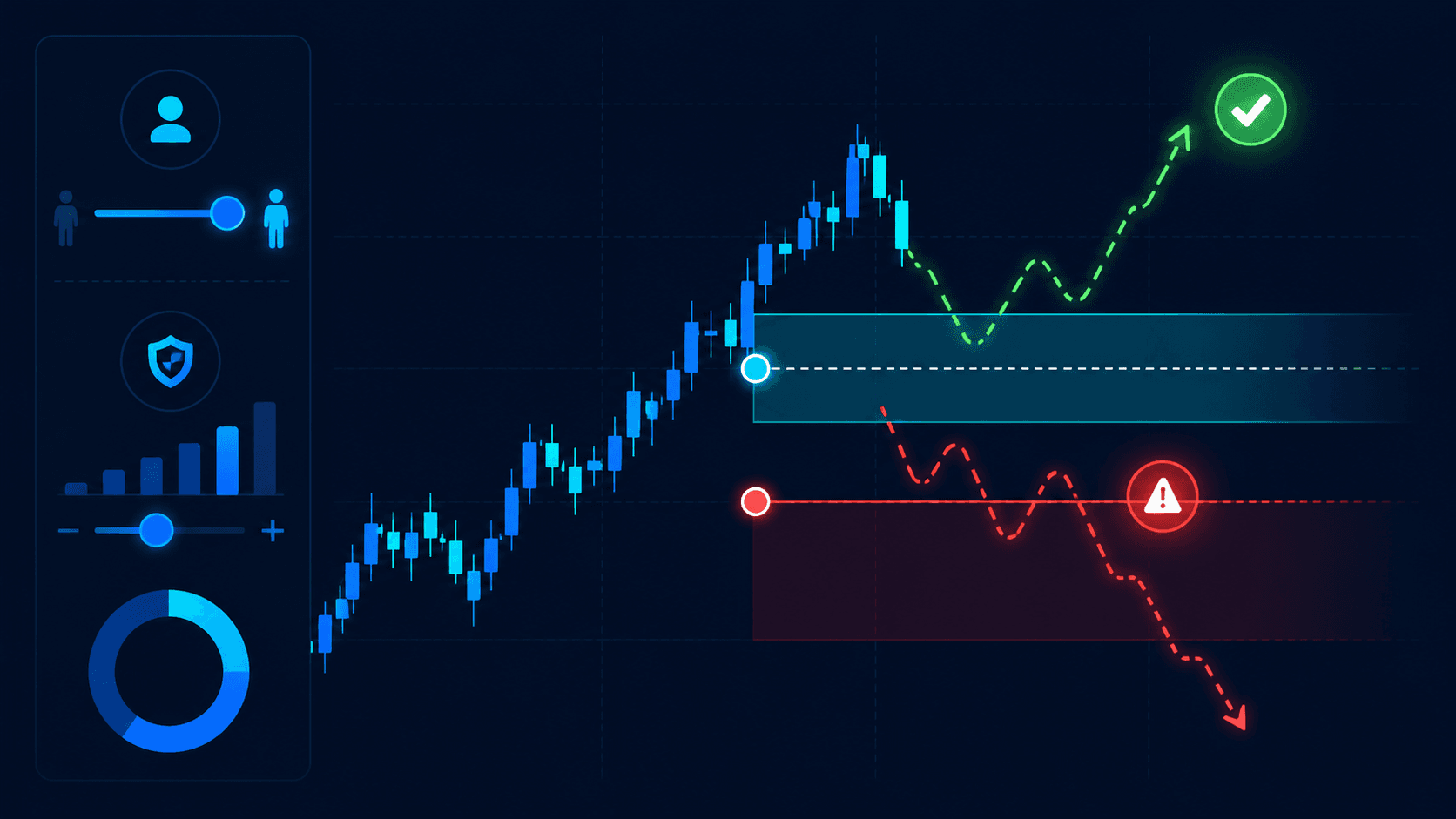
Learn how crypto stop-loss orders work, when stop losses help, when they fail, and how to use stop-limit, market stops, and position sizing properly.
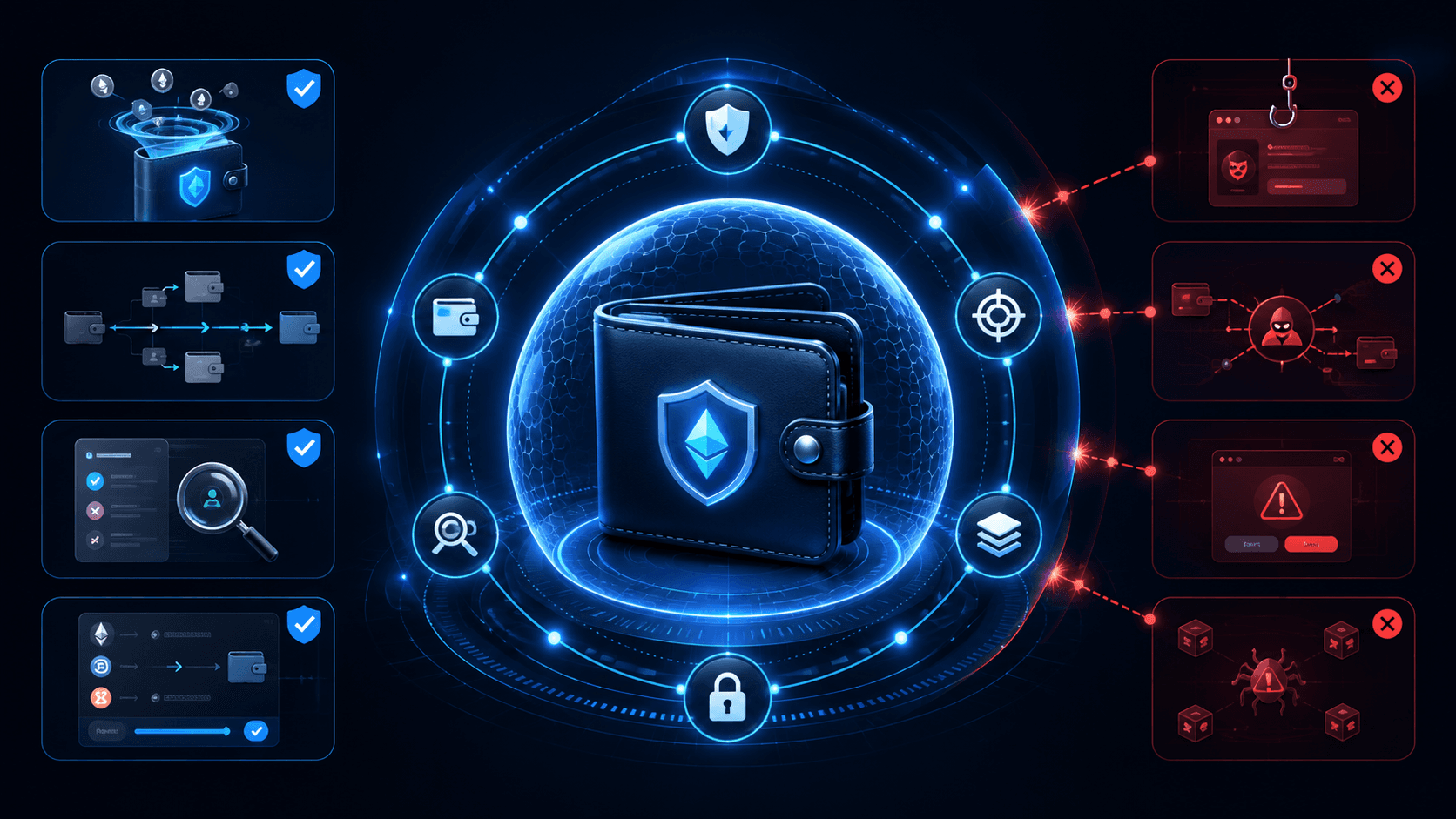
Learn 12 practical anti-phishing habits for crypto in 2026, including wallet drainer protection, address poisoning defense, and approval hygiene.